 SehatSphere.com
Hair Fall and Vitamin Deficiency: The Real Nutrients Behind It
A national Indian health survey found 57% of women are anemic — and in a dedicated Indian dermatology study, 65% of women with diffuse hair loss had low ferritin. Before reaching for another “hair vitamin” bottle, it’s worth knowing which nutrients are genuinely, evidence-backed connected to shedding — and which are mostly marketing. This guide covers the real research behind hair fall vitamin deficiency, not the supplement-aisle version of it.
Key takeaways:
- Iron (measured via ferritin, not hemoglobin) is the single most-documented nutrient link to diffuse hair loss — and your ferritin can be “normal” by standard labs yet still too low for hair growth specifically.
- True biotin deficiency causing hair loss is genuinely rare, despite biotin being the most heavily marketed “hair vitamin” on the market.
- More isn’t better: excess vitamin A, selenium, or high-dose zinc can each independently worsen hair shedding.
- Postpartum hair loss (telogen effluvium) is a real, temporary, hormone-driven process — not automatically a deficiency, though deficiencies can prolong or worsen it.
- The 4 nutrients with real evidence
- Why “normal” ferritin isn’t enough for hair
- How common is this in India
- The biotin myth, corrected
- When supplements make it worse
- Food sources worth prioritizing
- Postpartum hair loss, explained
- Deficiency hair loss vs. pattern baldness
- What a proper workup includes
- Quick self-check
- FAQs
Hair Fall Vitamin Deficiency: The 4 Nutrients With Real Evidence
Dozens of vitamins get marketed for hair health, but the research consistently converges on a much shorter list:
1. Iron (via ferritin)
The most consistently documented link. Iron is essential for oxygen delivery to the rapidly-dividing cells of the hair follicle — when stores run low, hair is one of the first tissues to be deprioritized.
2. Vitamin D
Plays a direct role in follicle cycling, not just bone health. A 2023 clinical study found oral vitamin D treatment measurably improved hair density in people with telogen effluvium specifically. Given 70-90% of Indians test deficient, this is a genuinely high-yield nutrient to check.
3. Vitamin B12
Supports red blood cell production and oxygen delivery to the scalp. Vegetarians, vegans, and anyone with absorption issues are at meaningfully higher risk — our B12 deficiency guide covers this population specifically.
4. Zinc
Involved in keratin production and follicle repair. A 2024 study comparing women with chronic telogen effluvium to healthy controls found zinc levels were a significant differentiator between the two groups.
If you’re also managing blood pressure or metabolic conditions alongside hair changes, our BP fluctuation guide, normal blood pressure by age guide, and high creatinine levels guide are worth a look, since chronic conditions and the medications treating them both genuinely affect nutrient status over time.
Why “Normal” Ferritin Isn’t Enough for Hair
This is the single most important, most overlooked detail in this entire topic. Standard lab reference ranges for ferritin are broad — often 10–120 ng/mL — and were built around preventing anemia, not optimizing hair growth. The threshold your hair follicles actually need is meaningfully higher.
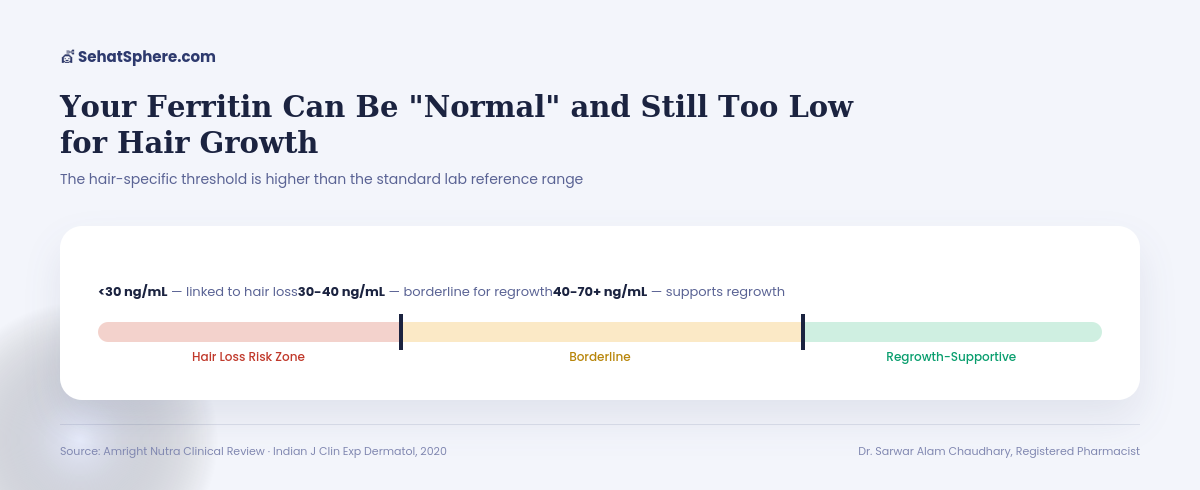
A cross-sectional Indian dermatology study of women with chronic diffuse hair loss found a mean ferritin of just 18.6 µg/L, with 57.5% below the deficiency cutoff entirely. Separately, clinical dermatology sources report ferritin below 30 ng/mL is consistently linked to hair loss, while regrowth typically needs levels in the 40–70 ng/mL range — a gap that means someone can be told their iron is “fine” and still be experiencing genuine, correctable, iron-driven shedding.
How Common Is Hair Fall Vitamin Deficiency in India?
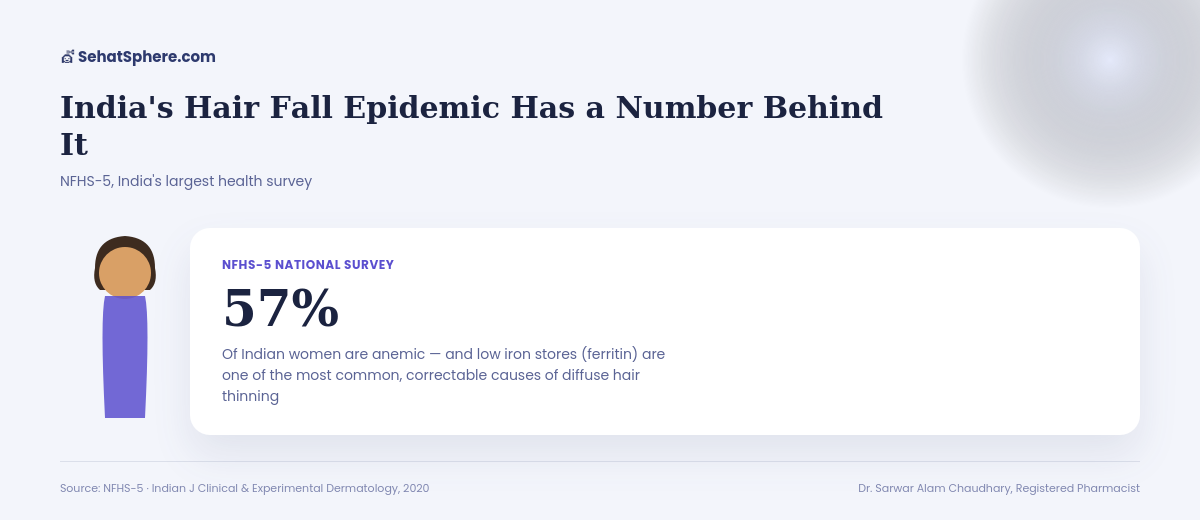
India’s iron-deficiency burden is genuinely severe, and specifically affects women. NFHS-5, India’s largest national health survey, found 57% of women anemic — consistent with a separate observational study where hair loss was reported by 63.5% of symptomatic women, alongside fatigue (77.9%) and generalized weakness (79.4%).
A genuinely important, under-discussed finding from the same research: 26.9% of symptomatic women had entirely normal hemoglobin but deficient ferritin and iron stores — a condition researchers call Iron Deficiency Without Anemia (IDWA). This matters directly for hair loss, because a standard hemoglobin-only blood test would completely miss this group, leaving genuinely correctable hair loss unexplained. Plant-based diets, common across much of India, also absorb iron less efficiently than animal sources, compounding the risk further. Our iron deficiency anemia guide covers this exact gap in more depth, and if you’re also managing PCOS, our PCOS symptoms guide is worth reading since hair changes are one of its documented warning signs, sharing much of the same insulin-and-iron overlap.
What To Read Next
- Vitamin D Deficiency in India: Why abundant sunlight isn’t enough, and how it connects to hair.
- Vitamin B12 Deficiency: Especially relevant if you follow a vegetarian diet.
- Nutrient Deficiency Symptom Finder: Free 2-minute tool to narrow down what’s actually going on.
The Biotin Myth, Corrected
Biotin is, by a wide margin, the most heavily marketed “hair vitamin” — and genuinely one of the least evidence-backed for most people. True biotin deficiency causing hair loss is rare, and unless you have a confirmed deficiency (or a specific risk factor like certain anticonvulsant medications or a rare genetic condition), taking more biotin is unlikely to meaningfully change your shedding. Worth knowing separately: high-dose biotin supplements can interfere with common lab tests, including thyroid panels, which is a real, documented reason to mention biotin use to your doctor before any blood test — not a hair-specific issue, but a genuine one.
When Supplements Make It Worse
“More vitamins” is not a safe default assumption, and this is genuinely underappreciated. Several nutrients marketed for hair health can worsen shedding specifically when taken in excess:
| Nutrient | Excess Effect |
|---|---|
| Vitamin A | Can increase hair shedding rather than prevent it |
| Selenium | Excess amounts linked to increased shedding and brittle hair |
| Zinc (high-dose) | Can lower copper levels, itself worsening shedding |
This is exactly why “test, don’t guess” is the responsible approach here, not a cautious platitude — self-stacking multiple hair supplements without confirmed deficiencies genuinely risks doing the opposite of what you intend. The free Integrative Interaction Checker is worth running any new supplement combination through before starting.
Food Sources Worth Prioritizing
Before supplementing, it’s worth knowing which foods genuinely move these specific nutrients:
- Iron: Red meat, spinach, lentils, and fortified cereals — pairing plant-based iron with vitamin C (citrus, tomatoes) meaningfully improves absorption
- Vitamin D: Fatty fish, egg yolks, and fortified milk, alongside sensible midday sun exposure — our vitamin D deficiency guide covers exactly why sunlight alone often isn’t enough in India
- Vitamin B12: Found almost exclusively in animal products — a genuine concern for vegetarians without deliberate fortified sources or supplementation
- Zinc: Nuts, seeds, legumes, and whole grains, though plant-based zinc is less bioavailable than animal sources
Postpartum Hair Loss, Explained
If your hair loss started 2–4 months after childbirth, there’s a specific, well-documented, mostly separate explanation: postpartum telogen effluvium. Elevated estrogen during pregnancy keeps more hair in its growth phase than usual; after delivery, estrogen drops sharply, and that “held-back” hair enters its resting phase all at once.
| Timeline | What’s Happening |
|---|---|
| 2–4 months postpartum | Shedding typically begins, sometimes 200–300 strands/day vs. the normal 50–100 |
| 4–6 months | Shedding usually peaks |
| 8–12 months | New growth becomes visible; fullness typically returns |
This process is normal and self-resolving on its own timeline — but pregnancy and breastfeeding genuinely deplete iron, B12, and vitamin D stores, which is exactly why a nutrient deficiency can prolong or worsen what would otherwise be a temporary hormonal event. Shedding that continues well past 12 months, or comes with visible bald patches rather than diffuse thinning, is worth a proper evaluation rather than waiting it out further.
Deficiency Hair Loss vs. Pattern Baldness
These two get confused constantly, and the distinction genuinely changes what helps:
| Feature | Nutrient-Deficiency Hair Loss | Pattern Hair Loss |
|---|---|---|
| Pattern | Diffuse, all over the scalp | Specific zones (crown, temples, part-line) |
| Onset | Often sudden, weeks to months | Gradual, over years |
| Reversibility | Usually reversible once corrected | Progressive without targeted treatment |
Both can genuinely coexist in the same person, which is exactly why a proper evaluation — not a guess based on which pattern seems to fit best — is worth pursuing if shedding feels significant or is lasting. Genetics plays a real, separate role in pattern hair loss regardless of nutrient status, which is worth accepting honestly rather than expecting supplements alone to reverse a genetically-driven pattern.
What a Proper Workup Actually Includes
Per dermatology practice standards, a genuine hair-loss evaluation isn’t just “check your iron” — it’s a specific panel: complete blood count, serum ferritin (not hemoglobin alone), serum iron with TIBC, zinc, vitamin D (25-OH), vitamin B12, and thyroid function (TSH and free T4, since thyroid disorders are a well-documented, separate cause of hair thinning). In women with irregular cycles or signs of excess androgen, testosterone and DHEA-S are often added — relevant if PCOS is part of the picture, since hair changes are one of its seven core warning signs. The free Blood Report Decoder can help you understand exactly what each of these values means once you have results.
Chronic stress is also worth a specific mention — both COVID-19 and other significant physical or emotional stressors have been documented triggering genuine telogen effluvium episodes months later, connecting back to the same cortisol pathway our mental stress guide covers. If digestive conditions or long-term acid-reducing medication are part of your history, our pantoprazole guide and GERD guide are worth reading too, since long-term acid suppression can independently affect B12 and iron absorption. If magnesium is part of your supplement stack, our magnesium deficiency guide is worth a look, and if cost has ever made a full lab panel feel out of reach, our generic medicine pricing guide covers a similar principle worth knowing about diagnostic costs too.
Quick Self-Check
Tick anything that applies to you, and see what it suggests.
Frequently Asked Questions
Which vitamin deficiency causes the most hair loss?
Iron, measured via ferritin, has the strongest and most consistent evidence link, followed by vitamin D, vitamin B12, and zinc.
Can my ferritin be “normal” and still cause hair loss?
Yes. Standard lab ranges are broad (often 10-120 ng/mL), but hair growth specifically appears to need ferritin above roughly 40 ng/mL, well above where labs flag “deficiency.”
Does biotin actually help with hair loss?
Only if you have a confirmed, genuine biotin deficiency, which is rare. Most people taking biotin supplements without a confirmed deficiency are unlikely to see meaningful hair regrowth from it alone.
Can too many vitamins cause hair loss?
Yes. Excess vitamin A, excess selenium, and high-dose zinc supplementation have each been documented to worsen hair shedding rather than help it.
How long does postpartum hair loss last?
Shedding typically begins 2-4 months after childbirth, peaks around 4-6 months, and new growth usually becomes visible by 8-12 months.
How is nutrient-deficiency hair loss different from pattern baldness?
Deficiency-related hair loss is typically diffuse (all over the scalp) and often sudden, while pattern hair loss develops gradually in specific zones like the crown or temples.
What blood tests should I ask for if I have hair loss?
A complete panel including serum ferritin, iron with TIBC, zinc, vitamin D, vitamin B12, and thyroid function (TSH, free T4) – not just hemoglobin alone.
How common is iron deficiency hair loss in India?
Very common. NFHS-5 found 57% of Indian women anemic, and a dedicated dermatology study found 65% of women with diffuse hair loss had low ferritin specifically.
The Bottom Line
Hair fall vitamin deficiency genuinely does connect to real, correctable nutrient gaps — iron, vitamin D, B12, and zinc have the actual evidence behind them, while biotin’s popularity outpaces its proof for most people. The single most useful thing you can do isn’t buying another supplement bottle; it’s asking specifically for a ferritin test, not just hemoglobin, since “normal” blood counts have quietly hidden genuine, fixable hair loss for a meaningful share of Indian women. Test first, then supplement what’s actually low — not the other way around. If you’re also tracking other lab values, the free Blood Report Decoder and Nutrient Deficiency Symptom Finder are worth bookmarking alongside this guide.
- Burden of Iron Deficiency Without Anemia Among Women of Reproductive Age in India. Research Square, 2026.
- Correlation of Serum Ferritin Levels in Female Patients With Chronic Diffuse Hair Loss. IP Indian Journal of Clinical and Experimental Dermatology, 2020.
- National Family Health Survey-5 (NFHS-5), India.
View All References (6) ▾
- Almohanna HM, et al. The Role of Vitamins and Minerals in Hair Loss: A Review. Dermatol Ther, 2019.
- Cleveland Clinic. Postpartum Hair Loss. clevelandclinic.org
- Post-COVID Telogen Effluvium: Diagnostic Value of Serum Ferritin. PMC, 2024.