 SehatSphere.com
Sauna and Your Medications: The Warning Behind 2026’s Biggest Wellness Trend
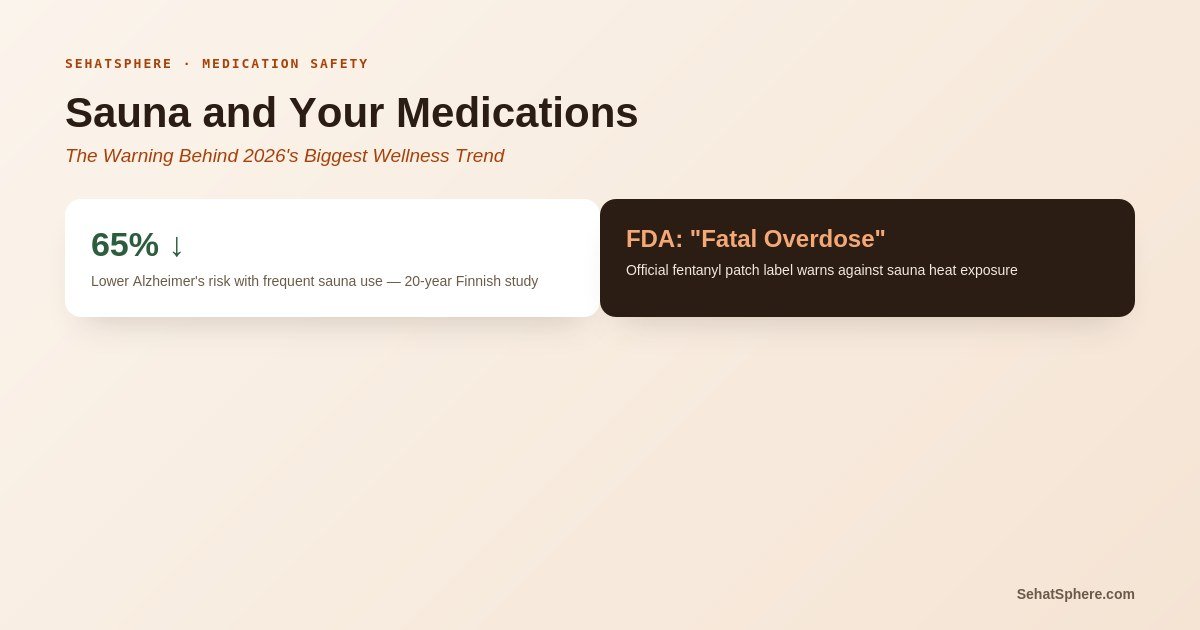
A 20-year Finnish study found frequent sauna use tied to a 65% lower risk of Alzheimer’s. That’s the headline everyone’s sharing. What’s missing from almost every version of this story: sauna and your medications can be a serious combination — starting with the FDA’s own warning about what heat does to certain medication patches.
Key takeaways:
- The FDA’s own fentanyl patch label warns that sauna heat can increase absorption and has caused fatal overdose.
- Lithium, blood pressure medication, blood thinners, and even prednisone each interact with sauna heat differently.
- The Alzheimer’s and cardiovascular benefits are real and well-documented — this isn’t a reason to avoid saunas, just a reason to be specific about your own medications first.
Sauna and Your Medications: The Study Everyone’s Sharing
Sauna bathing has quietly become one of the most talked-about wellness habits of 2026, and the number driving most of that conversation comes from a real study, not a TikTok exaggeration. Researchers followed 2,315 middle-aged Finnish men for a median of 20.7 years as part of the Kuopio Ischaemic Heart Disease study, comparing men who used a sauna once a week to men who used one 4 to 7 times a week. The frequent group had a 66% lower risk of developing dementia and a 65% lower risk of Alzheimer’s specifically, even after adjusting for age, blood pressure, cholesterol, smoking, and other factors.
Two things worth knowing before you build a routine around that number. First, this was an observational study — it shows a strong association, not proof that sauna use itself causes the lower risk. Second, every participant was a Finnish man; the effect in women hasn’t been established the same way. The honest version of this story is “promising, not proven” — less viral than “cuts your risk by 65%,” but accurate.
If you wear a fentanyl transdermal patch — commonly prescribed for severe chronic pain — the actual FDA-approved prescribing label states plainly that exposure of the patch to “heating pads or electric blankets, heat or tanning lamps, sunbathing, hot baths, saunas, hot tubs, and heated water beds may increase fentanyl absorption and has resulted in fatal overdose of fentanyl.” That’s language taken directly from the drug’s own federally approved label.
The mechanism is straightforward: a patch is designed to release medication at a steady rate through your skin. Heat increases blood flow to the skin and effectively opens the tap wider — sometimes releasing hours’ worth of medication in a much shorter window than intended.
Every Patch Type, Ranked by Risk
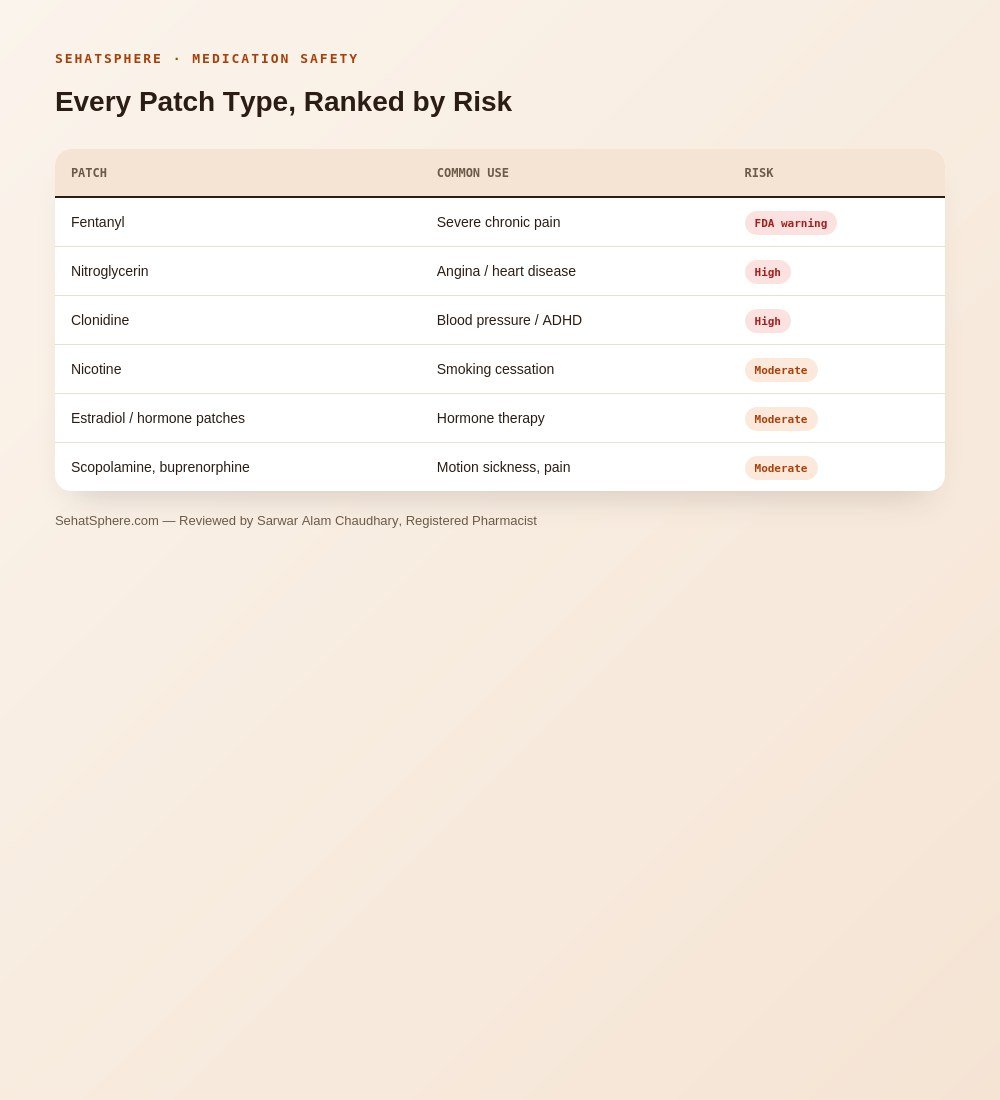
| Patch | Common Use | Risk Level |
|---|---|---|
| Fentanyl | Severe chronic pain | Highest — FDA black-box language |
| Nitroglycerin | Angina / heart disease | High — hypotension risk |
| Clonidine | Blood pressure / ADHD | High — severe BP drop |
| Nicotine | Smoking cessation | Moderate — documented toxicity |
| Estradiol / hormone patches | Hormone therapy | Moderate — dosing disruption |
| Scopolamine, buprenorphine | Motion sickness, pain | Moderate — case reports exist |
The pattern holds across essentially every transdermal patch on the market: heat exposure and patches don’t mix, and the safest default is removing any patch before a sauna session unless your prescriber has told you otherwise.
What To Read Next
- Cold Plunge and Your Medications: The other half of contrast therapy — same level of scrutiny needed.
- Why Does Blood Pressure Fluctuate? Our pillar guide on BP swings and what’s normal.
- Thyroid Medicine Mistakes: Common errors that affect hormone-sensitive medication.
Blood Thinners, Prednisone & Other Medications Worth Knowing
The patch table above covers transdermal medications, but several everyday oral medications deserve their own mention — ones the original FDA fentanyl warning doesn’t cover at all.
| Medication | Why It Matters With Sauna |
|---|---|
| Blood thinners (warfarin, Eliquis/apixaban, Xarelto/rivaroxaban) | Sauna doesn’t directly interact with how these drugs work, but the conditions requiring them (AFib, DVT, valve replacement) need physician clearance first — especially during the early weeks of DVT treatment when doses are higher and clot mobilization risk is a real concern |
| Prednisone / corticosteroids | No specific heat-based warning like fentanyl, but prednisone can raise blood pressure, cause fluid retention, and mask early signs of overheating or infection — worth mentioning to your doctor if you sauna regularly |
| Diuretics (furosemide, HCTZ, spironolactone) | Compound the fluid loss from sweating, increasing dehydration and electrolyte imbalance risk |
| Stimulants (ADHD medication) | Already elevate heart rate and blood pressure; sauna’s cardiovascular demand adds to that load |
If you’re on a blood thinner specifically, this is a good moment to get clearance rather than guess — particularly if you’re newly diagnosed with a clot or recently started treatment.
Lithium: A Different Mechanism, Same Underlying Problem
Lithium doesn’t come as a patch, so heat doesn’t dump it into your bloodstream the way it does with fentanyl. The risk here is dehydration. Lithium has a genuinely narrow safety margin, and sweating heavily in a sauna without replacing fluids can concentrate lithium in your blood toward toxic levels. If you take lithium and enjoy sauna bathing, this is worth a specific conversation with whoever manages your levels.
Blood Pressure Medication and the Fainting Risk
Sauna heat causes blood vessels near the skin to widen, part of why it feels relaxing — and part of why it can drop blood pressure further in someone already taking medication for hypertension. Combined with sweating-related fluid loss, this is a recognized reason some people feel lightheaded or faint after a long session, particularly on diuretics or other blood-pressure-lowering drugs. Standing up slowly, staying hydrated, and keeping sessions shorter when starting out are the practical countermeasures — the same principles covered in our guides on normal blood pressure ranges and accurate home BP monitoring.
The Heart Data Is Even Stronger Than the Brain Data
The Alzheimer’s number gets the headlines, but the same Finnish cohort produced an earlier finding that’s arguably more robust. Published separately in JAMA Internal Medicine in 2015, the same 2,315 men showed a 50% lower risk of fatal cardiovascular disease, a 40% lower risk of death from any cause, and a 63% lower risk of sudden cardiac death in the 4-7-times-a-week group compared to once a week.
A later, separate study published in BMC Medicine followed 1,688 people — just over half of them women — and found the same pattern of reduced cardiovascular mortality held in both sexes, with risk decreasing steadily as sauna frequency increased. The Alzheimer’s-specific number is still men-only data. The broader cardiovascular story now has real support in women too.
What’s Actually Happening in Your Cells
Heat exposure triggers the production of heat shock proteins — molecules whose job is to help other proteins fold correctly and repair damaged ones. Since misfolded proteins are a recognized feature of neurodegenerative disease, researchers see this as one plausible biological thread connecting sauna use to the brain findings. On the cardiovascular side, regular heat exposure is associated with improved blood vessel function and modestly lower resting blood pressure over time.
Rehydrating Afterward
A hard sauna session can mean genuine fluid and sodium loss through sweat. Rehydrating with an electrolyte mix afterward is reasonable for most people, but if you’re on an ACE inhibitor, ARB, or spironolactone, that’s the specific combination worth double-checking before reaching for a potassium-heavy recovery drink.
Two Myths Worth Retiring
Myth: “If a little heat is good, more is better.” The research used a specific, moderate range — 4 to 7 sessions a week. It isn’t evidence that pushing far beyond that produces a bigger benefit.
Myth: “This proves sauna use prevents Alzheimer’s.” It shows a strong statistical association in a specific population. That’s genuinely meaningful evidence — it isn’t the same claim as proof of prevention.
Not All “Sauna” Means the Same Heat Exposure
The Finnish study behind the Alzheimer’s finding used traditional dry saunas — 80–100°C, low humidity. Traditional Finnish/dry saunas run hottest and are what the research actually studied. Infrared saunas heat your body more directly at a lower ambient temperature (often 45–60°C) — popular for comfort, but with a different, less-studied exposure profile. Steam rooms add humidity, which changes how your body sheds heat entirely. The medication cautions in this guide apply across all three, but the Alzheimer’s research applies most directly to the traditional dry version.

How Long Is Too Long? Starting Out Safely
A common question is what actually happens if you push past a comfortable session — say, 20 minutes instead of 10. Past the point your body can comfortably regulate, longer sessions mainly increase dehydration, add cardiovascular strain, and raise the risk of the lightheadedness or fainting discussed above — without adding proportional benefit. The Finnish research itself used sessions the men were already accustomed to, not extreme single sessions.
If you’re new to this and healthy, most sources converge on a similar starting point: sessions of 10 to 15 minutes, at a temperature you can comfortably tolerate, two to three times a week before considering higher frequency. Hydrate before and after, avoid alcohol beforehand, and exit immediately if you feel dizzy, nauseated, or unusually short of breath.
What to Avoid After a Sauna
- Don’t stand up quickly — blood vessels are still dilated, and rising fast can cause dizziness or fainting.
- Don’t jump straight into alcohol — it compounds dehydration and blood pressure effects on top of what the sauna already did.
- Don’t skip rehydrating — water at minimum, an electrolyte drink if it was a longer or hotter session (see the medication note above if you’re on certain BP drugs).
- Don’t reapply a removed patch immediately while your skin is still hot — wait until you’ve cooled down.
- Don’t treat an immediate post-sauna wearable reading as your baseline — heart rate variability and blood pressure readings shift for a few hours afterward.
The India Context
Dedicated sauna facilities are less common in India than gym-based steam rooms and infrared cabins, which have grown in metro gyms and wellness centers over recent years. The same medication cautions apply regardless of which version you’re using locally. One India-specific point: in a country where ambient summer heat is already extreme in much of the country, anyone managing heat-sensitive medication should treat sauna sessions as additive to, not separate from, the heat exposure they’re already getting through daily weather.
If You Track HRV or Blood Pressure With a Wearable
Heat exposure genuinely shifts heart rate variability and blood pressure readings in the hours after a session — a real physiological response, not a device error. If you use an HRV ring or a BP-tracking smartwatch (covered in our complete wearables and medications guide), don’t be surprised by a temporarily altered reading right after sauna use.
Who Should Avoid Saunas
- Anyone wearing a fentanyl, nitroglycerin, or clonidine patch, without first removing it or getting specific clearance.
- People with uncontrolled or unstable blood pressure.
- Anyone in the early, high-dose treatment phase of a new blood clot diagnosis (DVT/PE) — get clearance first.
- Children and pregnant women, as a separate caution unrelated to medication (see below).
- Anyone who has previously felt faint, nauseated, or unwell during heat exposure without a clear resolution of the cause.
Children and Pregnancy: A Separate Caution
None of the research discussed above involved children or pregnant women, and the general safety guidance for both groups is more cautious for a different reason than medication. Children and pregnant women are generally advised to avoid sauna use altogether, since heat exposure can cause low blood pressure and fainting in children, and carries specific risks during pregnancy. This applies regardless of medication use.
Does Sauna Use Replace Exercise?
No, and none of the researchers behind this data have claimed it should. Sauna bathing and exercise appear to work through overlapping but distinct pathways — both raise heart rate and core temperature temporarily, but exercise adds musculoskeletal and metabolic benefits heat exposure alone doesn’t provide. The more useful framing is additive: sauna as a complement to activity you’re already doing, particularly since several studies specifically adjusted for physical activity levels and still found an independent association.
Frequently Asked Questions
Can I wear a fentanyl patch in a sauna?
No. The FDA-approved label explicitly warns against heat exposure including saunas, citing reports of fatal overdose. Remove the patch first, or ask your prescriber directly.
Who should avoid using a sauna?
Anyone with an unremoved medication patch, uncontrolled blood pressure, a newly diagnosed blood clot, or who is pregnant or a child should avoid it or get clearance first.
Can I use a sauna if I take blood pressure medication?
Often yes, with care. Start with shorter sessions, hydrate well, and stand up slowly afterward to avoid the fainting risk that comes with heat plus BP-lowering drugs.
Can I use a sauna or steam room while on Eliquis or other blood thinners?
Sauna doesn’t directly interact with how these drugs work, but the conditions requiring them need physician clearance first, especially during early, high-dose blood clot treatment.
Is sauna use safe on prednisone?
There’s no fentanyl-style specific warning, but prednisone can raise blood pressure and mask signs of overheating, so mention regular sauna use to your doctor if you’re on it long-term.
What should I avoid after a sauna?
Standing up too quickly, alcohol, skipping rehydration, and treating an immediate post-sauna wearable reading as your true baseline.
What happens if I stay in for 20 minutes instead of 10?
Past your comfortable limit, longer sessions mainly add dehydration and cardiovascular strain without proportional extra benefit.
Does the Alzheimer’s benefit apply to women too?
The main study followed only Finnish men, so that specific finding hasn’t been established the same way in women.
I take lithium, can I still use a sauna?
Often yes, with care. The concern is dehydration concentrating lithium toward toxic levels, so hydration and monitoring matter more than avoiding saunas outright.
How often do you need to sauna for the Alzheimer’s benefit?
The strongest association was among men using a sauna 4 to 7 times per week, compared to once a week.
The Bottom Line
The Alzheimer’s and cardiovascular research behind sauna’s 2026 popularity is genuinely strong — that’s not the part to be skeptical of. What deserves equal attention is the FDA’s own fentanyl patch warning, plus the real, specific cautions around lithium, blood pressure medication, blood thinners, and prednisone. None of this means avoiding saunas; it means being specific about your own medications before building the habit.
- Laukkanen et al. Age and Ageing (2017) — Sauna Bathing and Dementia/Alzheimer’s Risk. academic.oup.com
- FDA — Official Fentanyl Transdermal System Prescribing Label. accessdata.fda.gov
View All References (10) ▾
- AAPS PharmSciTech — Mild Hyperthermia and Transdermal Nicotine Absorption. link.springer.com
- Fentanyl Transdermal Patches — Case Reports and Safety Recommendations. pmc.ncbi.nlm.nih.gov
- Poison Control — Are Saunas Good for You? poison.org
- Zaccardi et al., American Journal of Hypertension — Sauna Bathing and Blood Pressure. academic.oup.com
- Laukkanen et al., JAMA Internal Medicine (2015) — Sauna Bathing and Fatal Cardiovascular Events. pubmed.ncbi.nlm.nih.gov
- BMC Medicine — Sauna Bathing and Cardiovascular Mortality in Men and Women. link.springer.com
- Infrared Sauna and Medications: What’s Safe, What’s Dangerous. Peak Saunas. peaksaunas.com
- Can a Sauna Be Used With Anticoagulation Therapy (Eliquis/Xarelto)? droracle.ai
Why Trust This Guide?