 SehatSphere.com
Magnesium Deficiency Symptoms: 8 Warning Signs Most People Miss
Magnesium powers over 300 enzyme reactions in your body — and running low rarely announces itself clearly. A cramp gets blamed on exercise. Fatigue gets blamed on work. Poor sleep gets blamed on stress. Individually, none of these seem worth mentioning to a doctor. Together, they’re one of the more common deficiency patterns that goes unrecognized for years.
Key takeaways:
- Magnesium deficiency builds gradually across muscle, nerve, sleep, mood, and heart symptoms — rarely as one obvious sign.
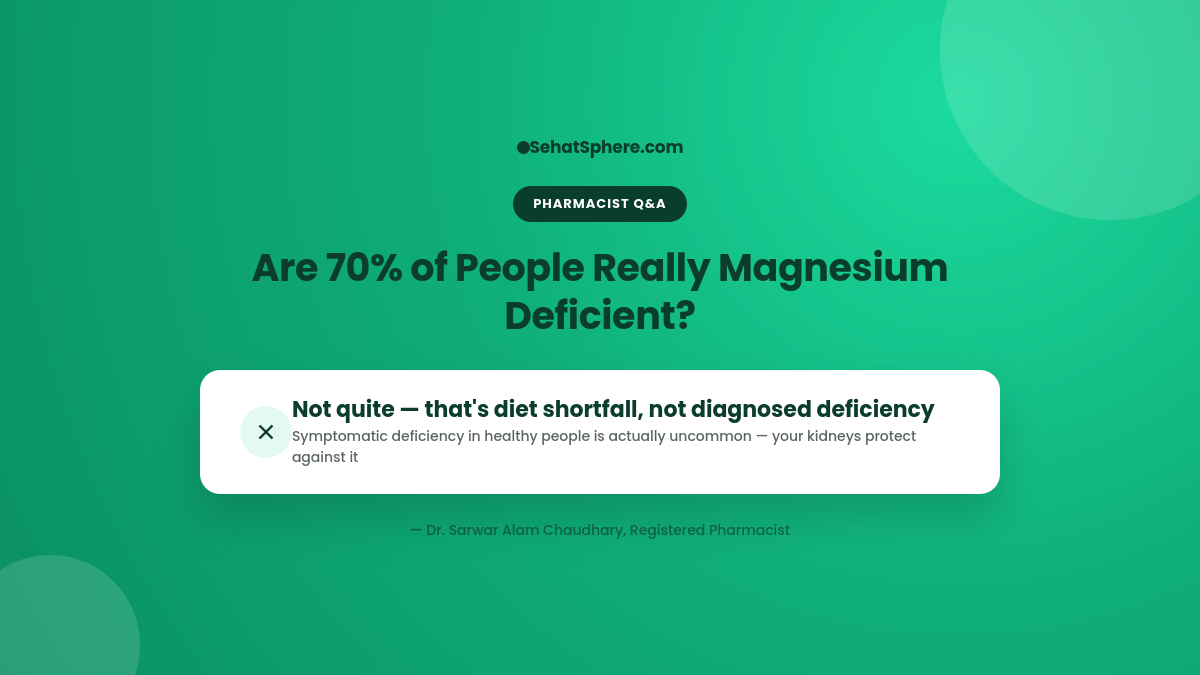
- “50–70% of people are deficient” is technically true but misleading — that’s diet falling short of the RDA, not the same as diagnosed clinical deficiency, which stays uncommon in otherwise healthy people.
- A standard blood test can miss real deficiency, since less than 1% of your body’s magnesium circulates in blood.
- Certain medications (PPIs, diuretics, metformin) quietly deplete magnesium regardless of diet.
Why Magnesium Deficiency Symptoms Are So Easy to Miss
Magnesium is a cofactor in more than 300 enzyme systems, but very little of it sits in your blood — most is stored inside cells and bone. That’s the core problem: symptoms show up gradually, across several unrelated-seeming systems at once, rather than announcing themselves the way a fever would.
Modern diets make this more likely than it used to be. Refined grains lose most of their magnesium during processing, and high intakes of sugar, caffeine, and alcohol all increase how much magnesium your body loses through urine. None of this is dramatic on its own — it’s the accumulation over months and years that quietly pushes levels down.
The 8 Symptoms Worth Knowing
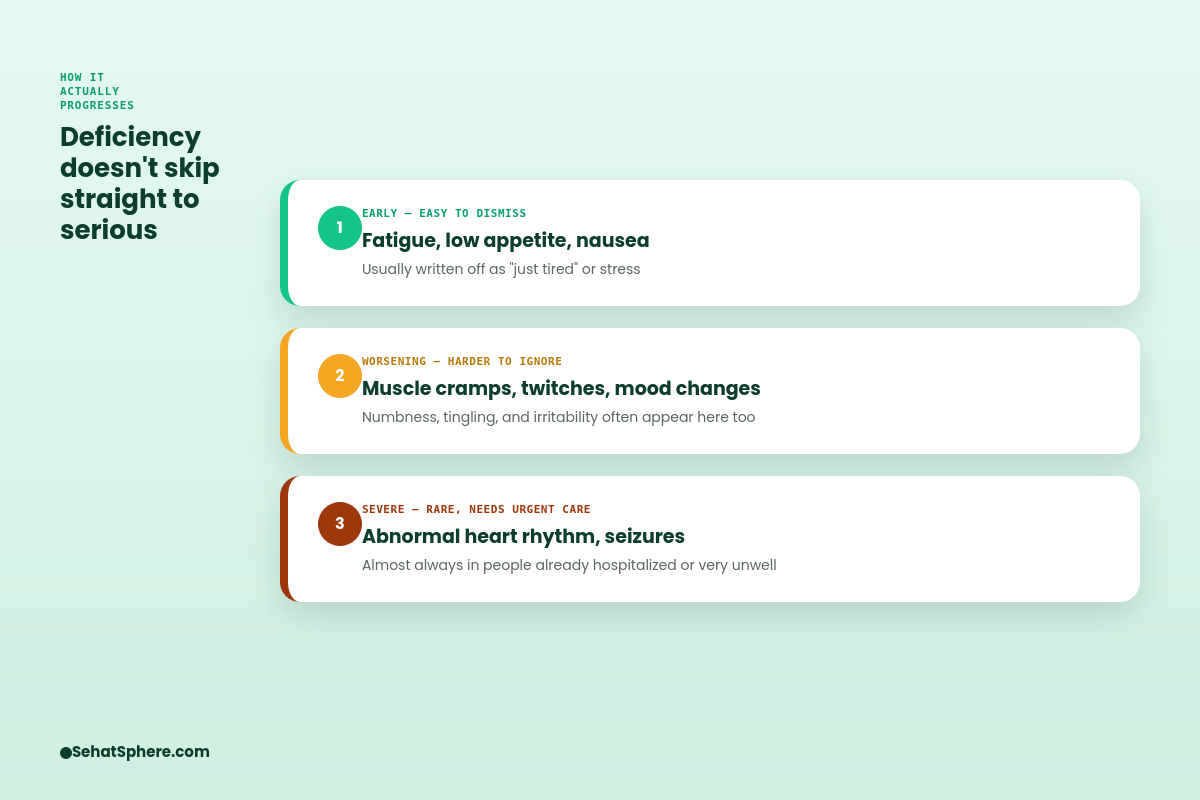
None of these are exclusive to magnesium — that’s exactly why they’re missed. What matters is the pattern: several showing up together, persisting for weeks, and not responding to more sleep or less stress.
1. Muscle cramps and twitches
Usually the first thing people notice — a calf cramp that wakes you at night, or a persistent eyelid twitch. Magnesium helps muscles relax after contracting by regulating calcium flow in cells.
2. Persistent fatigue
Because magnesium is directly involved in producing cellular energy, low levels can leave you drained in a way that doesn’t track with how much you’ve slept.
3. Anxiety and mood changes
Magnesium regulates the nervous system’s stress response; low levels are associated with heightened anxiety and irritability without an obvious trigger.
4. Poor sleep quality
Falling asleep fine but waking repeatedly, or feeling unrested despite a full night in bed — magnesium supports the nervous-system pathways involved in winding down.
5. Irregular heartbeat or palpitations
Magnesium works alongside potassium and calcium to keep your heart’s electrical rhythm steady. This symptom deserves prompt medical attention, not a wait-and-see approach.
6. Frequent headaches
Magnesium regulates blood vessel tone and nerve signaling; several studies link low status to more frequent tension headaches and migraines. If your headaches have crept up in frequency, it’s also worth ruling out medication-overuse headache — a common, often-missed cause in its own right.
7. Numbness or tingling
Most often in hands and feet. On its own this overlaps with several other causes, so it’s more useful as part of a larger pattern than a standalone signal.
8. Weakness or loss of appetite
Tends to appear later, after other symptoms have already been present a while — a reasonable point to stop attributing everything to stress and get levels checked.
Check Your Own Pattern
Tick anything that’s applied consistently over the past month, not just today. This isn’t a diagnosis — it’s a way to see whether your pattern is worth a conversation with your doctor.
This reflects symptom overlap only, not your actual magnesium level. A blood test, not a checklist, confirms it.
Who’s Actually at Higher Risk
People with digestive conditions (celiac, Crohn’s, or intestinal surgery) often absorb less magnesium regardless of intake. Long-term PPI use is specifically linked to low magnesium — serious enough that regulators have issued formal warnings, and a leading cause covered in Cleveland Clinic’s own magnesium-deficiency guidance. The same applies to certain diuretics, and to metformin for managing diabetes.
Heavy alcohol use, high caffeine intake, chronic stress, and intense exercise all increase magnesium losses through urine and sweat. Older adults are at higher risk too, since absorption becomes less efficient with age. Pregnant and breastfeeding women have meaningfully higher requirements, since the growing baby draws on the mother’s reserves.
Why Testing Is Trickier Than It Sounds
Less than 1% of your body’s total magnesium is actually in your blood. The rest is stored inside cells and bone, which your body pulls from to keep blood levels looking normal even when overall stores are genuinely low.
This means a standard serum magnesium test can come back “normal” even in someone with real, symptomatic deficiency — a testing pitfall Houston Methodist’s own testing guide walks through in more detail. If your test comes back normal but several symptoms persist, that’s worth raising with your doctor rather than assuming the test has ruled it out.
Long-term PPI use, poorly controlled diabetes, heavy alcohol use, or pregnancy? It’s reasonable to ask for a magnesium check at your next routine blood work even without obvious symptoms.
Food Sources That Actually Move the Number
Green leafy vegetables, pumpkin seeds, almonds, cashews, and legumes are reliably good sources. Whole grains — particularly ragi and other millets — contain meaningfully more magnesium than the refined wheat and rice that have replaced them. Dark chocolate, bananas, and avocado are smaller but genuinely useful contributors.
Absorption matters as much as intake — only around 30–40% of dietary magnesium is typically absorbed, and this drops further with high calcium supplement intake or alcohol. Boiling vegetables leaches magnesium into water that usually gets discarded; steaming, or using that water in a dal, preserves more of it.
Choosing the Right Supplement Form
| Form | Absorption | Best For |
|---|---|---|
| Glycinate | Good, gentle on digestion | Sleep, anxiety-related symptoms |
| Citrate | Good, mild laxative effect | If constipation is also an issue |
| Oxide | Poor (~4%) | Cheap, mostly a laxative — not ideal for correcting deficiency |
More isn’t automatically better. Supplemental doses above recommended upper limits can cause diarrhea and cramping, and very high intakes can affect heart rhythm — the exact symptom this guide started with.
Medicines That Quietly Deplete Magnesium
Proton pump inhibitors, used long-term for acid reflux, are specifically associated with low magnesium. Diuretics prescribed for blood pressure increase magnesium loss through urine, and metformin has a similar, less dramatic effect over long-term use. None of this means these medicines should be stopped — it’s simply a reason to mention magnesium at your next follow-up.
If you’re already taking a magnesium supplement alongside any prescription, timing matters too — our full interaction guide covers exactly which medications need spacing and by how many hours.
When to See a Doctor Without Waiting
An irregular, skipped, or racing heartbeat — severe muscle cramps that don’t ease with rest — numbness or weakness that’s new or spreading — seizures, or a family history of them — persistent symptoms despite consistent dietary changes over months.
What To Read Next
- Magnesium and Your Medications: The full interaction breakdown, drug by drug.
- Vitamin B12 Deficiency in Vegetarians: Another quietly common nutrient gap worth checking.
- Still Tired After 8 Hours of Sleep? Other medicine-related causes worth ruling out.
- How to Reverse Insulin Resistance: Relevant if metformin is part of why your magnesium is low.
- Why Does Heart Rate Fluctuate? Palpitations aren’t always a magnesium story — here’s the fuller picture.
Frequently Asked Questions
What are the earliest magnesium deficiency symptoms?
Muscle twitches or cramps, mild fatigue, and slightly disrupted sleep — subtle enough that most people attribute them to stress rather than a nutrient gap.
Can a normal blood test rule out magnesium deficiency?
Not entirely. Less than 1% of your body’s magnesium is in your blood, so a normal serum result doesn’t always reflect your actual stores.
Are 50–70% of people really magnesium deficient?
That statistic refers to dietary intake falling short of the RDA, not diagnosed clinical deficiency — which stays uncommon in otherwise healthy people since kidneys regulate excretion carefully.
Is magnesium glycinate better than magnesium citrate?
Neither is universally better — glycinate is gentler on digestion, citrate has a mild laxative effect that can help if constipation is also present.
Can too much magnesium be harmful?
Magnesium from food isn’t a concern, but supplemental doses above recommended limits can cause diarrhea, cramping, and at very high intakes, affect heart rhythm.
Does stress actually deplete magnesium?
Yes. Chronic stress increases how much magnesium your body uses and loses through urine, creating a cycle where stress worsens deficiency and deficiency makes stress harder to manage.
How long does it take to correct a magnesium deficiency?
Mild cases often improve within a few weeks of consistent dietary changes or supplementation. More significant deficiencies can take longer.
Are symptoms different in men and women?
Core symptoms are largely the same, but women have additional risk periods — pregnancy, breastfeeding, and heavy menstrual cycles all increase magnesium needs or losses.
The Bottom Line
Magnesium deficiency symptoms are common precisely because they’re so ordinary and easy to explain away individually. The “everyone’s deficient” statistics circulating online are real but refer to diet falling short of the RDA — not the same as a diagnosed clinical deficiency. What matters isn’t panicking over a headline stat; it’s noticing when several of these symptoms show up together, persist for weeks, and don’t respond to the usual fixes.
- National Institutes of Health, Office of Dietary Supplements. Magnesium Fact Sheet. ods.od.nih.gov
- Cleveland Clinic. Feeling Fatigued? Could It Be Magnesium Deficiency? clevelandclinic.org
- Houston Methodist. Magnesium Deficiency: Symptoms, Causes & How to Test. houstonmethodist.org