 SehatSphere.com
The 2026 Monsoon Fever Surge: Why Hospitals Are Flooding, Dengue vs. Viral Symptoms, and a Complete Recovery Guide
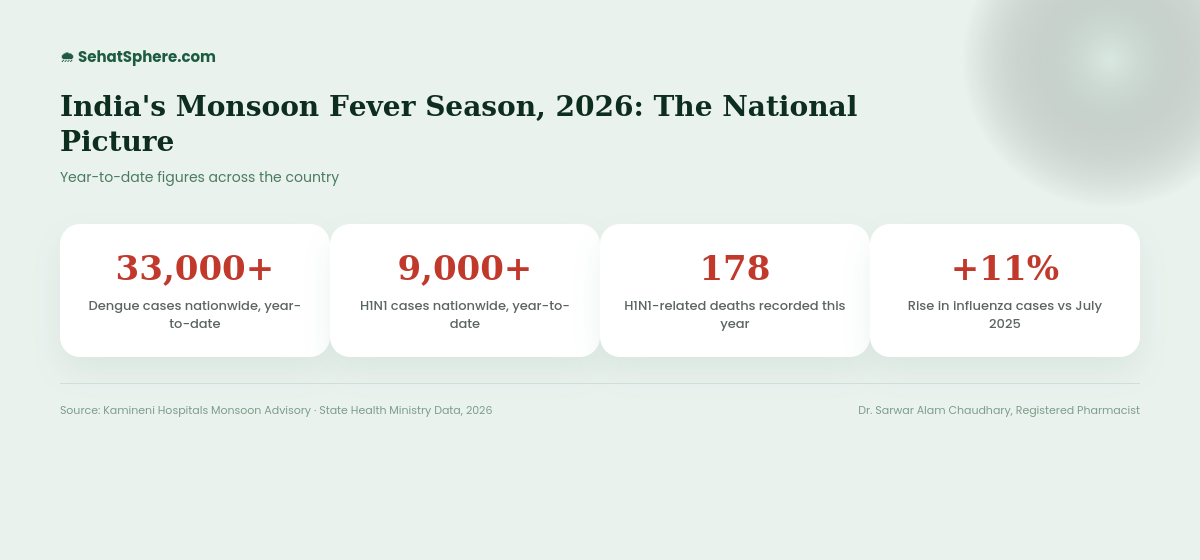
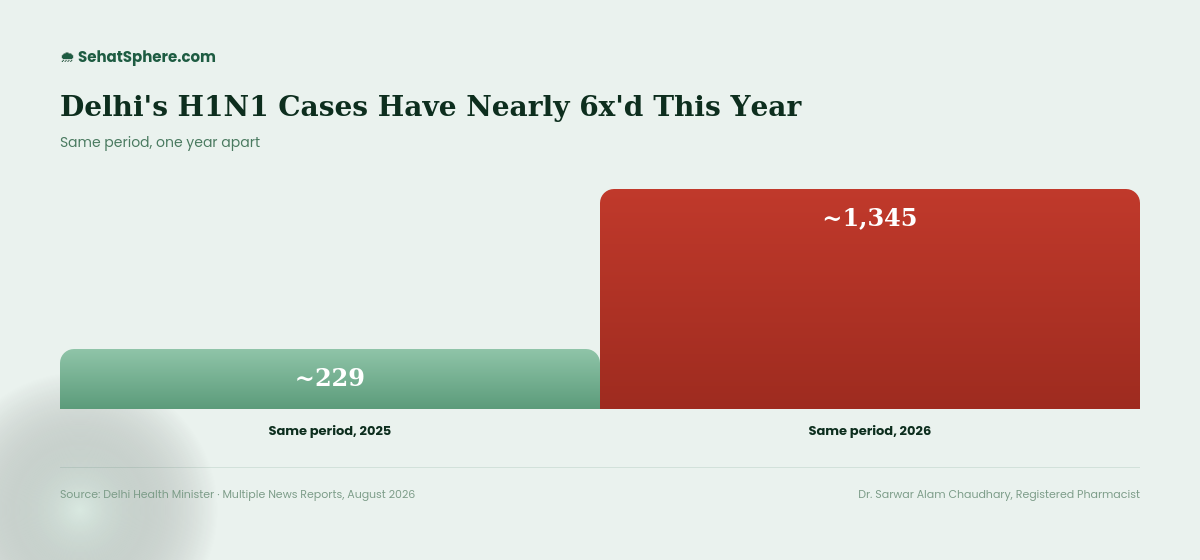
The monsoon fever surge 2026 is a genuine, well-documented reality this year — over 33,000 dengue cases and 9,000 H1N1 cases nationwide, with Delhi’s H1N1 numbers alone climbing nearly sixfold compared to the same period last year. The confusing part, the part that sends families to the wrong pharmacy shelf or the wrong hospital queue, is that dengue, viral fever, H1N1, typhoid, and leptospirosis all start with the same three things: fever, body ache, fatigue. This guide untangles what’s actually circulating this season, how to tell them apart at home, and what a genuine recovery plan looks like.
Key takeaways:
- India recorded over 33,000 dengue cases and 9,000+ H1N1 cases nationwide this year, with 178 H1N1-related deaths — alongside a genuinely puzzling rise in fevers that test negative for every known pathogen.
- Dengue fever is typically sudden and continuous (102–104°F), not the on-and-off pattern of an ordinary viral fever — a distinction worth knowing before day three.
- Certain common painkillers can genuinely raise bleeding risk in dengue specifically, making “just take a painkiller” advice actively dangerous without knowing which fever you’re dealing with.
- Papaya leaf extract for dengue-related low platelets isn’t pure folklore — a pilot study and multiple case reports show a real effect, though doctors are clear it supplements, never replaces, medical care.
- The 2026 numbers, city by city
- Why every monsoon illness feels the same
- Dengue: the specific signs to watch
- H1N1: this year’s quiet surge
- The fevers that test negative for everything
- The painkiller mistake that raises bleeding risk
- Papaya leaf juice: myth or genuine evidence
- Red-flag symptoms needing urgent care
- Watching for this in children specifically
- Practical prevention at home
- A realistic recovery timeline
- What supportive care actually looks like
- Quick self-check
- FAQs
The Monsoon Fever Surge 2026: Numbers, City by City
National figures behind the monsoon fever surge 2026 tell only part of the story; the on-ground picture varies sharply by city, and that variation itself is worth understanding.
| City | 2026 Situation |
|---|---|
| Delhi | 360 dengue, 46 malaria, 21 chikungunya, 210 leptospirosis cases (till June) |
| Hyderabad | 266 dengue cases (down from 570 in 2025, 821 in 2024) — a genuinely positive local trend |
| Delhi (H1N1 specifically) | ~1,345 cases vs ~229 same period last year |
| Bengaluru | Clusters of unexplained viral syndrome with organ involvement, testing negative for known pathogens |
Notice the contradiction worth sitting with: Delhi’s dengue numbers have actually fallen for three straight years (687 in 2023, 555 in 2024, 411 in 2025), even as national dengue and H1N1 figures climb. Municipal larval-control drives genuinely seem to be working in some cities while the broader national trend worsens — both things are true at once, and neither cancels the other out. If you’re already managing a chronic condition, this season is worth extra caution — our diabetes medicine safety guide and normal blood pressure by age guide both cover how fever and illness can affect existing medication routines.
Why Every Monsoon Illness Feels the Same
Physicians across multiple cities report the identical frustration this season: dengue, H1N1, and ordinary viral fever present with almost identical symptoms in the first 48 hours. A large share of patients arriving with what looks exactly like dengue actually test negative for it and every other vector-borne pathogen, yet are genuinely, severely sick. This overlap is precisely why “wait and see” is bad advice this season, and why a same-day blood test past day three has become the standard clinical recommendation, not an overcautious one.
What To Read Next
- Common Antibiotic Mistakes: Why antibiotics do nothing against any fever covered in this guide.
- Is “Boosting” Immunity Even the Right Goal? What genuinely helps your body fight off this season’s fevers.
- Zinc Deficiency Symptoms: A real, documented immune-relevant nutrient gap.
Dengue: The Specific Signs to Watch
Dengue has a genuinely distinguishing pattern worth learning, since catching it early changes outcomes. Someone can feel completely fine one day and wake up the next with a sudden, high, continuous fever — typically 102–104°F, and specifically not the rise-and-fall cyclical pattern of an ordinary viral fever. Severe pain behind the eyes, intense joint and muscle pain (historically nicknamed “breakbone fever” for a reason), and a rash appearing a few days in are the classic additional markers — though by the time the rash shows up or platelets visibly drop, the illness has usually already progressed past its earliest, most treatable window.
Dengue spreads through Aedes mosquitoes that breed specifically in clean, stagnant water — not dirty puddles, which is a genuinely common misconception. These mosquitoes bite mainly during daylight hours, meaning a bed net at night alone offers essentially no protection against this particular threat.
A genuinely interesting historical detail: dengue earned its old nickname “breakbone fever” in the 1780s, from the intensity of the joint and muscle pain it causes — a description that’s held up remarkably well for over two centuries. There are four distinct dengue virus serotypes (DEN1 through DEN4), and infection with one confers lifelong immunity to that specific serotype but only temporary protection against the others — which is exactly why a second dengue infection, with a different serotype, can genuinely be more severe than the first. Our high creatinine levels guide is worth reading too, since kidney function is one of the values doctors monitor closely during a significant dengue illness.
H1N1: This Year’s Quiet Surge
H1N1 (swine flu) has climbed sharply enough this monsoon to deserve its own section, not a footnote under “viral fever.” Delhi alone has recorded roughly 1,344–1,349 cases so far this year, against approximately 229 in the same period last year — nearly a sixfold jump.
H1N1 symptoms overlap heavily with ordinary flu: fever, cough, sore throat, body aches, headache, chills, fatigue — though notably, fever isn’t guaranteed to be present in every case, which itself trips up early recognition. Since H1N1 is viral, antibiotics do nothing against it; antiviral medication and supportive care, guided by an actual doctor, remain the standard approach. Our common antibiotic mistakes guide covers exactly this misunderstanding in more depth, since reaching for antibiotics against a viral illness accomplishes nothing beyond fueling resistance.
The Fevers That Test Negative for Everything
This is a genuinely under-discussed, concerning pattern this season worth knowing about honestly. Multiple hospitals report clusters of patients arriving in serious condition — sometimes with measurable liver and kidney dysfunction, fluid collecting in the abdomen or lungs — who test negative for dengue, malaria, chikungunya, and every other routinely-screened pathogen. Most recover within five to seven days of hospitalization with supportive care, but the pattern itself illustrates something important: a negative test for the “usual suspects” doesn’t mean a fever is trivial or safe to ignore. It means the specific cause hasn’t been identified yet, which is a different thing entirely.
The Painkiller Mistake That Raises Bleeding Risk
Certain common painkillers — specifically NSAIDs like ibuprofen and aspirin — can raise bleeding risk in dengue specifically, since dengue already drives platelet counts down. Reaching for whatever painkiller is in the medicine cabinet without knowing which fever you’re actually managing is a genuine, documented risk this season, not an overcautious footnote. Paracetamol remains the generally preferred option for fever and pain during suspected dengue, though this is exactly the kind of decision worth confirming with a doctor rather than guessing.
Papaya Leaf Juice: Myth or Genuine Evidence?
This deserves an honest answer, because it’s neither pure superstition nor a proven cure, and treating it as either misleads people. A pilot clinical study specifically testing Carica papaya leaf extract in adults with severe dengue-related thrombocytopenia (platelets at or below 30,000) found a genuine, measurable increase in platelet counts. Multiple individual case reports describe similar patterns — one documented a rise from a critically low 12,100 to over 122,000 within two days of starting diluted papaya leaf extract alongside standard supportive care. Laboratory research suggests a plausible mechanism too: compounds in the leaves appear to stabilize red blood cells and reduce platelet clumping.
What this evidence does not support is using papaya leaf juice as a substitute for medical care, or assuming it works identically for everyone. Every documented case involved papaya extract used alongside IV fluids, monitoring, and standard treatment — not instead of it. If you’re managing dengue, this is worth asking your doctor about directly, rather than either dismissing it outright or relying on it alone.
Red-Flag Symptoms Needing Urgent Care
Fever persisting beyond three days without improvement. Severe abdominal pain or persistent vomiting. Bleeding from the gums or nose. Difficulty breathing, chest pain, or bluish lips. Confusion, extreme weakness, or reduced urine output. Symptoms that improve, then suddenly worsen — a pattern specifically associated with dengue’s more dangerous phase.
Families most at risk this season include children under ten, elderly members, pregnant women, people managing diabetes, and anyone with reduced immunity — our immunity balance guide is worth reading for a genuinely evidence-based view of what actually supports your body through a season like this, rather than what’s simply marketed to.
Watching for This in Children Specifically
Children present a genuine, extra layer of difficulty this season, since younger kids often can’t clearly describe symptoms like eye pain or the specific quality of their discomfort the way adults can. A previously active child becoming unusually quiet, refusing food and fluids, or developing a rash alongside fever deserves the same urgency as the adult warning signs covered above — arguably more, since dehydration progresses faster in smaller bodies. Our heart attack in young adults guide and PCOS symptoms guide both touch on the broader principle that “young and otherwise healthy” doesn’t mean risk-free, a pattern worth remembering this season too.
Practical Prevention at Home
- Empty stagnant water weekly — coolers, flowerpot trays, buckets; Aedes mosquitoes need only small amounts of clean, still water to breed.
- Daytime protection matters as much as nighttime — dengue-carrying mosquitoes bite primarily during daylight hours.
- Don’t leave cut fruit out for hours — it turns unsafe faster than most people realize in monsoon humidity.
- Refrigerate cooked food promptly — spoilage happens noticeably faster in warm, humid kitchens this season.
- Boil or filter drinking water during heavy rainfall periods, when contamination risk from flooding genuinely rises.
A Realistic Recovery Timeline
| Days | What’s Typically Happening |
|---|---|
| 1–3 | Fever, body ache, fatigue — hardest to distinguish between illnesses at this stage |
| 4–7 | Either resolving (ordinary viral fever) or entering a more critical phase (dengue’s danger window) |
| 7–14 | Platelet recovery in dengue cases, gradual return of energy and appetite |
| 2–3 weeks | Lingering fatigue is genuinely common and expected, not a sign something is still wrong |
If fatigue or weakness lingers well past this window, our protein deficiency guide and vitamin D deficiency guide are both worth reading, since genuine nutrient gaps can meaningfully slow post-viral recovery, and are easy to overlook once the fever itself has resolved.
What Supportive Care Actually Looks Like
Beyond the specific dengue and H1N1 details above, the fundamentals of managing any monsoon fever at home are genuinely worth getting right, since they apply regardless of the exact diagnosis. Hydration matters more than most people realize — not just water, but electrolyte balance, since vomiting and reduced appetite both deplete this quickly. Rest is a real intervention, not an afterthought; pushing through a fever to keep working genuinely delays recovery and raises complication risk. Our hair fall and vitamin deficiency guide and zinc deficiency guide are both worth reading if you notice hair thinning or slow healing in the weeks after a significant fever, since this is a genuinely common, under-discussed after-effect. If you’re on any regular medication, the free Integrative Interaction Checker is worth using before adding any fever-reducing medication or supplement to your existing routine.
Quick Self-Check
Tick anything that applies to you or a family member right now, and see what it suggests.
Frequently Asked Questions
How do I tell dengue apart from an ordinary viral fever?
During the monsoon fever surge 2026, dengue typically causes a sudden, continuous high fever (102-104°F), unlike the on-and-off pattern of ordinary viral fever, along with severe pain behind the eyes and intense joint/muscle pain.
Is it safe to take ibuprofen for a monsoon fever?
Not without confirming the diagnosis first. NSAIDs like ibuprofen and aspirin can raise bleeding risk specifically in dengue. Paracetamol is generally preferred until dengue is ruled out.
Does papaya leaf juice actually help with dengue?
There’s genuine evidence, including a pilot clinical study and case reports, showing it can help raise platelet counts when used alongside standard medical care – not as a replacement for it.
How many dengue and H1N1 cases has India recorded in 2026?
Over 33,000 dengue cases and 9,000+ H1N1 cases nationwide year-to-date, with 178 H1N1-related deaths recorded.
Why has Delhi’s H1N1 surged so much this year?
Delhi recorded roughly 1,345 H1N1 cases compared to about 229 in the same period last year, nearly a sixfold increase, though no single cause has been officially confirmed.
What are the warning signs that a fever needs urgent medical attention?
Fever beyond 3 days, severe abdominal pain, persistent vomiting, bleeding from gums or nose, breathing difficulty, confusion, or symptoms that improve then suddenly worsen.
Can a fever test negative for dengue, malaria, and chikungunya but still be serious?
Yes. Some hospitals are seeing patients with serious illness, including organ dysfunction, who test negative for all commonly screened pathogens – a negative test doesn’t mean the illness is trivial.
What foods should be avoided during monsoon to prevent illness?
Cut fruit left out for hours, and food not refrigerated promptly, since both spoil faster and become unsafe more quickly in monsoon humidity.
The Bottom Line
The monsoon fever surge 2026 is real, documented, and genuinely worth taking seriously — not through panic, but through the specific, practical steps covered here: knowing dengue’s distinguishing pattern, avoiding the wrong painkiller, getting tested past day three rather than waiting it out, and recognizing that even a fever that tests negative for everything familiar can still need real medical attention. The families managing this season best aren’t the ones who avoid every mosquito bite — they’re the ones who know exactly when “probably just a viral fever” needs to become “let’s get this checked.” If cost is ever a barrier to getting tested promptly, our generic medicine pricing guide is worth reading, since affordable treatment shouldn’t be the reason a genuine warning sign gets ignored.
- Deccan Chronicle. Kamineni Hospitals Issues Monsoon Health Advisory.
- The Patriot. Delhi Reports 360 Dengue Cases as Monsoon Illnesses Rise.
- Nova Hospital. H1N1 Cases in Delhi Surge: Symptoms, Warning Signs, Prevention.