 SehatSphere.com
10 Thyroid Medicine Mistakes Quietly Undoing Your Treatment
Nearly one in three hypothyroid patients in India remains undiagnosed or under-treated, and among those who ARE on levothyroxine, a US study found up to 40% still had abnormal thyroid levels despite taking their medicine daily. The pill usually isn’t the problem. How it’s taken almost always is. This guide covers the ten mistakes that quietly interfere with an otherwise simple, effective treatment — plus a real scientific debate on brand-switching that most articles get wrong in one direction or the other.
Key takeaways:
- Coffee, calcium, and iron aren’t small details — they can cut levothyroxine absorption by 25–36% if taken too close together.
- Brand-switching advice is genuinely contested: older data showed a 63% vs 24% gap in abnormal TSH between switchers and non-switchers, but a 2022 study of nearly 16,000 patients found almost no difference.
- India’s hypothyroidism prevalence runs around 11%, higher in women and after age 35 — and a currently-trending “healthy salt” swap can genuinely make it worse.
- Retesting TSH too early after any change gives you a meaningless number — the medicine needs 6–8 weeks to reach a new steady state.
- The 10 mistakes
- The brand-switching debate, honestly
- The “healthy salt” trend making it worse
- When it’s not a mistake at all
- The supplement that fakes lab results
- Signs your dose itself is wrong
- Storage mistakes worth knowing
- How common is this in India
- Thyroid symptoms vs stress
- Quick self-check
- FAQs
The 10 Mistakes
1. Taking it too close to coffee, calcium, or iron
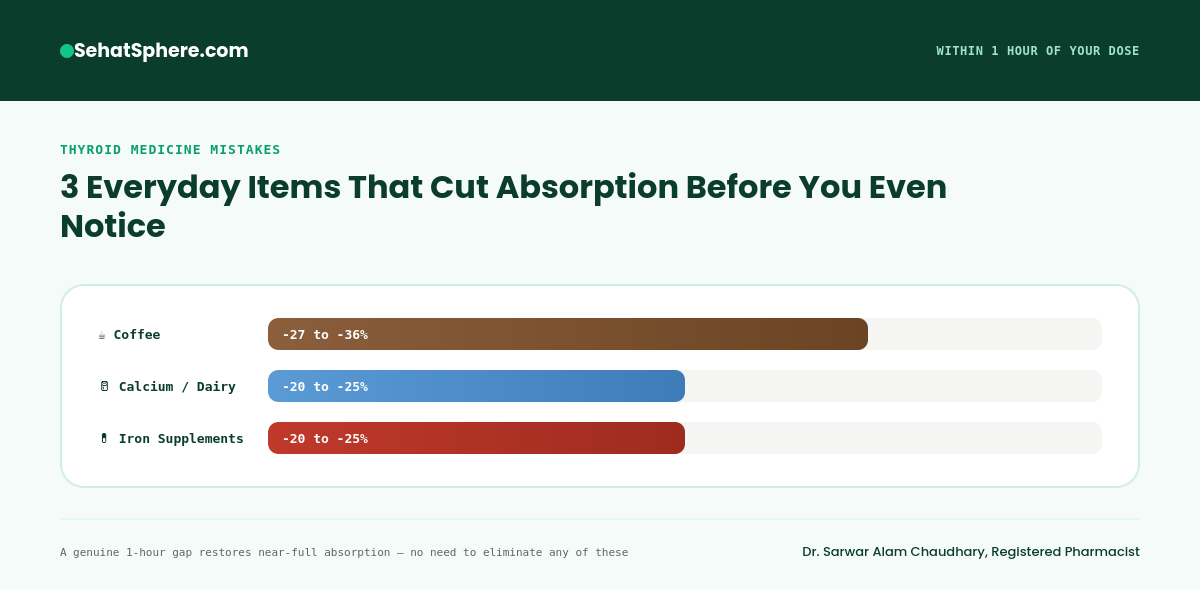
Coffee within an hour cuts absorption by 27–36%. Calcium and dairy cut it by 20–25%. Iron supplements interfere similarly. Levothyroxine needs an empty stomach and roughly an hour of genuine separation to absorb as intended.
2. Inconsistent daily timing
Taking it at 7am one day and 11am the next creates fluctuating blood levels even if the total weekly dose is identical. Consistency matters more than which specific hour you pick.
3. Stopping abruptly once you “feel fine”
Feeling better means the medicine is working, not that the underlying condition resolved. Hypothyroidism is almost always a lifelong management situation, not a course that ends.
4. Ignoring symptoms because labs look “normal”
The reference range is wide, and some people feel genuinely unwell at a TSH that’s technically inside it. Persistent fatigue or weight changes despite a “normal” result are worth a real conversation with your doctor, not automatic dismissal — and worth ruling out against other overlapping causes, since our B12 deficiency guide and magnesium deficiency guide describe near-identical fatigue patterns. The free Nutrient Deficiency Symptom Finder is a reasonable starting point if you’re not sure which one applies to you.
5. Adjusting your own dose
Splitting, skipping, or doubling doses based on how you feel that week undoes the careful titration your doctor did using your actual TSH trend.
6. Not increasing the dose during pregnancy
Thyroid hormone needs typically rise by 25–50% during pregnancy. Failing to adjust risks the mother’s health and the baby’s neurological development — this is one mistake that genuinely cannot wait for a routine follow-up.
7. Skipping follow-up TSH tests
Levothyroxine’s long half-life (~7 days) means dose adequacy can only be judged properly 6–8 weeks after starting or changing it — skipping this test means flying blind on your own dose. Many people feel a subjective improvement well before this window, which paradoxically makes the test feel unnecessary right when it matters most.
8. Adding kelp, iodine, or “thyroid support” supplements without checking
Excess iodine can worsen autoimmune thyroid conditions specifically, which is the opposite of what most people buying these supplements intend. Many over-the-counter “thyroid support” blends don’t disclose their exact iodine content, making it genuinely difficult to know how much you’re actually adding to your diet.
9. Assuming all thyroid medicines are interchangeable
Levothyroxine (T4), liothyronine (T3), and desiccated thyroid extract work differently in the body and aren’t simply swappable at the same dose without medical guidance.
10. Retesting TSH too soon after any change
Testing at 2 weeks instead of 6–8 gives a number that doesn’t reflect your true new baseline, often triggering an unnecessary dose change based on incomplete information.
What To Read Next
- Common Antibiotic Mistakes: Another medication class people quietly misuse.
- Blood Report Decoder: Free tool to understand any lab value, including TSH.
- Complete Guide to Medicine Safety: The broader framework this guide sits inside.
The Brand-Switching Debate, Honestly
Mistake #9 above is straightforward. Brand-switching is genuinely more complicated, and most articles oversimplify it in one direction or the other.
| Study | Finding |
|---|---|
| Older Dutch cohort (higher doses, >100mcg) | 63% abnormal TSH after switching vs. 24% in non-switchers |
| JAMA Internal Medicine, 2022 (Johns Hopkins, ~15,800 patients) | Almost no difference: 2.5% abnormal (switchers) vs. 3.1% (non-switchers) |
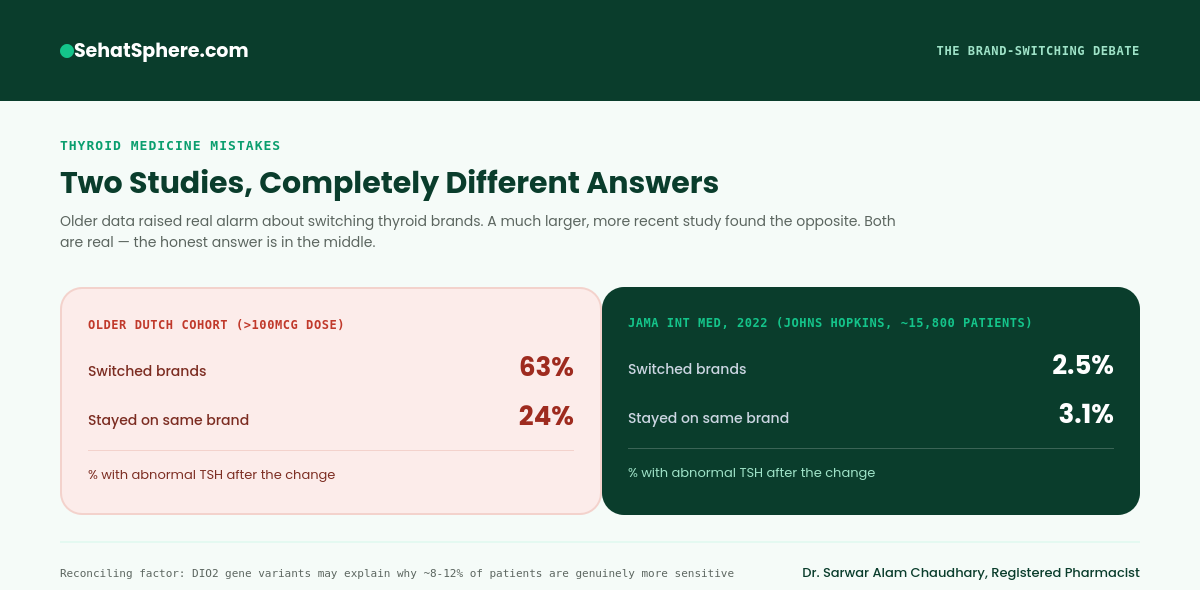
The reconciling detail: emerging genetic research on DIO2 gene variants suggests a specific subgroup — estimated at 8–12% of patients — may genuinely be more sensitive to product-sourcing changes, while the rest see no meaningful difference. Until testing for this becomes routine, the reasonable middle ground: don’t panic over a pharmacy substitution, but if you notice new symptoms after a switch, mention it rather than assuming it’s unrelated.
Regardless of which study you find more convincing, a few groups are consistently advised to prioritize staying on the same product: pregnant women (even small hormone variations can affect fetal neurological development), thyroid cancer survivors requiring precise TSH suppression, and anyone who has personally experienced a clear symptom change after a past switch. For everyone else, the evidence genuinely doesn’t support the level of anxiety this topic tends to generate.
The “Healthy Salt” Trend Making It Worse
Pink Himalayan salt has become a popular “healthier” swap for ordinary table salt. There’s a genuine problem specific to thyroid health: ordinary iodized salt is a primary source of dietary iodine, and exclusively switching to pink salt — which contains low and inconsistent iodine — can reduce your iodine intake without you realizing it, potentially worsening hypothyroidism over time.
This isn’t a reason to fear pink salt occasionally. It’s a reason to make sure iodized salt remains part of your routine if hypothyroidism is already part of your history, rather than switching entirely on a wellness trend.
When It’s Not a Mistake At All
Occasionally, a patient does everything right and still shows a persistently abnormal TSH. Two real, documented explanations exist beyond “you’re doing something wrong”:
- Pseudomalabsorption: A well-documented pattern where inconsistent adherence gets mistaken for true malabsorption. A real hospital case involved a patient prescribed up to 3,000 mcg daily — roughly 20 times a typical dose — before a supervised absorption test revealed the actual issue was compliance, not the gut.
- Gastroparesis: Delayed stomach emptying (common in long-standing diabetes) can genuinely impair tablet absorption. One documented case resolved simply by switching to a gelatin capsule formulation instead of a standard tablet.
If you’re confident you’re taking it correctly and your numbers still won’t budge, a supervised absorption test — not a higher default dose — is the right next step with your doctor. This is also where the free Blood Report Decoder can help you understand exactly what each value on a repeat panel actually reflects, and the Biological Longevity Audit is worth trying if you want a broader sense of how your daily habits, not just this one medication, are adding up.
The Supplement That Fakes a Lab Result Entirely
This one is genuinely different from everything above — it’s not an absorption problem at all, it’s a laboratory interference problem. High-dose biotin supplements, popular for hair, skin, and nail health, can interfere directly with the immunoassay technology many labs use to measure thyroid hormones, producing results that look like your thyroid levels changed when they genuinely haven’t.
Depending on the specific assay, biotin can cause your TSH to look falsely low while your free T4 looks falsely high — a pattern that can mimic hyperthyroidism on paper, even though your actual thyroid is unchanged. The FDA has specifically flagged this interaction, and most labs now recommend stopping biotin supplements for 48–72 hours before a thyroid panel to avoid it. If you’ve had a confusing thyroid result and you also take a biotin-containing multivitamin or hair supplement, this is worth mentioning to whoever ordered your test before anyone adjusts your dose based on a number that may not be real.
Recognizing When Your Dose Itself Is Wrong
Separate from mistakes in how the medicine is taken, it helps to recognize the physical signs that your actual dose may need adjusting, rather than waiting entirely for a scheduled blood test.
| Dose Too Low (Undertreated) | Dose Too High (Overtreated) |
|---|---|
| Persistent fatigue, cold intolerance | Racing heart, anxiety, tremor |
| Weight gain, constipation | Unintended weight loss, diarrhea |
| Dry skin, hair thinning | Heat intolerance, excessive sweating |
| Depression, brain fog | Insomnia, irritability |
Neither column is a reason to adjust your own dose — both are a reason to request an earlier TSH check rather than waiting out the rest of a routine follow-up interval, especially if the symptoms are new and clearly different from your baseline.
Storage and Handling Mistakes Worth Knowing
Levothyroxine tablets are genuinely sensitive to heat, humidity, and light — all things a bathroom cabinet provides in abundance. Storing tablets in a bathroom, a car glovebox, or anywhere near a kitchen stove can gradually degrade potency well before the printed expiry date, which is a quietly overlooked cause of “my dose stopped working” that has nothing to do with timing or interactions at all. A cool, dry drawer away from direct sunlight is a small change that genuinely protects the medication’s actual potency.
How Common Is This in India?
Hypothyroidism prevalence in India runs around 10.95%, with women affected at roughly 10–12% and prevalence rising notably after age 35. The more concerning figure: a review of published Indian data suggests nearly one-third of hypothyroid patients across age groups remain undiagnosed and untreated. Among those who are diagnosed and treated, a separate observational study found meaningful rates of patients with abnormal thyroid function despite being prescribed levothyroxine for at least two months — underscoring that treatment and correctly-managed treatment aren’t automatically the same thing.
If you’re also managing other conditions alongside your thyroid, our pantoprazole guide is worth reading — PPIs raise stomach pH, which can itself reduce levothyroxine absorption, layering one more variable onto an already timing-sensitive medication. Digestive conditions more broadly are worth ruling out too — our GERD and silent reflux guide covers the overlap. Blood pressure medication timing follows a surprisingly similar logic to thyroid dosing — our BP medicine timing guide covers a parallel myth in a different drug class, and if cholesterol medication is also part of your routine, our statins guide is worth a look. The free Integrative Interaction Checker is a quick way to check your full medication list against each other.
Thyroid Symptoms and Stress Genuinely Overlap
Fatigue, irritability, and poor concentration show up in both hypothyroidism and chronic stress, which is exactly why the two get confused for each other in daily life. Our mental stress guide and anger and blood pressure guide cover the cortisol side of this overlap, and if blood pressure itself has been part of the picture, our BP fluctuation guide and normal blood pressure by age guide round out the bigger picture. If creatine or supplements are part of your routine and a lab value has looked unexpectedly off, our creatine and blood test guide and high creatinine levels guide cover a similar “context before panic” principle. And if cost has ever made you inconsistent with any prescription, our generic medicine pricing guide is worth reading.
Quick Self-Check
Tick anything that applies to you, and see what it suggests.
Frequently Asked Questions
What is the most common thyroid medicine mistake?
Taking it too close to coffee, calcium, or iron supplements, which can cut absorption by 20-36% and is easy to do without realizing the connection to symptoms.
Does switching thyroid medicine brands really matter?
The evidence is genuinely mixed. Older data showed a large difference in abnormal TSH between switchers and non-switchers at higher doses, but a large 2022 US study found almost no difference overall. A small subset of patients may be more sensitive due to genetic factors.
Can I stop thyroid medicine once I feel better?
No. Feeling better means the medicine is working, not that the condition has resolved. Hypothyroidism is almost always a long-term management situation.
How long after changing my dose should I get retested?
6 to 8 weeks, because levothyroxine’s approximately 7-day half-life means it takes that long to reach a new stable level in your blood. Testing earlier gives a misleading number.
Does pink Himalayan salt affect thyroid health?
Exclusively switching from iodized salt to pink salt can reduce iodine intake, since pink salt contains low and inconsistent iodine, potentially worsening hypothyroidism over time.
Why is my TSH still abnormal even though I take my medicine every day?
This can happen from timing interference with food or supplements, inconsistent daily timing, or in rare cases, true malabsorption from conditions like gastroparesis. A supervised absorption test can distinguish these possibilities.
Does pregnancy change thyroid medicine needs?
Yes, significantly. Thyroid hormone needs typically rise by 25-50% during pregnancy, and this adjustment matters for both maternal health and fetal neurological development.
How common is hypothyroidism in India?
Prevalence is estimated around 10.95%, higher in women and after age 35. Notably, nearly one-third of hypothyroid patients in India are believed to remain undiagnosed or untreated.
Can biotin supplements affect thyroid test results?
Yes, high-dose biotin can interfere with the lab technology used to measure thyroid hormones, making TSH look falsely low and free T4 look falsely high, even when actual thyroid function hasn’t changed. Most labs recommend stopping biotin 48-72 hours before testing.
What are the signs my thyroid medicine dose needs adjusting?
Undertreatment often shows as fatigue, weight gain, and cold intolerance. Overtreatment often shows as a racing heart, anxiety, and unintended weight loss. Either pattern is worth an earlier TSH check.
The Bottom Line
Levothyroxine is a remarkably simple, effective medication when the small logistics around it are respected: consistent timing, real separation from coffee and minerals, and patience before retesting. The genuinely debated question — brand switching — deserves honesty rather than either panic or dismissal, since the real answer depends on which small subset of patients you happen to be. If your numbers won’t cooperate despite doing everything right, that’s a signal for a proper absorption conversation with your doctor, not a bigger dose by default. Most people managing this condition well aren’t doing anything dramatic differently from those who struggle with it — they’ve simply made the timing boring and automatic, which is exactly the point.
- Brito JP, et al. Levothyroxine Product Switching and Thyrotropin Levels. JAMA Internal Medicine, 2022.
- American Thyroid Association. Guidelines for Hypothyroidism Management, 2014.
- Prevalence of hypothyroidism in India: cross-sectional studies, various regional cohorts, 2022-2025.