 SehatSphere.com
Mounjaro Ozempic Diet India: Cost, What to Eat & What to Avoid
Less than a year after Eli Lilly launched Mounjaro in India (March 2025), it had generated over ₹333 crore in revenue in just seven months, outselling semaglutide products 10 to 1. Every Mounjaro Ozempic diet India conversation now includes real, current questions: what does it actually cost, what should you eat while on it, and what happens when you stop. This guide covers all three honestly.
Key takeaways:
- Mounjaro (tirzepatide) and Ozempic (semaglutide) are different drugs — tirzepatide targets two gut hormones (GIP and GLP-1), semaglutide targets one (GLP-1 only), which is part of why Mounjaro shows slightly greater average weight loss (~23% vs ~15%).
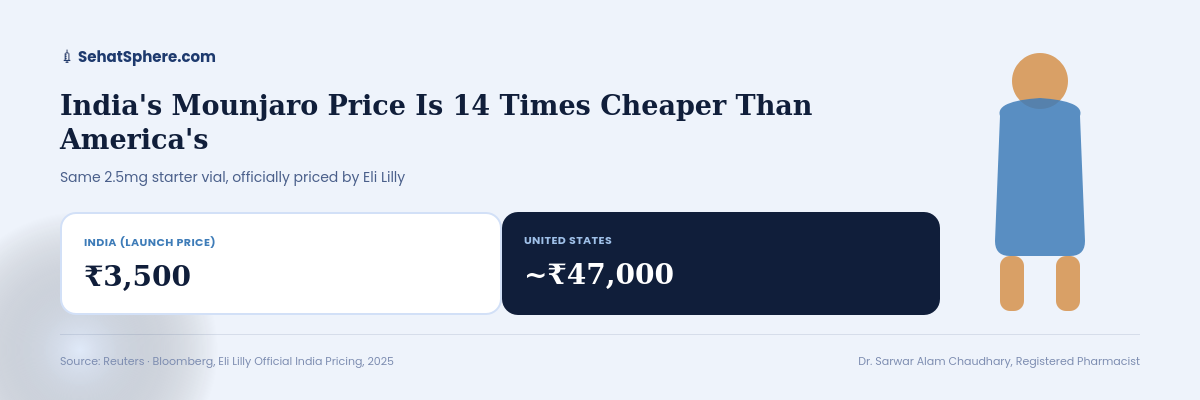
- India’s official Mounjaro launch price (2.5mg, ₹3,500) was roughly 14 times cheaper than the equivalent US price — a deliberate access-focused pricing decision.
- Generic semaglutide, available since March 2026 patent expiry, now costs as little as ₹325 per weekly injection — a fraction of branded pricing.
- No IRDAI-regulated health insurance in India currently covers GLP-1 medication for the obesity indication specifically — this is an out-of-pocket cost for essentially everyone right now.
- Mounjaro Ozempic diet India: the scale of this trend
- Mounjaro vs Ozempic: the actual difference
- Real cost in India, 2026
- What to eat on these medications
- Eat this, not that: what to avoid
- Managing side effects with food
- “Ozempic face” — the trending concern
- The “just give me Mounjaro” trend
- The nutrient gap worth watching
- Real side effects, honestly
- The dangerous mistake: self-dosing
- What happens when you stop
- Quick self-check
- FAQs
Mounjaro Ozempic Diet India: The Scale of This Trend
This isn’t a niche wellness trend — it’s a documented, rapidly-growing part of Indian healthcare. India has an estimated 100 million people living with diabetes and another 100 million with obesity, per Eli Lilly’s own statement at launch. Within months of its March 2025 India debut, Mounjaro became the country’s top-selling weight-loss medication, with sales reportedly doubling within months and prompting rival Novo Nordisk to cut Wegovy prices by up to 37% to compete. This same metabolic backdrop connects directly to our heart attack in young adults guide and insulin resistance guide, since obesity and diabetes are core drivers of both trends simultaneously.
Mounjaro vs Ozempic: The Actual Difference
These aren’t interchangeable brand names for the same drug. Ozempic (semaglutide) is a GLP-1 receptor agonist — it mimics one gut hormone. Mounjaro (tirzepatide) is a dual GIP/GLP-1 receptor agonist — it mimics two hormones simultaneously. This mechanistic difference translates to a real clinical one: head-to-head data suggests Mounjaro produces somewhat greater average weight loss (around 23%) compared to Wegovy/semaglutide (around 15%) over comparable treatment periods, though both are genuinely effective for appropriately selected patients.
What To Read Next
- The Hypoglycemia Danger: The genuine risk of combining GLP-1 drugs with older diabetes medication.
- How to Reverse Insulin Resistance: The metabolic foundation these medications work on top of.
- Protein Deficiency in India: Why adequate protein matters more, not less, on these drugs.
Real Cost in India, 2026
| Medication | Approx. Monthly Cost (2026) |
|---|---|
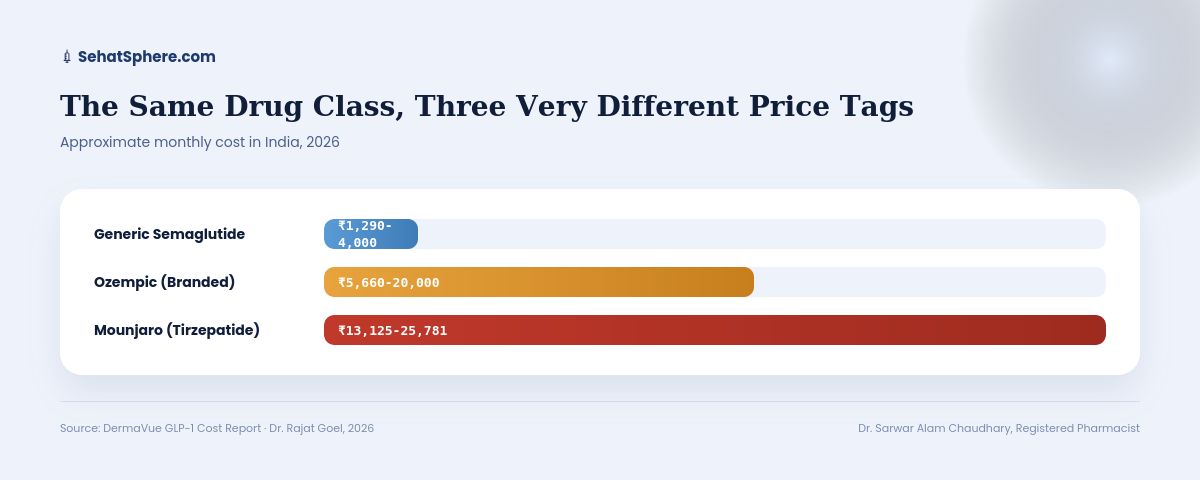
| Generic semaglutide | ₹1,290 – ₹4,000 |
| Ozempic (branded) | ₹5,660 – ₹20,000 |
| Mounjaro (tirzepatide) | ₹13,125 – ₹25,781 |
India’s official Mounjaro launch pricing was deliberately set far below Western markets — the same 2.5mg starter vial that costs roughly ₹3,500 in India runs approximately 14 times higher in the US. Following semaglutide’s patent expiry in March 2026, Indian generic versions have brought costs down dramatically further, though Mounjaro itself remains under patent with generics not expected until 2027–2028. A genuinely important practical note: no IRDAI-regulated health insurance policy currently covers GLP-1 medication for the obesity indication in India — this is out-of-pocket spending for essentially everyone right now, worth budgeting for realistically before starting. If cost is a genuine concern, our generic medicine pricing guide covers the broader principle of branded-versus-generic value.
What to Eat on These Medications
There’s no single official diet plan, but a consistent, practical, meal-by-meal pattern works well for most people:
| Time | What to Eat | Why |
|---|---|---|
| Morning | Small protein-forward breakfast — eggs, paneer, or moong dal chilla | Sets a steadier tone for the day, reduces nausea risk early on |
| Afternoon | Light, balanced meal — dal-roti-sabzi or grilled chicken with salad | Avoids overloading a slower stomach mid-day |
| Evening | Sprouts chaat, roasted chana, or nuts + water/coconut water | Beats the evening energy slump without a heavy snack |
| Dinner | Light & early — tofu/paneer or grilled chicken/fish + sauteed vegetables | Prevents night-time reflux from a heavy late meal |
Beyond timing, protein specifically deserves emphasis — it’s essential to preserve muscle mass during rapid weight loss; our protein deficiency in India guide covers why most Indian diets already run short here even without appetite suppression on top.
Eat This, Not That: What to Avoid
| ✓ Eat | ✗ Avoid |
|---|---|
| Dal, rajma, chana, paneer, tofu | Deep-fried & very oily food |
| Eggs, chicken, fish (grilled) | Sweets, mithai, pastries |
| Curd, milk, Greek yogurt | Fizzy / carbonated drinks |
| Vegetables, salad, fruit | Large, heavy meals |
| Oats, whole grains, seeds | Excess alcohol |
| Water, buttermilk, coconut water | Ultra-processed snacks |
Deep-fried & very oily food
Samosa, pakora, heavy fried curries — the single biggest nausea trigger on these medications.
Sweets & sugary foods
Mithai, pastries, sugary drinks — empty calories that spike blood sugar right when your body is trying to stabilize it.
Fizzy / carbonated drinks
They bloat an already slow-emptying stomach, worsening the fullness these drugs already cause.
Large meals
“Just one more bite” is exactly what ends in genuine discomfort with a stomach that empties this much slower than usual.
Excess alcohol
Worsens nausea, dehydration, and blood-sugar swings simultaneously — a combination worth actively avoiding, not just moderating.
If hair thinning or fatigue develops during treatment, our hair fall and vitamin deficiency guide is worth reading, since inadequate nutrient intake during appetite suppression is a documented, genuine cause.
Managing Side Effects With Food
| Side Effect | What Actually Helps |
|---|---|
| Nausea | Small, bland meals — ginger, khichdi, toast. Don’t lie down right after eating. |
| Constipation | More fibre + water, a daily walk, curd, soaked figs or prunes. |
| Acidity / reflux | Light, early dinner, stay upright afterward, less fried and spicy food. |
| Fatigue | Usually a sign of low protein or fluids — meet protein and hydration needs first before assuming it’s the medication alone. |
“Ozempic Face”: The Trending Concern Nobody Mentions Upfront
This has become one of the most-searched side effects associated with GLP-1 medications, and it’s genuinely worth understanding before starting, not discovering afterward. “Ozempic face” describes sagging, hollowed facial skin and more prominent bone structure that can appear after rapid, significant weight loss — and the mechanism is more specific than most people assume.
Research suggests 25–40% of the weight lost on GLP-1 medications comes from lean muscle mass, not fat alone. Since muscle provides structural support underneath skin, losing it alongside facial fat removes the “scaffolding” skin needs to stay taut — producing the hollowed cheeks, sunken eyes, and sagging jawline associated with this term. Importantly, dermatologists are clear this isn’t unique to Ozempic or even to GLP-1 drugs specifically — the same effect occurs with any sufficiently rapid weight loss, including bariatric surgery or extreme dieting; it’s simply being discussed more because so many more people are now losing weight this way, this quickly.
| What Helps Reduce This Risk | Why |
|---|---|
| Adequate protein intake throughout treatment | Directly supports retained muscle mass and skin elasticity |
| Consistent hydration | Helps skin maintain elasticity during rapid change |
| Gradual pace where medically appropriate | Gives skin more time to adapt alongside fat loss |
| Resistance/strength training | Actively preserves muscle mass being lost from caloric deficit |
This is exactly why protein intake gets emphasized so heavily throughout this guide — it’s not just about hunger management, it’s directly protective against this specific, genuinely common cosmetic effect. Our protein deficiency in India guide is worth revisiting with this specific concern in mind.
The “Just Give Me Mounjaro” Trend Doctors Are Flagging
A genuinely notable shift Indian doctors report: patients increasingly walk in requesting a specific brand by name — “I’d like Mounjaro” or “I want Ozempic” — rather than asking whether they’re actually appropriate candidates for it. A government health minister publicly cautioned in 2026 against the “unchecked spread of disinformation” through what was termed “fad regimens,” specifically emphasizing that lifestyle interventions remain foundational, not optional extras to skip once medication starts.
This is worth taking seriously precisely because these are prescription medications with real contraindications, monitoring requirements, and genuine risks covered throughout this guide — not casual lifestyle purchases to self-select into based on social media enthusiasm alone. If chronic stress is part of why food or body-image concerns feel urgent right now, our mental stress guide is worth reading alongside this one.
The Nutrient Gap Genuinely Worth Watching
A sharply reduced appetite, by design, means eating meaningfully less overall — which genuinely raises the risk of falling short on nutrients that already run low in typical Indian diets. Our vitamin D deficiency guide, zinc deficiency guide, and B12 deficiency guide are all worth reading proactively, not just reactively, if you’re on one of these medications long-term. If PCOS is part of your metabolic picture, our PCOS symptoms guide covers the same insulin-resistance overlap these medications are often prescribed for. The free Nutrient Deficiency Symptom Finder is a genuinely useful, quick way to catch a gap before it becomes a bigger problem.
Real Side Effects, Honestly
Up to 40% of Mounjaro users experience some gastrointestinal side effect, most pronounced during the first 8 weeks and during dose increases specifically. Nausea, vomiting, diarrhea, and constipation are the most commonly reported. Serious but rarer risks include pancreatitis, gallbladder issues, and dehydration-related kidney injury — our high creatinine levels guide is worth reading if a kidney-function value looks unexpectedly off during treatment. Official labeling also carries a thyroid tumor warning, which is worth discussing directly with your doctor given your personal and family history, particularly if thyroid conditions already run in your family.
The Dangerous Mistake: Self-Dosing
Self-medicating or “stacking” doses to lose weight faster is genuinely dangerous. Tirzepatide and semaglutide must be started at a low dose and gradually increased on a specific titration schedule — skipping this escalation leads to severe vomiting, dehydration, kidney injury, and pancreatitis. Many patients achieve excellent results at 5mg or 7.5mg and never need to escalate further; going faster than your doctor’s plan doesn’t produce faster safe results, only faster complications.
Baseline and regular lab monitoring is considered mandatory, not optional: HbA1c, kidney and liver function, thyroid, lipase, and lipid panels before starting and periodically throughout treatment. The free Blood Report Decoder and Integrative Interaction Checker are both worth using alongside a doctor-supervised program, and if you’re also managing older diabetes medication, our diabetes medicine safety guide covers the genuine combination-hypoglycemia risk in depth.
What Happens When You Stop
This deserves honest treatment rather than being left out of the conversation entirely. Most people regain a significant portion of lost weight after stopping these medications, since they address appetite regulation directly rather than curing an underlying condition. Many patients continue on a lower maintenance dose long-term, combined with sustained diet and lifestyle changes, specifically to preserve results — treating this as a short-term “reset” rather than an ongoing commitment is where most disappointment with these drugs actually comes from. Our fatty liver treatment guide and metabolic flexibility guide both cover the sustainable, longer-term lifestyle side of this same picture.
Quick Self-Check
Tick anything that applies to you, and see what it suggests.
Frequently Asked Questions
What’s the real cost for Mounjaro Ozempic diet India in 2026?
Generic semaglutide starts around ₹1,290-4,000/month, branded Ozempic ₹5,660-20,000/month, and Mounjaro ₹13,125-25,781/month, depending on dose.
Is Mounjaro better than Ozempic for weight loss?
Clinical data suggests Mounjaro (tirzepatide) produces somewhat greater average weight loss (~23%) than Ozempic/Wegovy (~15%), due to its dual GIP/GLP-1 mechanism versus GLP-1 only.
What should I eat on Mounjaro or Ozempic?
Adequate protein, fiber-rich vegetables and whole grains, small frequent meals, and consistent hydration, while avoiding high-fat fried foods and large portions.
Does insurance cover Mounjaro or Ozempic in India?
No, currently no IRDAI-regulated health insurance policy covers GLP-1 medication for the obesity indication in India.
What happens if you stop Mounjaro or Ozempic?
Most people regain a significant portion of lost weight, since these medications don’t cure an underlying condition. Many continue on a lower maintenance dose with lifestyle changes to sustain results.
Is it dangerous to increase your own dose faster than prescribed?
Yes, genuinely dangerous. Skipping the titration schedule can cause severe vomiting, dehydration, kidney injury, and pancreatitis.
What are the most common side effects of Mounjaro?
Up to 40% experience gastrointestinal side effects like nausea, vomiting, diarrhea, and constipation, most pronounced during the first 8 weeks.
What is “Ozempic face” and can it be prevented?
Sagging, hollowed facial skin from rapid weight loss, since 25-40% of weight lost on these medications comes from muscle, not just fat. Adequate protein intake, hydration, and resistance training can help reduce this risk.
Is “Ozempic face” a side effect specific to Ozempic?
No, it’s a result of rapid weight loss itself, not specific to any one drug. The same effect occurs with bariatric surgery or extreme dieting; it’s simply more discussed now due to how many people use GLP-1 medications.
The Bottom Line
Mounjaro Ozempic diet India conversations have moved fast, from near-unavailability to genuine mainstream adoption within about a year, and the practical details matter more than the hype. Cost varies dramatically by exact drug and brand, insurance won’t help right now, self-escalating your dose is genuinely dangerous, and stopping without a sustainable plan tends to undo the results. Used correctly, under real medical supervision, with attention to protein and hydration, these medications can genuinely help — used as a shortcut around all of the above, they’re considerably riskier than the marketing suggests. If you’re managing thyroid medication alongside this, our ashwagandha thyroid interactions guide is also worth reading, since supplement stacking deserves the same careful scrutiny as any prescription combination.
- Reuters. India Gets First Weight-Loss Drug as Eli Lilly Launches Mounjaro.
- MedicalVault. Mounjaro (Tirzepatide) India: Cost, Dose & Weight Loss Guide.
- DermaVue. GLP-1 Cost India 2026: Ozempic, Mounjaro, Generic Prices.
View All References (5) ▾
- Healthline. Mounjaro Diet: Foods to Eat and Avoid.
- Colorado State University. Diabetes and Weight Loss Medications: Ozempic, Mounjaro and Wegovy.