
 SehatSphere
Still Tired After 8 Hours of Sleep?
The usual answers – sleep apnea, blue light, REM cycles – only tell half the story. Here’s the part almost nobody checks: your medicine cabinet and your last blood report.
Quick Answers
Tired After 8 Hours of Sleep? Quality Matters More Than Quantity
Still tired after 8 hours of sleep? You’re not alone – this is one of the most common health complaints worldwide – and one of the most misunderstood. Eight hours in bed is not the same as eight hours of restorative sleep. Your body cycles through light sleep, deep sleep, and REM sleep roughly every 90 minutes, and when those cycles are fragmented – even without you waking up fully – the number on the clock stops meaning very much.
Sleep inertia: the grogginess that isn’t a problem
Sleep inertia is the foggy, disoriented feeling right after waking, and it’s completely normal even after a full night’s sleep. It typically lasts 15 minutes to 2 hours, though a more severe version – “sleep drunkenness” – can last up to 4 hours in some people. Research from Stanford’s Center for Sleep and Circadian Sciences has found sleep inertia genuinely lowers mental performance during those first waking hours, not just a subjective feeling.
“If I still feel groggy 20 minutes after waking, something is medically wrong.”
Sleep inertia lasting up to 2 hours is normal physiology, not a red flag on its own.
Sleep apnea: the medical cause hiding behind snoring
Obstructive sleep apnea is one of the most common medically diagnosable causes of persistent daytime fatigue, and it’s frequently missed because the person doesn’t remember waking up. The airway repeatedly collapses during sleep, triggering brief arousals – sometimes dozens or hundreds per night – that fragment sleep without full awakening.
- ⚠️Loud, chronic snoring – often dismissed as harmless
- ⚠️Gasping or choking sensations during the night
- ⚠️Dry mouth or headache specifically upon waking
If these sound familiar, a sleep study – not another sleep hygiene tip – is the appropriate next step. According to the American Academy of Sleep Medicine, roughly 26% of adults aged 30-70 have obstructive sleep apnea, and most remain undiagnosed.
Is your medicine the real reason you’re tired?
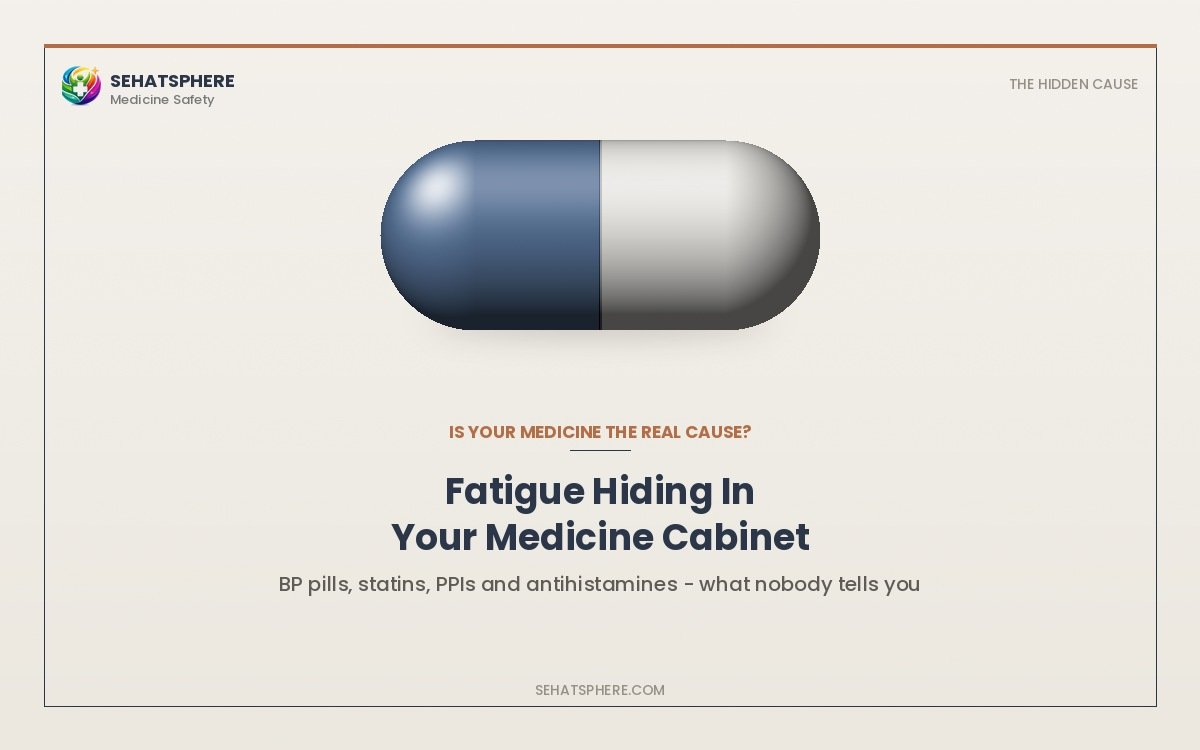
This is the piece almost every generic sleep article skips entirely. Over 200 common medications can cause fatigue as a documented side effect, and several of the biggest culprits are medicines millions of people take every single day without connecting them to their tiredness.
| Medicine type | Why it causes fatigue |
|---|---|
| Beta-blockers, some BP meds | Deliberately slow heart rate, reducing oxygen delivery to tissues |
| Statins | Interfere with cellular energy production in muscle tissue |
| PPIs (Omeprazole, Pantoprazole) | Long-term use depletes magnesium, causing weakness and fatigue |
| Antihistamines | Block histamine in the brain, a chemical that helps keep you alert |
| SSRIs / antidepressants | Alter neurotransmitters that regulate alertness and energy |
People connect fatigue to poor sleep, stress, or getting older – almost never to the tablet they’ve taken every morning for two years. Checking your medicine list is one of the fastest, most overlooked steps in figuring out persistent tiredness.
— Dr Sarwar Alam Chaudhary, PharmacistFatigue from medication typically peaks 1-4 hours after the dose and can persist through the day. Never stop a prescribed medicine on your own because of this – talk to your doctor about dose timing, formulation changes, or alternatives.
Test what you just learned
1. Which medicine class causes fatigue partly by depleting magnesium?
2. How long can sleep inertia normally last?
The nutrient deficiency link nobody checks
Several extremely common deficiencies cause fatigue that feels identical to “just needing more sleep” – and the only way to tell the difference is a blood test, not more hours in bed.
- 🩸Iron deficiency (anemia): reduces oxygen delivery throughout the body – one of the most common, testable causes of fatigue
- 🥬Vitamin B12 deficiency: particularly common in vegetarians, causes fatigue alongside neurological symptoms
- ☀️Vitamin D deficiency: widespread even in sunny countries, linked to persistent low energy
- 💊Magnesium deficiency: causes muscle cramps and fatigue, and can be worsened by certain medicines (see above)
Lifestyle factors that genuinely matter
Physical activity and sleep pressure
Daytime movement builds adenosine, a chemical that creates genuine drive toward deep sleep at night. Without it, sleep stays light and unsatisfying regardless of hours logged. A daily 30-minute walk is often enough to meaningfully rebuild this over a few weeks.
Blue light and caffeine timing
Screen exposure before bed delays melatonin release, while caffeine has a half-life of roughly 5-6 hours – an afternoon coffee can still be measurably affecting your sleep architecture at midnight, even if you feel fine falling asleep.
“I fall asleep fine after evening coffee, so it isn’t affecting my sleep.”
Caffeine can reduce deep sleep quality even when it doesn’t delay sleep onset or cause noticeable wakefulness.
A simple self-check framework
Tiredness that’s new, mild, and tied to visible habits (late screens, irregular bedtime, low activity) – give changes 2-3 weeks before assuming something deeper is wrong.
Snoring plus gasping, fatigue lasting 3+ weeks despite good habits, or fatigue that started alongside a new medicine – these deserve a blood test or sleep study, not another lifestyle article.
Test yourself
3. Does evening coffee only matter if it keeps you awake?
4. Which deficiency is particularly common in vegetarians and causes fatigue?
Try SehatSphere’s Free Health Tools
Two tools that pair well with this guide.
Which Nutrient Deficiency Do You Have?
Free symptom-based finder for common deficiencies.
Open Tool →Frequently Asked Questions
Why am I still tired after 8 hours of sleep?
Common causes include fragmented sleep quality (even without waking fully), sleep apnea, certain medicines (BP pills, statins, PPIs, antihistamines), and nutrient deficiencies like B12, iron, vitamin D, or magnesium.
Can blood pressure or cholesterol medicine cause tiredness?
Yes. Beta-blockers slow heart rate and reduce oxygen delivery, while statins can interfere with cellular energy production in muscle tissue, both causing documented fatigue.
How long does normal sleep inertia last?
Typically 15 minutes to 2 hours. A more severe version called sleep drunkenness can last up to 4 hours in some people, but is still usually not medically concerning on its own.
What deficiency commonly causes tiredness in vegetarians?
Vitamin B12 deficiency is particularly common in vegetarians since B12 is found almost exclusively in animal products, and it commonly presents as persistent fatigue.
When should tiredness prompt a doctor visit rather than a lifestyle fix?
If fatigue persists beyond 2-3 weeks despite good sleep habits, or is accompanied by loud snoring and gasping, a blood test or sleep study is the appropriate next step.
Does caffeine affect sleep even if I fall asleep easily?
Yes. Caffeine’s roughly 5-6 hour half-life means afternoon intake can reduce deep sleep quality later that night, even without noticeably delaying sleep onset.
Written by Dr Sarwar Alam Chaudhary
A practising pharmacist who is also Registered BHMS and works in a hospital setting – the medicine-fatigue connection in this guide comes directly from patterns seen at the pharmacy counter. More about the author →