 SehatSphere.com
Ashwagandha Thyroid Interactions: The Sedative Risks Nobody Warns You About
Ashwagandha thyroid interactions are genuinely documented, not internet speculation — a real clinical trial found the herb measurably lowered TSH and raised T3/T4 in people with subclinical hypothyroidism within 8 weeks. Separately, if you also take a sedative or anti-anxiety medication, ashwagandha’s own calming action on the same brain receptors can stack in ways most people never get warned about.
Key takeaways:
- Ashwagandha thyroid interactions are real: a controlled trial in subclinical hypothyroidism found 300mg twice daily for 8 weeks measurably lowered TSH and raised T3/T4 compared to placebo.
- Ashwagandha acts on the same GABA-A brain receptors as benzodiazepines and barbiturates — combining them can genuinely stack sedation, not just theoretically.
- Beyond thyroid and sedatives, ashwagandha can also lower blood pressure and blood sugar, meaningfully raising hypoglycemia risk if combined with diabetes medication.
- The evidence level matters: some interactions are backed by real clinical trials, others are still “theoretical, based on mechanism” — and this guide is honest about which is which.
Ashwagandha Thyroid Interactions, Explained
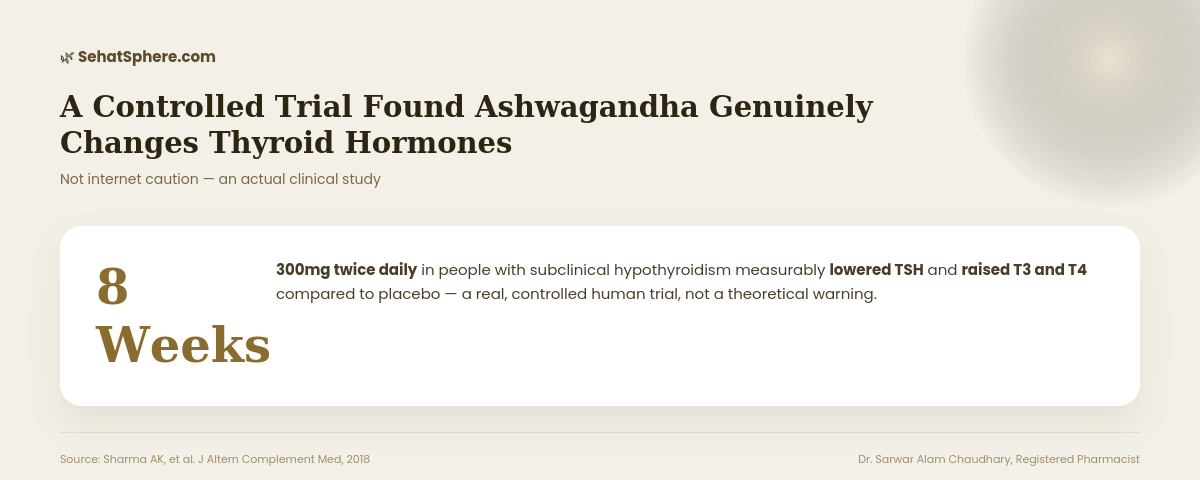
This is the single most well-documented ashwagandha thyroid interaction, and it’s backed by an actual controlled trial, not just anecdote. A study of 50 people with subclinical hypothyroidism found that ashwagandha, at 300mg twice daily for 8 weeks, measurably lowered serum TSH and raised T3 and T4 levels compared to placebo. A separate smaller study found similar T4 increases in healthy men taking 500mg/day for 8 weeks.
The mechanism isn’t fully established, but the clinical implication is clear: ashwagandha genuinely appears to alter thyroid hormone levels, which matters enormously if you’re already on levothyroxine or another thyroid medication. Taking both together risks over-treatment (too much thyroid hormone activity) without anyone realizing the supplement is contributing, since routine follow-up rarely asks specifically about herbal supplements.
The Sedative and Benzodiazepine Risk
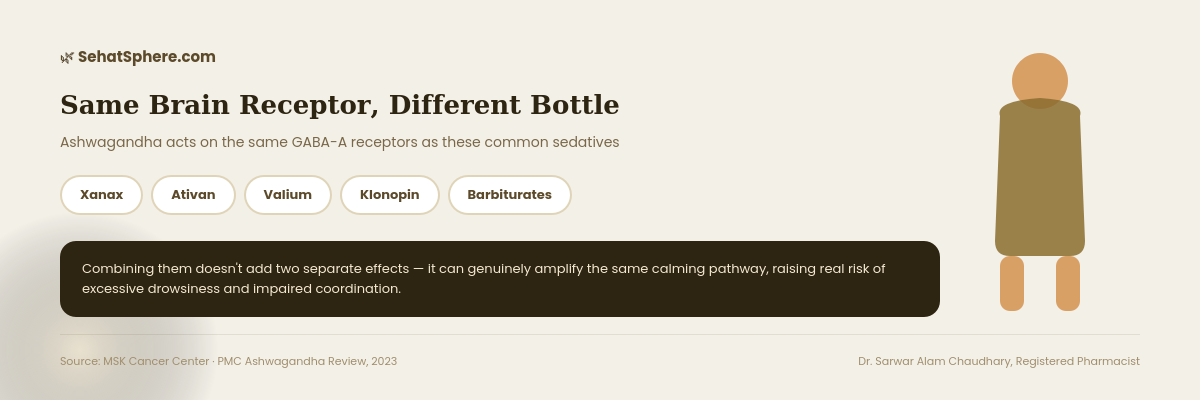
Ashwagandha has a real, mechanistic reason to interact with sedatives: research shows it acts on GABA-A receptors — the exact same target benzodiazepines (Xanax/alprazolam, Ativan/lorazepam, Valium/diazepam, Klonopin/clonazepam) and barbiturates use to produce their calming effect. Combining the two doesn’t add two separate effects side by side — it can genuinely amplify the same pathway, raising real risk of excessive drowsiness, impaired coordination, and slowed reflexes.
This is worth taking seriously specifically if you drive, operate machinery, or are older, where impaired coordination carries higher real-world consequences. The honest caveat: much of this specific interaction is currently rated as a theoretical, mechanism-based concern in pharmacist references, not proven through large human trials — which doesn’t make it something to ignore, but does mean “definitely happens to everyone” would be overstating the current evidence.
 What To Read Next
- Thyroid Medicine Mistakes: Everything else worth knowing if levothyroxine is part of your routine.
- Mental Stress: Causes & Natural Fixes: Why people reach for ashwagandha in the first place.
- Integrative Interaction Checker: Free tool to check your full supplement and medication list.
- Common Antibiotic Mistakes: Another common medication-safety blind spot worth knowing.
- High Creatinine Levels, Explained: If a routine lab value looks unexpectedly off.
Other Real Interactions Worth Knowing
| Medication Type | What Can Happen |
|---|---|
| Blood pressure medication | Ashwagandha may independently lower BP, raising risk of it dropping too low combined |
| Diabetes medication | Can lower blood sugar further, raising genuine hypoglycemia risk |
| Immunosuppressants | Ashwagandha’s immune-stimulating action may work against these drugs’ purpose |
| SSRIs (escitalopram, sertraline) | Under-studied combination; theoretical risk of excess serotonin activity |
If blood pressure or blood sugar management is already part of your routine, our normal blood pressure by age guide and insulin resistance guide are worth reading alongside this one. Ashwagandha is also a known moderate inducer of the CYP3A4 liver enzyme and inhibitor of CYP2B6, meaning it can meaningfully change blood levels of any other drug processed through these same pathways — a genuinely underappreciated, broad-reaching mechanism beyond the specific interactions listed above. If you’re managing PCOS, our PCOS symptoms guide is worth reading too, since ashwagandha’s hormonal effects can genuinely intersect with that condition’s own hormone picture.
How Strong Is the Evidence, Honestly
Being genuinely honest about evidence quality matters here, since supplement marketing rarely is:
| Interaction | Evidence Level |
|---|---|
| Thyroid hormone changes | Controlled human trial (moderate-strong) |
| Sedative/benzodiazepine additive effect | Mechanism-based, limited human data |
| Blood pressure/sugar lowering | Documented in trials, dose-dependent |
| SSRI serotonin interaction | Theoretical, not well-studied |
This distinction genuinely matters for how seriously to weigh each warning — the thyroid interaction has real trial data behind it, while the sedative interaction, though mechanistically plausible and worth real caution, hasn’t been confirmed in large controlled human studies yet.
Who Should Genuinely Avoid It
Anyone on thyroid medication, without a doctor’s explicit awareness and monitoring plan. Anyone on benzodiazepines, barbiturates, or other sedatives. Pregnant women (increased miscarriage risk reported at higher doses). Anyone with hormone-sensitive prostate cancer (ashwagandha may raise testosterone). Anyone on immunosuppressants for a transplant or autoimmune condition.
Using It More Safely
If you’re taking ashwagandha alongside any prescription medication, the responsible approach is straightforward: tell your doctor and pharmacist specifically, not just assume a “natural” supplement doesn’t count as worth mentioning. If you’re on thyroid medication, ask about more frequent TSH monitoring while using both together. If you take a sedative for any reason, be cautious about driving or operating machinery until you know how the combination affects you personally. The free Integrative Interaction Checker is worth running your complete list through before adding ashwagandha to an existing regimen, and if magnesium is also part of your supplement stack, our magnesium interactions guide covers a similarly underappreciated overlap.
The Broader Health Picture Worth Knowing
Ashwagandha thyroid interactions don’t exist in isolation from the rest of your metabolic and hormonal health. If fatigue, weight changes, or hair thinning brought you toward ashwagandha in the first place, it’s worth genuinely ruling out other causes rather than assuming a supplement alone will fix an underlying issue — our hair fall and vitamin deficiency guide, vitamin D deficiency guide, and protein deficiency in India guide all cover genuinely overlapping fatigue symptoms worth checking first. If you’re managing diabetes alongside this, our diabetes medicine safety guide is directly relevant, since ashwagandha’s blood-sugar-lowering effect compounds with existing medication in the same way covered there. The free Nutrient Deficiency Symptom Finder and Blood Report Decoder are both worth using to get a clearer, evidence-based picture before adding any new supplement.
Quick Self-Check
Tick anything that applies to you, and see what it suggests.
Frequently Asked Questions
What are the real ashwagandha thyroid interactions?
A controlled trial found ashwagandha (300mg twice daily, 8 weeks) measurably lowered TSH and raised T3/T4 in people with subclinical hypothyroidism, meaning it can genuinely alter thyroid hormone levels.
Can ashwagandha be taken with thyroid medication?
Only with your doctor’s awareness and appropriate monitoring, since ashwagandha thyroid interactions can risk over-treatment if combined without adjusting your dose or monitoring schedule.
Does ashwagandha interact with sleeping pills or anti-anxiety medication?
Yes, mechanistically. Ashwagandha acts on the same GABA-A receptors as benzodiazepines and barbiturates, which can additively increase drowsiness and impaired coordination.
Is ashwagandha safe to take with blood pressure medication?
Use caution. Ashwagandha may independently lower blood pressure, and combining it with BP medication could cause pressure to drop too low.
Can ashwagandha affect blood sugar medication?
Yes, it can lower blood sugar further when combined with diabetes medication, raising genuine hypoglycemia risk.
Should pregnant women take ashwagandha?
No, it’s generally advised to avoid it during pregnancy due to reported increased miscarriage risk at higher doses.
How strong is the evidence for ashwagandha drug interactions?
It varies. The thyroid interaction has real controlled trial data behind it, while the sedative interaction is mechanism-based with limited human trial confirmation so far.
The Bottom Line
Ashwagandha thyroid interactions are genuinely documented in controlled research, not just internet caution-fatigue — and the sedative-additive risk, while less rigorously proven in humans, has a real, specific mechanistic basis worth respecting. “Natural” doesn’t mean “inert,” and this herb genuinely touches thyroid hormones, blood pressure, blood sugar, and the same brain receptors several prescription sedatives use. Mentioning it to your doctor and pharmacist, explicitly and by name, is the single most useful thing this guide can leave you with. If cost has ever been a barrier to a proper thyroid panel or follow-up visit, our generic medicine pricing guide is worth reading too.
- Sharma AK, Basu I, Singh S. Efficacy and Safety of Ashwagandha Root Extract in Subclinical Hypothyroid Patients. J Altern Complement Med, 2018.
- Memorial Sloan Kettering Cancer Center. Ashwagandha: Interactions and Safety.
- GoodRx Health. 5 Ashwagandha Interactions to Watch For.
View All References (5) ▾
- Ashwagandha (Withania somnifera): Current Research on Health-Promoting Activities. PMC.
- Drugs.com. Ashwagandha and Levothyroxine Interaction Report.