 SehatSphere.com
Heart Attack in Young Adults: The Real Numbers Behind India’s Silent Crisis
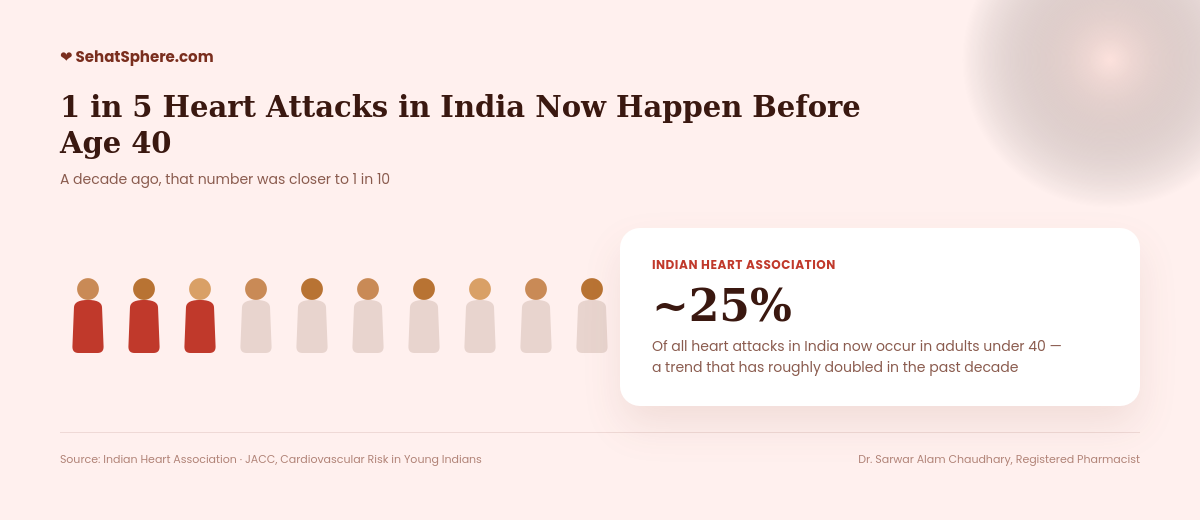
A decade ago, roughly 1 in 10 heart attacks in India happened before age 40. Today, per the Indian Heart Association, that number has climbed to nearly 1 in 4–5. This isn’t a statistical blip or a media exaggeration — it’s a documented, accelerating shift affecting India’s most economically productive generation, and much of it is genuinely, measurably preventable if you know what to actually watch for.

Key takeaways:
- Indians suffer their first heart attack at an average age of 53 — roughly 6 years earlier than the global average, and South Asians carry a 3–5 times higher genetic predisposition to premature heart disease.
- Nearly 45% of all heart attacks may be “silent,” with minimal or no recognizable symptoms — and young adults are disproportionately represented in this group.
- COVID-19 infection, even mild cases, has been linked to elevated cardiovascular risk for up to 3 years afterward, per NIH-backed research.
- Roughly 80% of premature heart disease is considered preventable — quitting smoking alone cuts cardiovascular risk by half within a single year.
- The real numbers behind the trend
- Why this is actually happening
- The silent heart attack problem
- COVID’s lingering cardiovascular effect
- The South Asian genetic factor
- Warning signs, including atypical ones
- Panic attack or heart attack?
- Why women are often missed
- The diabetes connection specifically
- When it’s not the usual cause
- What genuinely reduces your risk
- When to start screening
- If you’re already on heart medication
- What to actually do in the moment
- What recovery actually looks like
- Quick self-check
- FAQs
The Real Numbers Behind the Trend
This isn’t anecdotal. The Indian Heart Association reports that nearly 25% of heart attacks in India now occur in people under 40 — a figure that has climbed sharply from roughly 1 in 10 just a decade ago. A 2021 data point makes this concrete: 2,541 individuals aged 18–30 died from heart attacks in India that year, with half of all young-adult cardiac deaths falling in the 18–45 age bracket.
| Comparison | India | Rest of World |
|---|---|---|
| Average age of first heart attack | 53 years | ~59 years |
| Heart disease/stroke deaths before age 70 | 52% | 23% |
| Genetic predisposition (South Asians) | 3–5x higher than global average | |
India was estimated to account for roughly 60% of the world’s heart disease burden as far back as 2010 — and the trend toward younger onset has only accelerated since. If you’re already managing blood pressure, our Complete Guide to Blood Pressure and normal blood pressure by age guide are worth reading alongside this one, since hypertension is one of the most significant, modifiable drivers of this entire trend.
Why This Is Actually Happening
A landmark study published in the Journal of the American College of Cardiology tracked cardiovascular risk factors among young urban Indians over time, and the shift is stark:
| Risk Factor | Earlier Rate | Current Rate |
|---|---|---|
| High blood pressure (men) | 11% | 34% |
| High blood pressure (women) | 5% | 15% |
| Diabetes (men) | 5% | 12% |
| Diabetes (women) | 3.5% | 7% |
These aren’t small shifts — blood pressure prevalence roughly tripled in men over a relatively short study window. Behind these numbers sits a genuinely layered set of contributors: sedentary desk jobs and long commutes, diets increasingly built around processed and fast food, disrupted sleep from irregular shift work, chronic workplace stress, rising rates of smoking and vaping, and abdominal obesity — a specific fat-distribution pattern that carries outsized cardiovascular risk. Our insulin resistance guide and fatty liver treatment guide both cover this same metabolic cluster in more depth, since it rarely shows up as just one isolated risk factor. Protein-poor, cereal-heavy diets compound this picture too — our protein deficiency in India guide covers the same dietary shift from a different angle, and the high uric acid diet guide shares significant overlap with this exact metabolic risk cluster.
What To Read Next
- Does Anger Raise Blood Pressure? The stress-cardiovascular link, backed by real research.
- Morning Blood Pressure Spikes: Why cardiac events cluster in the early morning hours.
- Statins Side Effects: If cholesterol management is part of your prevention plan.
The Silent Heart Attack Problem
Perhaps the most dangerous type of cardiac event is the silent myocardial infarction — a heart attack with minimal or no recognizable symptoms. Research suggests nearly 45% of all heart attacks may be silent, and young adults are disproportionately represented in this group, largely because they’re statistically less likely to be getting the routine ECGs or cardiac screenings that would catch it.
The damage to heart muscle in a silent event is just as real and cumulative as a symptomatic one — it’s often only discovered later, incidentally, during a routine health checkup. This is precisely why “I feel fine” is not reliable evidence that your cardiovascular system actually is.
COVID’s Lingering Cardiovascular Effect
This is a genuinely current, evolving piece of the puzzle that predates most existing “young heart attack” content. Multiple studies since 2021 have found that COVID-19 infection — even mild cases — can cause lingering inflammation of the heart muscle (myocarditis), damage to the inner lining of blood vessels (endothelial dysfunction), and an elevated blood-clotting tendency.
Compared to people never infected, those who contracted COVID-19 early in the pandemic faced roughly double the risk of major cardiovascular events — and for those with severe cases requiring hospitalization, that risk was nearly four times higher. Young adults recovering from COVID, even apparently fully, are now recognized as carrying measurably elevated cardiac risk for years afterward, not just during acute illness.
The South Asian Genetic Factor
Genetics alone doesn’t explain this crisis, but it’s a real, well-documented amplifier. South Asians — including Indians — are estimated to be 3 to 5 times more prone to premature coronary artery disease compared to Western populations, independent of lifestyle factors alone. This partly explains why Indians tend to develop heart disease 5–10 years earlier than other ethnic groups even with comparable risk-factor profiles. A strong family history of heart disease, early heart attacks, or high cholesterol meaningfully raises individual risk further, and is worth discussing explicitly with a doctor rather than assuming it doesn’t apply to you at a young age.
Warning Signs, Including the Atypical Ones
Chest pain remains the most recognized symptom, but relying on it exclusively is exactly what delays treatment for many young adults, whose symptoms are frequently milder or genuinely different from the “clutching the chest” scenario popular culture has trained everyone to expect.
| Classic Signs | Atypical Signs (Often Missed) |
|---|---|
| Chest pain, pressure, or squeezing lasting more than a few minutes | Unusual fatigue for days or weeks beforehand |
| Pain radiating to the arm, jaw, neck, or back | Heartburn, nausea, vomiting, or abdominal pain |
| Shortness of breath | Cold sweats without exertion |
| Lightheadedness or fainting | An unexplained sense of “impending doom” |
Symptoms can build gradually over days rather than striking suddenly, and cardiac discomfort is genuinely, commonly mistaken for acidity, indigestion, gas, or a pulled muscle — especially in someone young, active, and otherwise apparently healthy. If chest discomfort persists beyond a few minutes, comes and goes repeatedly, or is accompanied by any of the atypical signs above, that combination warrants urgent evaluation, not a wait-and-see approach.
Panic Attack or Heart Attack?
Both can cause chest pain, sweating, and shortness of breath, which genuinely makes this distinction difficult in the moment, especially for someone who’s never experienced either before.
| Feature | Panic Attack | Heart Attack |
|---|---|---|
| Pain character | Often sharp, stabbing, localized | More often pressure, squeezing, fullness |
| Onset | Rapid, peaks within minutes | Can build gradually or come and go |
| Associated feeling | Overwhelming fear of dying | Physical symptoms often dominate over fear |
When genuinely in doubt, the responsible default is always to seek immediate medical attention rather than trying to self-diagnose which one it is — the cost of a false alarm is vastly lower than the cost of a missed heart attack.
Why Women Are Often Missed
For decades, medical consensus held that estrogen offered women under 40 substantial protection against heart attacks. Recent global and regional data show that this protection is real but not absolute — and it’s created a dangerous blind spot, since both patients and even some clinicians can be slower to consider a cardiac cause in younger women.
Women are more likely than men to experience the atypical symptom cluster described above — shortness of breath, unexplained fatigue, nausea, and back or jaw pain — sometimes with little or no classic chest pain at all. This pattern difference is a genuine, documented contributor to delayed diagnosis and treatment in women specifically. If you’re also managing PCOS, this overlap is worth knowing about directly — the same insulin resistance driving PCOS symptoms independently raises long-term cardiovascular risk, making this a genuinely connected picture rather than two separate concerns.
The Diabetes Connection Specifically
Roughly 1 in 5 heart attacks under age 50 occur in people with diabetes, and undiagnosed or poorly managed blood sugar is one of the fastest-rising contributors to this entire trend. Diabetes damages blood vessels gradually and silently over years, well before any cardiac symptom appears — making blood sugar screening just as relevant to this guide as blood pressure and cholesterol. If you’re already managing blood sugar concerns, our insulin resistance guide covers the earliest, most reversible stage of this same pathway, well before a formal diabetes diagnosis would apply.
When It’s Not the Usual Cause
Most heart attacks stem from cholesterol plaque rupturing inside a coronary artery and triggering a clot — the process our statins guide covers from the cholesterol-management side. But a meaningful minority of young-adult cases, especially in women, stem from genuinely different mechanisms:
- SCAD (Spontaneous Coronary Artery Dissection): A tear forms in a coronary artery wall, disrupting blood flow — recognized more often in younger and middle-aged women than typical plaque-driven disease.
- Coronary artery spasm: The artery temporarily tightens, sharply reducing blood flow, sometimes triggered by stimulant drugs.
- Inherited clotting disorders: Certain genetic or acquired conditions increase abnormal clot formation risk independent of cholesterol.
- Extreme fitness culture and steroid use: Emerging research has flagged rising sudden cardiac events among young performers and fitness-focused individuals, linked to anabolic steroid use, overtraining, and body-image pressure specific to certain professions.
What Genuinely Reduces Your Risk
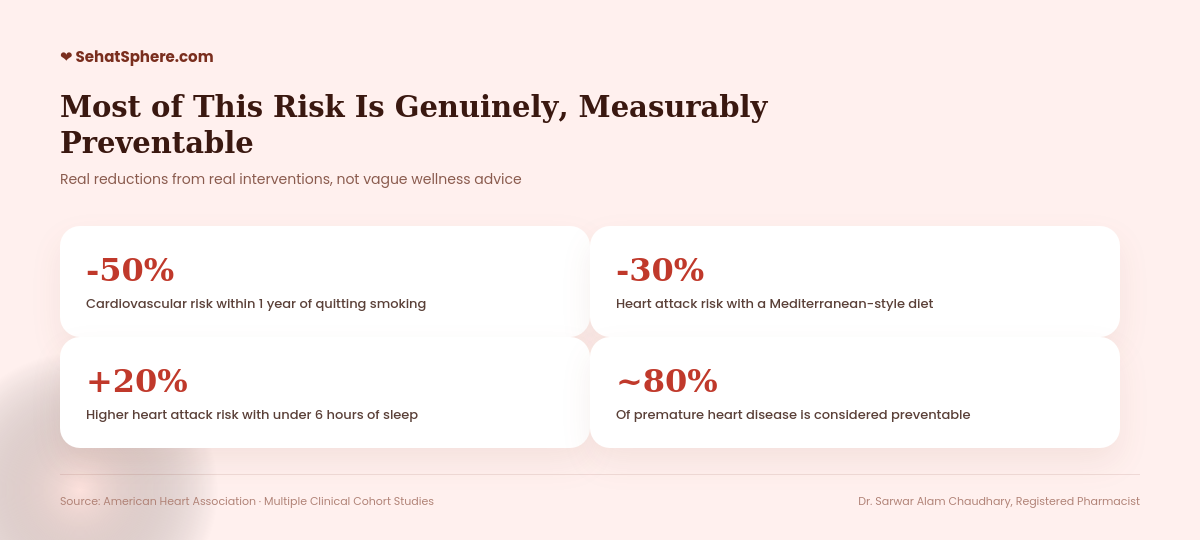
This is the part most “eat healthy, exercise more” content leaves frustratingly vague. Here are the actual, measured numbers behind specific interventions:
| Intervention | Documented Effect |
|---|---|
| Quitting smoking | -50% risk within 1 year |
| Mediterranean-style diet | -30% heart attack risk |
| Losing 5–10% body weight | Improves cholesterol & BP |
| Sleeping under 6 hours nightly | +20% heart attack risk |
| Overall preventable burden | ~80% of premature disease |
Chronic stress deserves specific mention — it elevates cortisol, raises blood pressure, and promotes inflammation, all directly contributing to cardiovascular strain. Our mental stress guide covers evidence-based reduction techniques in depth, and our anger and blood pressure guide covers the specific research on acute emotional triggers. If you’re managing cholesterol with medication already, our statins guide separates genuine side effects from nocebo-driven ones, and our fatty liver guide covers the same coffee-and-Mediterranean-diet protective pattern from a different angle.
When to Start Screening
Prevention should genuinely begin early, not wait until middle age. If you have no known risk factors, a baseline screening covering blood pressure and cholesterol around age 20 is advised, repeating every 4–6 years. If you carry risk factors — family history, smoking, high blood pressure, diabetes, or obesity — more frequent screening, guided by your doctor, is genuinely warranted well before your 30s or 40s.
Our Blood Report Decoder can help you make sense of a lipid profile once you have one, and the free Biological Longevity Audit is a reasonable starting point for a broader sense of where your daily habits stand. If cost has ever kept you from a proper screening or follow-up treatment, our generic medicine pricing guide is worth reading before assuming it’s out of reach.
If You’re Already on Heart-Related Medication
If a doctor has already started you on blood pressure or cholesterol medication in your 20s or 30s, that’s not an overreaction — given everything above, it’s precisely the kind of early intervention that changes outcomes. Our pantoprazole guide is worth knowing if you’re also managing acid reflux alongside cardiac medications, since drug interactions and timing genuinely matter when multiple prescriptions are involved. If thyroid function is part of your picture — genuinely common alongside cardiovascular risk — our thyroid medicine guide covers this overlap, and if you’re managing multiple prescriptions at once, the free Integrative Interaction Checker is worth running your full list through. Magnesium status specifically has documented cardiovascular relevance too — our magnesium deficiency guide covers this connection in more depth.
What to Actually Do in the Moment
Call emergency services immediately — don’t drive yourself. Chew an aspirin if one is available and you’re not allergic (this is genuinely time-sensitive advice, not general wellness content). Sit or lie down in a comfortable position and try to stay calm while help arrives. Do not wait to “see if it passes,” especially if symptoms persist beyond a few minutes or keep returning. Every minute of delay in a genuine cardiac event costs heart muscle that can’t be recovered later.
Doctors typically diagnose a heart attack through a specific sequence: an ECG (electrocardiogram) within minutes of arrival, a troponin blood test measuring heart muscle damage, coronary angiography to image the blood vessels directly, and an echocardiogram afterward to assess overall heart function once the acute event has been managed.
What Recovery Actually Looks Like
Recovery timelines vary considerably depending on the severity of the event and how quickly treatment began, but most people follow a structured cardiac rehabilitation program over several weeks to months, under direct medical supervision rather than self-directed guesswork. This typically combines supervised, gradually-increasing physical activity, medication management, and genuine lifestyle changes across diet, sleep, and stress — not a single dramatic overhaul, but consistent, monitored progress.
Diet during recovery specifically benefits from foods with real evidence behind them: fatty fish for omega-3s linked to healthier heart rhythm, leafy greens for potassium and magnesium supporting blood pressure, oats and whole grains for cholesterol-lowering soluble fiber, and legumes as a genuine substitute for processed meat. None of this replaces a cardiologist’s specific guidance, but it reflects the same evidence base referenced throughout this guide.
Quick Self-Check
Tick anything that applies to you, and see what it suggests.
Frequently Asked Questions
Why are heart attacks increasing in young Indians?
A combination of sedentary lifestyles, processed diets, chronic stress, disrupted sleep, rising smoking and diabetes rates, genetic predisposition specific to South Asians, and lingering cardiovascular effects from COVID-19 infection.
What percentage of heart attacks in India occur under 40?
Nearly 25%, per the Indian Heart Association, up from roughly 1 in 10 a decade ago.
Can a heart attack happen with no symptoms at all?
Yes. Research suggests nearly 45% of heart attacks may be silent, with minimal or no recognizable symptoms, and young adults are disproportionately affected.
Does COVID-19 increase heart attack risk?
Yes, NIH-backed research found elevated cardiovascular risk for up to 3 years after infection, roughly double for mild cases and up to 4 times higher for those hospitalized.
Are women protected from heart attacks before menopause?
Partially, but not absolutely. Recent data shows younger women can and do have heart attacks, often with atypical symptoms that get missed or dismissed more frequently than in men.
What’s the difference between a panic attack and a heart attack?
Panic attack pain is often sharp and localized with overwhelming fear; heart attack discomfort is more often pressure or squeezing, and can build gradually. When in doubt, seek immediate medical attention.
Can stress alone cause a heart attack?
Chronic stress raises blood pressure and inflammation, and acute anger or stress has been linked to a measurably higher short-term heart attack risk, though it typically compounds with other existing risk factors.
When should young adults start heart screening?
Around age 20 for a baseline blood pressure and cholesterol check if no risk factors are present, repeating every 4-6 years, or more frequently with risk factors like family history, smoking, or diabetes.
What is SCAD and how is it different from a typical heart attack?
Spontaneous Coronary Artery Dissection is a tear in the artery wall disrupting blood flow, recognized more often in younger and middle-aged women than typical cholesterol-plaque-driven heart attacks.
How much can lifestyle changes actually reduce heart attack risk?
Substantially. Quitting smoking cuts risk by half within a year, a Mediterranean-style diet reduces heart attack risk by about 30%, and roughly 80% of premature heart disease overall is considered preventable.
Why do Indians get heart attacks at a younger age than other populations?
South Asians carry a 3 to 5 times higher genetic predisposition to premature coronary artery disease, and Indians average their first heart attack around age 53, about 6 years earlier than the global average.
Can extreme exercise or steroid use trigger a heart attack in young, fit people?
Yes, in some cases. Overtraining, anabolic steroid use, and undiagnosed underlying heart conditions have been linked to sudden cardiac events even in apparently fit young adults.
The Bottom Line
Heart attacks in young adults are no longer a rare exception in India — they’re a documented, accelerating trend with real numbers behind it: nearly 1 in 4 to 5 cases now under 40, up sharply from a decade ago, with silent presentations, COVID-related risk, and genetic predisposition all compounding the picture. None of this is meant to induce panic. It’s meant to correct the dangerous assumption that youth itself is protection. The honest, actionable takeaway: know your numbers starting in your 20s, take atypical symptoms seriously rather than dismissing them as stress or indigestion, and treat the roughly 80% of this risk that’s genuinely preventable as worth acting on now, not after a warning event forces the issue. If you’re building a broader prevention routine, our heart rate fluctuation guide is a genuinely useful next read, covering the everyday variations worth understanding alongside everything in this guide.
- Indian Heart Association. Heart Attack Statistics in Young Indians.
- Xie Y, et al. Long-Term Cardiovascular Outcomes of COVID-19. Nature Medicine, 2022.
- Gupta R, et al. Cardiovascular Risk Factor Trends Among Young Urban Indians. Journal of the American College of Cardiology.
View All References (6) ▾
- American Heart Association. Mediterranean Diet and Cardiovascular Risk.
- Hayes SN, et al. Spontaneous Coronary Artery Dissection: Current State of the Science. Circulation, American Heart Association.
- Rising Sudden Cardiac Deaths Among Young Indian Actors and Models. PMC.