 SehatSphere.com
The Hypoglycemia Danger Nobody Warns You About: A Diabetes Medicine Safety Guide
This is one of the most important diabetes medicine hypoglycemia interactions almost nobody explains clearly. If you’re using diet, weight loss, or a newer diabetes medicine to improve your blood sugar, there’s a risk almost no “reversal” article mentions: your existing medications weren’t designed for a body that’s suddenly working better. Combining an older insulin-releasing drug with a newer one can push documented hypoglycemia rates to 24.4% — nearly 1 in 4 people. This guide covers the mechanism, the real numbers, and exactly what adjustment conversation to have with your doctor before you start, drawing on both India-specific data and the clinical trial numbers most consumer content leaves out entirely.
Key takeaways:
- GLP-1 medications (semaglutide, tirzepatide) are “glucose-dependent” — they rarely cause true hypoglycemia alone, because they stop stimulating insulin once your sugar normalizes.
- Combined with an older sulfonylurea, documented symptomatic hypoglycemia jumps to 17.3–24.4%, which is exactly why doses need adjusting together, not separately.
- In one South Indian old-age home study, 67.2% of residents were diabetic, with hypoglycemia notably common among those on sulfonylureas specifically.
- Many “low sugar” feelings on newer weight-loss medications are actually from eating too little or dehydration, not true hypoglycemia at all.
- Why GLP-1 medications work differently
- The combination risk nobody explains
- How common is this in India
- What low blood sugar actually feels like
- When it’s not really hypoglycemia
- Not all sulfonylureas carry equal risk
- The real weight-loss numbers
- Who’s genuinely at higher risk
- The broader health picture worth tracking
- What to actually do about it
- Quick self-check
- FAQs
Diabetes Medicine, Hypoglycemia, and Why the Mechanism Matters
GLP-1 receptor agonists — semaglutide (Ozempic, Wegovy) and tirzepatide (Mounjaro, Zepbound) — work through what’s called a glucose-dependent mechanism. They boost insulin release only when your blood glucose is already elevated. Once your sugar returns to normal, the medication essentially stops pushing insulin — creating a built-in floor that protects against dangerous drops. This is exactly why, used alone, these medications rarely cause true hypoglycemia, unlike older insulin-releasing drugs that force insulin out regardless of your actual glucose level.
Our Mounjaro and Ozempic diet guide covers the broader picture of using these medications well; this guide focuses specifically on the medication-interaction risk that gets far less attention.
The Combination Risk Nobody Explains
The picture changes considerably when a GLP-1 is combined with an older insulin-releasing drug — a sulfonylurea (glipizide, glimepiride, glyburide/glibenclamide) or insulin itself. These older medications can drive glucose too low on their own; adding a GLP-1 on top, plus eating less from reduced appetite, compounds the risk further.
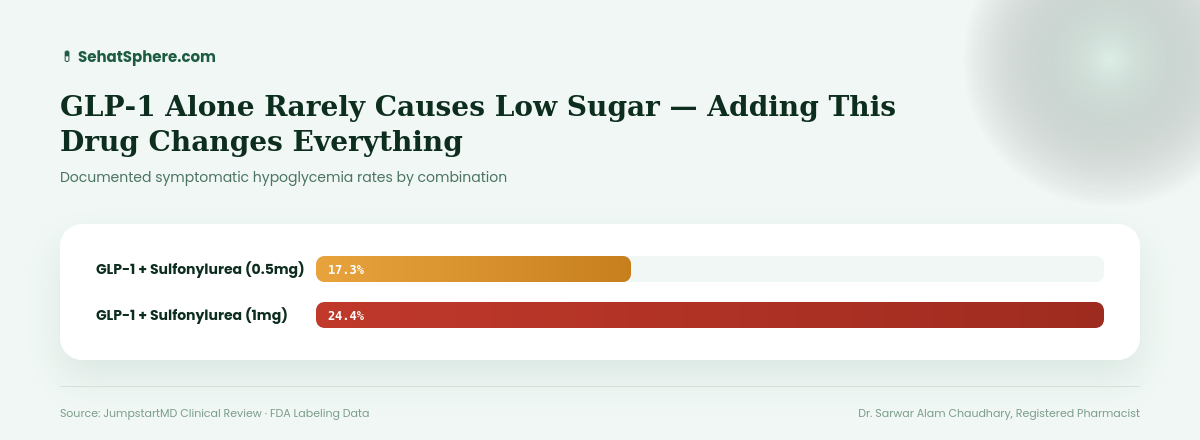
In clinical studies, documented symptomatic hypoglycemia jumped to 17.3% on semaglutide 0.5mg and 24.4% on the 1mg dose when taken alongside a sulfonylurea. This is precisely why FDA labeling explicitly instructs clinicians to lower the insulin or sulfonylurea dose when starting a GLP-1 — the two medications were never meant to be simply stacked at full strength.
What To Read Next
- Mounjaro & Ozempic Diet India: The broader diet framework for GLP-1 medications.
- How to Reverse Insulin Resistance: The earlier metabolic stage, before medication is needed.
- Diabetic Foot Care: Another diabetes-management area with real, preventable risk.
How Common Is This in India?
A study across nine old-age care facilities in South India found 67.2% of residents were diabetic, with hypoglycemia notably prevalent among those on sulfonylureas specifically — a population where age, kidney function decline, and irregular eating compound the risk considerably. South Asians also tend to develop diabetes at a younger age with more pronounced complications than other ethnic groups, a pattern our heart attack in young adults guide covers from the cardiovascular angle.
A genuinely India-specific risk factor deserves direct mention: religious fasting — whether Ramadan, Navratri, or other observances — combined with sulfonylurea or insulin use, is a well-documented trigger for hypoglycemic episodes. If fasting is part of your religious practice, this is worth a specific medication-timing conversation with your doctor well before the fast begins, not worked out on the fly. Chronic stress independently affects blood sugar control too — our mental stress guide covers this same cortisol pathway, and if PCOS is part of your metabolic picture, our PCOS symptoms guide shares substantial insulin-resistance overlap with everything in this guide.
What Low Blood Sugar Actually Feels Like
Recognizing the real pattern matters more than most people realize, since symptoms are often dismissed as general tiredness or stress.
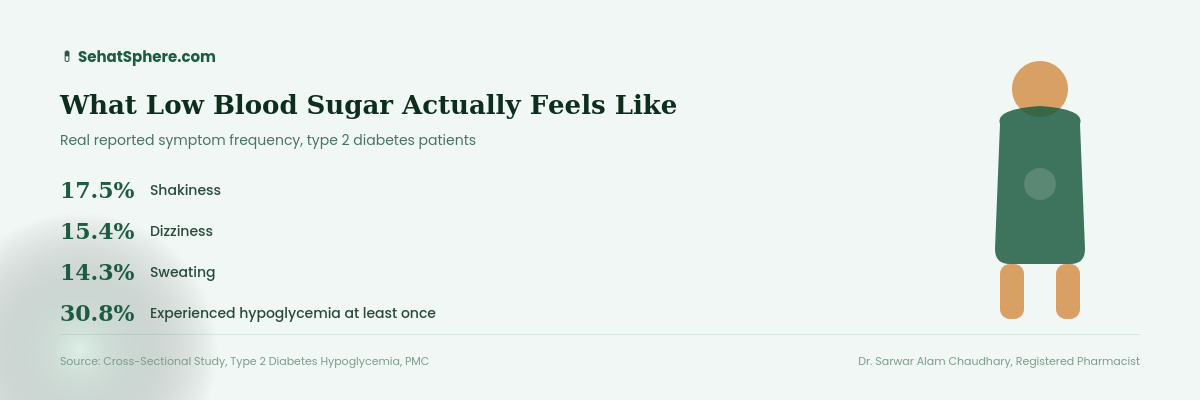
| Symptom | Reported Frequency |
|---|---|
| Shakiness | 17.5% |
| Dizziness | 15.4% |
| Sweating | 14.3% |
| Any hypoglycemia episode (overall) | 30.8% |
Hypoglycemia was most common among insulin users (41.75% of that group), followed by sulfonylurea users (26.92%), and lowest among those on metformin alone (18.95%) — a genuinely useful ranking to know if you’re comparing your own medication regimen against this risk picture.
When It’s Not Really Hypoglycemia
Here’s a genuinely important, underdiscussed clarification: if you’re using a GLP-1 for weight loss and don’t have diabetes or take other glucose-lowering drugs, true hypoglycemia is uncommon. The shaky, sweaty, lightheaded feeling many people blame on “low sugar” while on these medications is frequently caused by eating too little (appetite suppression genuinely reduces intake substantially), dehydration, or skipped meals — not an actual glucose crash. Distinguishing this matters, because the fix is different: eating a small, balanced snack and rehydrating, not treating it as a medical emergency every time.
Not All Sulfonylureas Carry Equal Risk
This is a specific, actionable distinction worth knowing if a sulfonylurea is part of your regimen. Long-acting sulfonylureas — glyburide (glibenclamide) and glimepiride — carry meaningfully higher hypoglycemia risk than shorter-acting options like gliclazide and glipizide. If you’ve experienced repeated low-sugar episodes, this is a genuinely reasonable, specific question to raise with your doctor: whether a shorter-acting alternative within the same drug class might reduce your risk without sacrificing blood sugar control.
The Real Weight-Loss Numbers
Since weight loss is often the reason people start these medications in the first place, the genuine numbers are worth knowing directly: GLP-1 medications can reduce body weight by 15% to 25% on average after about one year of consistent use. This is a substantial, clinically meaningful reduction — not a marginal effect — which is exactly why the interaction risk with existing diabetes medication deserves this much explicit attention rather than being an afterthought.
Gastrointestinal side effects are genuinely common alongside this benefit — up to 50% of people experience some degree of nausea, vomiting, or diarrhea, usually most pronounced during dose increases and easing over time.
Who’s Genuinely at Higher Risk
| Group | Why |
|---|---|
| Adults 65 and older | Consistently higher hypoglycemia risk across multiple large cohort studies |
| Recently discharged from hospital | Risk is roughly 4.5x higher in the first 30 days after discharge |
| Impaired kidney function | Sulfonylureas are renally excreted; reduced clearance raises drug levels |
| On 5+ medications concurrently | Polypharmacy independently raises hypoglycemia risk |
| Liver disease | One study found a 7.4x higher hypoglycemia risk in this group |
If you’re managing multiple prescriptions, the free Integrative Interaction Checker is worth running your complete list through, and if thyroid medication is also part of your routine, our thyroid medicine guide is worth reading, since both conditions frequently coexist and require careful, coordinated dose management.
The Broader Health Picture Worth Tracking
Diabetes medication adjustments rarely happen in isolation from the rest of your metabolic health. If a routine lab panel shows an unexpected creatinine change, our high creatinine levels guide covers why this matters directly for medication dosing, since several diabetes drugs are cleared through the kidneys. If cardiovascular risk factors are also part of your picture, our normal blood pressure by age guide and statins guide are worth reading together with this one, given how frequently diabetes, blood pressure, and cholesterol medications get adjusted as a set rather than individually. Nutrient status affects recovery and energy during any medication transition too — our protein deficiency guide and vitamin D deficiency guide are both worth a look, and the Biological Longevity Audit is a reasonable starting point for a broader sense of how all these pieces are adding up together.
What to Actually Do About It
Have an explicit conversation with your doctor about lowering your existing insulin or sulfonylurea dose before or alongside starting the new medication — this is standard, expected practice per FDA labeling, not an unusual request. Monitor your blood sugar more closely during the transition period. Know the real symptoms of true hypoglycemia (shakiness, sweating, confusion, rapid heartbeat) versus appetite-suppression-related fatigue. Keep a fast-acting glucose source accessible during the adjustment period, and don’t skip meals entirely while starting a new medication, even with reduced appetite.
If cost is ever a factor in staying consistent with follow-up testing or adjusted prescriptions, our generic medicine pricing guide is worth reading, and the free Blood Report Decoder can help you track your glucose trends over time as doses get adjusted.
Quick Self-Check
Tick anything that applies to you, and see what it suggests.
Frequently Asked Questions
Can GLP-1 medications like Ozempic or Mounjaro cause low blood sugar?
Rarely on their own, due to their glucose-dependent mechanism. Risk rises considerably when combined with a sulfonylurea or insulin, reaching 17.3-24.4% in documented studies.
Why does combining diabetes medications increase hypoglycemia risk?
Older drugs like sulfonylureas force insulin release regardless of glucose level. Adding a GLP-1 on top, plus reduced food intake from appetite suppression, compounds the glucose-lowering effect beyond what either medication alone would cause.
How much weight can you lose on GLP-1 medications?
On average, 15% to 25% of body weight after about one year of consistent use.
Is shakiness on a GLP-1 medication always low blood sugar?
Not necessarily. If you don’t have diabetes or take other glucose-lowering drugs, these feelings are often from eating too little or dehydration rather than true hypoglycemia.
Are all sulfonylureas equally likely to cause hypoglycemia?
No. Long-acting options like glyburide and glimepiride carry higher risk than shorter-acting ones like gliclazide and glipizide.
How common is hypoglycemia in elderly diabetics in India?
A South Indian old-age home study found 67.2% of residents were diabetic, with hypoglycemia notably common among those on sulfonylureas specifically.
Does fasting affect hypoglycemia risk for diabetics?
Yes, significantly. Religious fasting combined with sulfonylurea or insulin use is a well-documented trigger for hypoglycemic episodes, worth discussing with a doctor in advance.
Who is at highest risk of dangerous hypoglycemia?
Adults over 65, those recently discharged from hospital, people with impaired kidney or liver function, and anyone on 5 or more medications concurrently.
The Bottom Line
The genuine danger in diabetes medicine hypoglycemia safety isn’t any single drug — it’s the gap between an old prescription and a new one that nobody actively reconciled. GLP-1 medications are remarkably safe used alone, precisely because of their glucose-dependent design, but that safety profile changes the moment they’re combined with an older insulin-releasing drug. The fix isn’t complicated: an explicit dose-adjustment conversation before starting anything new, genuine awareness of what real hypoglycemia feels like versus appetite-related fatigue, and closer monitoring during any transition period. That conversation is the single highest-leverage thing missing from most “diabetes reversal” success stories you’ll read elsewhere.
- JumpstartMD Clinical Review. Do GLP-1 Medications Cause Low Blood Sugar?
- Weight Reduction with GLP-1 Agonists and Paths for Discontinuation. PMC.
- Prevalence and Associated Factors of Hypoglycemia Among Patients With Type 2 Diabetes Mellitus. PMC.
View All References (7) ▾
- Prevalence of Hypoglycemia Among Diabetic Old Age Home Residents in South India. ScienceDirect.
- Hypoglycemia With Insulin and Sulfonylureas. PMC, NIH.
- Pharmacologic Differences of Sulfonylureas and the Risk of Adverse Events. Diabetes Care, ADA.
- Mayo Clinic. Diabetes Drugs and Weight Loss.