 SehatSphere.com
How to Reverse Insulin Resistance: The Asian Indian Phenotype Nobody Warns You About
If you want to know how to reverse insulin resistance, the honest starting point isn’t a diet plan — it’s understanding that South Asians face this risk differently from almost every other population studied. Insulin resistance in non-obese Indians ranges from 11% to 43% depending on location and lifestyle — meaning a large share of people at genuine risk never look “overweight” by standard measures at all. The good news, backed by real clinical trial data: this condition is genuinely, substantially reversible in most people, often faster than expected.
Key takeaways:
- South Asians develop insulin resistance and type 2 diabetes at meaningfully lower BMI than other populations — the American Diabetes Association specifically lowered its screening cutoff to 23 kg/m² for this group, versus 25 for most others.
- In a controlled clinical trial, participants who lost an average of 22 pounds through a strict diet plan were 20 times more likely to achieve diabetes remission within a year.
- Losing just 5-7% of body weight has been shown to significantly lower diabetes risk — a genuinely achievable target, not a dramatic transformation.
- Certain common medications — steroids, some blood pressure drugs, HIV treatments — can themselves cause or worsen insulin resistance, an overlooked cause worth ruling out.
- What insulin resistance actually is
- The cellular mechanism, explained
- The Asian Indian phenotype, explained
- How common is this in India
- Symptoms that often get missed
- How it’s actually diagnosed
- Insulin resistance vs prediabetes vs diabetes
- The diet changes with real evidence
- Why exercise works so specifically
- Sleep, cortisol & stress
- Medications that can cause it
- Intermittent fasting: the evidence
- A realistic reversal timeline
- Family history & genetics
- The nutrient connections worth knowing
- Supplements with real evidence
- What happens if it’s untreated
- Test your knowledge
- Quick self-check
- Monitoring your progress
- FAQs
What Insulin Resistance Actually Is
After you eat, your body breaks carbohydrates down into sugar, and insulin’s job is to help your cells absorb that sugar for energy. In insulin resistance, your cells stop responding normally to insulin’s signal — so your pancreas compensates by producing more and more insulin just to keep blood sugar in a normal range. This compensation can work for years, silently, before blood sugar itself starts rising and prediabetes or type 2 diabetes becomes visible on a routine test. Our metabolic flexibility guide covers the closely related concept of how efficiently your body switches between fuel sources, which sits right alongside this same insulin-signaling story.
The Cellular Mechanism: What’s Actually Happening Inside Your Cells
Understanding the “why” behind insulin resistance genuinely changes how seriously people take the reversal steps later in this guide, so it’s worth walking through the actual biochemistry rather than staying at the surface level.
In a properly functioning cell, insulin binds to the insulin receptor on the cell’s surface, triggering a cascade: the receptor autophosphorylates, which activates a docking protein called IRS-1 (insulin receptor substrate-1). IRS-1 then switches on the PI3K-Akt signaling pathway inside the cell, and the end result of that whole chain is that GLUT4 glucose transporters — normally sitting in storage inside the cell — move to the cell membrane and physically let glucose in. This entire sequence, from insulin binding to glucose actually entering the cell, happens in minutes.
Insulin resistance develops when this chain breaks down, most commonly at the IRS-1 step. Chronic exposure to excess free fatty acids — released from overfilled fat cells, especially visceral fat around the abdominal organs — and low-grade inflammatory signaling molecules like TNF-alpha and IL-6 cause IRS-1 to get phosphorylated on the wrong amino acid (serine instead of tyrosine). This wrong-site phosphorylation effectively jams the docking protein, blocking the downstream signal before GLUT4 ever gets the message to move. The insulin is present, the receptor is there, but the internal relay line is disrupted — which is precisely why it’s called resistance rather than deficiency.
This mechanism explains something that genuinely confuses a lot of people: why a person can have completely normal-looking blood tests for years while this process is already underway. Fasting glucose only rises once the pancreas’s compensatory over-production of insulin can no longer force enough glucose through the jammed signaling pathway — by which point the resistance itself has usually been building for a long time.
It also explains why visceral, ectopic fat — fat stored around organs and inside the liver and muscle tissue, not just under the skin — matters so much more than total body weight, and why Asian Indians, who store proportionally more visceral and ectopic fat at any given BMI (a pattern researchers sometimes call the “thin-fat Indian” phenotype), develop this signaling breakdown at lower body weights than other populations.
The Asian Indian Phenotype, Explained
This is the single most important, most under-communicated fact in this entire topic. Research consistently shows Asian Indians develop insulin resistance, metabolic syndrome, and type 2 diabetes at a younger age and lower BMI than other ethnicities — a pattern researchers call the Asian Indian phenotype.
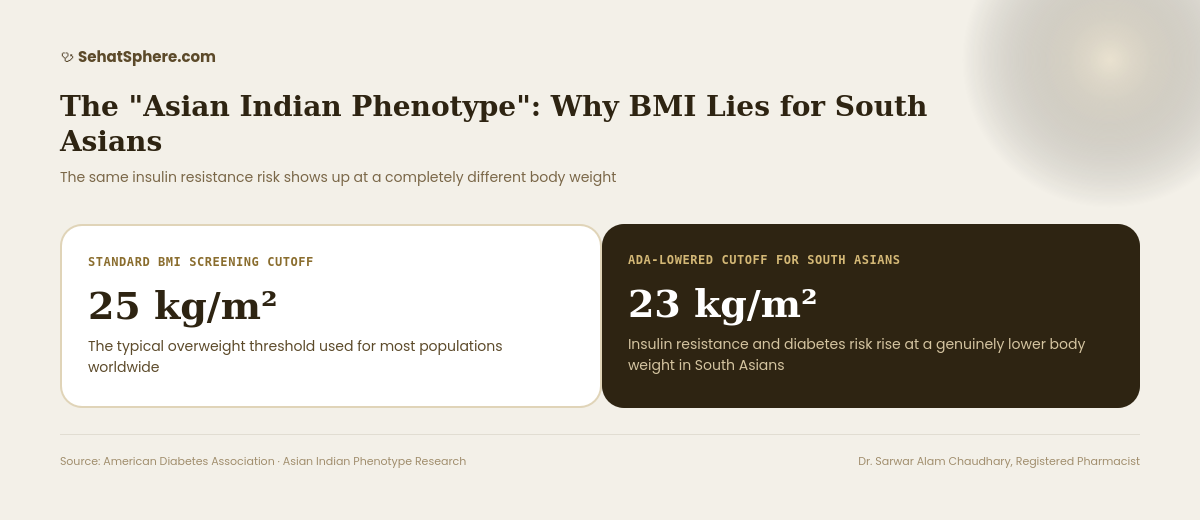
This is precisely why the American Diabetes Association lowered its type 2 diabetes screening BMI threshold specifically for South Asians — to 23 kg/m², compared to the standard 25 used for most other populations. The underlying driver is a specific body-fat distribution pattern: excess abdominal fat and adverse fat patterning, including features documented as early as birth and childhood, occurring even when overall body mass index looks entirely normal. This means genuinely large numbers of Indians who would never be flagged as “at risk” by standard international BMI charts are, in fact, carrying real metabolic risk.
Understanding how to reverse insulin resistance for this specific group genuinely has to start here — with this fat-distribution pattern, not the generic BMI chart most people rely on. This same phenotype pattern shows up across our heart attack in young adults guide and high creatinine levels guide too, since South Asians face cardiovascular and kidney risk at younger ages by the same underlying mechanism.
What To Read Next
- Metabolic Flexibility vs Rigidity: The mitochondrial fuel-switching story behind this same condition.
- Fatty Liver Treatment Guide: Where excess, unused glucose often ends up stored.
- PCOS Symptoms: Insulin resistance sits at the center of this condition too.
How Common Is This in India?
Insulin resistance in non-obese Indians ranges from 11% to 43% depending on geographical location, urbanization, and economic strata — a genuinely wide range that itself tells a story about how unevenly this risk is distributed. Rapid urbanization has compounded the problem: reduced physical activity, increased processed food consumption, irregular sleep, and higher chronic stress have all measurably contributed to rising insulin resistance specifically in urban Indian populations, where the shift from traditional to modern lifestyle has happened within a single generation.
Children aren’t exempt either — a study of overweight and obese Indian schoolchildren found significantly higher HOMA-IR scores (a standard insulin resistance measure) compared to children without metabolic syndrome, alongside low HDL, high triglycerides, and elevated blood pressure in the same group. Our heart attack in young adults guide covers the cardiovascular consequences this same pattern eventually produces, often years before it becomes clinically obvious.
Symptoms That Often Get Missed
Insulin resistance is often genuinely silent for years, which is exactly why it goes undiagnosed until prediabetes or diabetes is already established:
| Sign | Why It’s Often Missed |
|---|---|
| Increased abdominal fat | Attributed to general weight gain, not a specific metabolic signal |
| Fatigue after meals | Dismissed as normal post-meal tiredness |
| Dark, velvety skin patches (acanthosis nigricans) | Often mistaken for a skin condition rather than a metabolic marker |
| Sugar cravings | Treated as a willpower issue rather than a physiological signal |
| Difficulty losing weight despite effort | Attributed to diet adherence rather than the underlying hormonal picture |
Our PCOS symptoms guide covers a related population where insulin resistance is a core, well-documented driver of the condition, not a coincidental finding.
How It’s Actually Diagnosed
Standard assessment includes fasting blood glucose, HbA1c, fasting insulin levels, and the HOMA-IR index (a calculated ratio using fasting glucose and insulin together). A doctor typically also evaluates your lipid profile, waist circumference, and blood pressure as part of a genuinely complete metabolic assessment, rather than relying on a single number in isolation. A simpler, more accessible alternative studied specifically in rural India is the triglyceride-to-HDL ratio — a genuinely useful, low-cost surrogate marker in settings where HOMA-IR testing is expensive or impractical. The free Blood Report Decoder can help you interpret whichever markers your own results include.
Insulin Resistance vs Prediabetes vs Type 2 Diabetes
These three terms get used almost interchangeably in casual conversation, but they represent genuinely different points on the same underlying timeline — and knowing which stage you’re actually in changes what action makes sense. Insulin resistance is the earliest, most silent stage: your cells have already started ignoring insulin’s signal, but your pancreas is still compensating hard enough that your blood glucose numbers can look completely normal on a standard test. This is exactly why fasting glucose alone misses so many at-risk people — the compensation itself hides the problem from a routine check-up.
| Stage | Fasting Glucose | HbA1c | What’s Actually Happening |
|---|---|---|---|
| Insulin resistance | Often normal (below 100 mg/dL) | Often normal (below 5.7%) | Cells resist insulin; pancreas compensates with higher output |
| Prediabetes | 100–125 mg/dL | 5.7–6.4% | Compensation starting to fail; glucose creeping upward |
| Type 2 diabetes | 126 mg/dL or higher | 6.5% or higher | Pancreatic compensation has substantially failed |
The practical takeaway is this: by the time prediabetes shows up on a routine test, insulin resistance has usually been quietly building for years already. This is precisely why doctors increasingly recommend fasting insulin and HOMA-IR testing — covered in the diagnosis section above — specifically for people who look metabolically “fine” by glucose numbers alone but carry the risk factors covered throughout this guide, especially the Asian Indian phenotype pattern.
The Diet Changes With Real Evidence
This is where the strongest clinical data exists, and it deserves the specific numbers rather than vague encouragement.
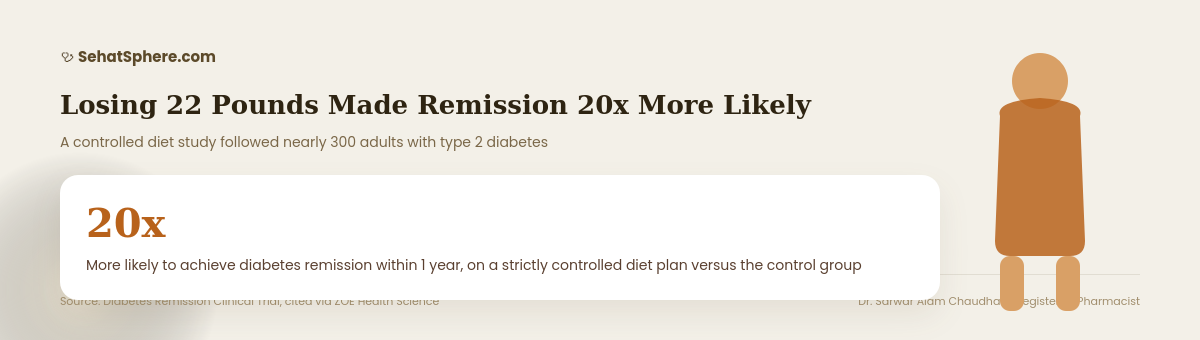
In a controlled trial involving nearly 300 adults with type 2 diabetes, participants on a strictly controlled diet plan lost an average of 22 pounds and were 20 times more likely to achieve diabetes remission within one year compared to the control group.
This is the clearest data-backed answer to how to reverse insulin resistance through diet alone: separately, losing just 5-7% of body weight has been shown to significantly lower diabetes risk in people at high risk — a genuinely modest, realistic target rather than a dramatic transformation. Eating plenty of non-starchy vegetables, lean protein, and whole grains, while reducing processed food, lowers the blood sugar spike your pancreas has to respond to, directly reducing the insulin demand driving the resistance in the first place. Our protein deficiency in India guide is worth reading here specifically, since adequate protein genuinely supports this exact dietary shift.
A documented Indian case report is worth mentioning too: a 31-year-old woman with an HbA1c of 13.5 (severely elevated) achieved near-normal control through an Ayurvedic dietary protocol combined with therapeutic yoga — including a millet-based diet and structured meal timing — with measurable improvement in her HOMA-IR score. This isn’t presented as proof that diet alone reverses every case, but as genuine evidence that culturally-rooted approaches can produce real, measured metabolic change.
Beyond the overall dietary pattern, specific everyday food swaps make a measurable difference to the insulin demand any single meal creates:
| Helps Insulin Sensitivity | Worsens Insulin Resistance |
|---|---|
| Whole grains — brown rice, whole wheat roti, millets (bajra, jowar, ragi) | Refined grains — white rice, maida-based bread and snacks |
| Non-starchy vegetables — leafy greens, gourds, beans | Sugar-sweetened beverages — soft drinks, sweetened tea/coffee, packaged juices |
| Legumes — dals, chickpeas, rajma (high fiber, slow-digesting) | Deep-fried snacks — samosas, pakoras, namkeen |
| Fatty fish, eggs, paneer, curd — protein that slows glucose absorption | Refined sugar — sweets, mithai, bakery items eaten frequently |
| Nuts and seeds in moderation — healthy fats, minimal glucose impact | Fruit juice without fiber — strips out the fiber that would otherwise blunt the sugar spike |
Why Exercise Works So Specifically
The mechanism here is genuinely worth understanding, not just the general “exercise is good” advice. During physical activity, your muscles can take in up to 5 times more sugar from your bloodstream for fuel, without needing insulin’s signal at all. This effect is temporary during any single workout, but consistent exercise over time genuinely improves how sensitive your cells are to insulin more broadly — both reducing fat and building muscle, which itself absorbs glucose more efficiently. Our diabetic foot care guide is worth reading too if diabetes is already part of your picture, since foot health and blood sugar management are directly connected.
Sleep, Cortisol & Stress: The Overlooked Driver
Almost nobody mentions this when insulin resistance is discussed, yet the evidence is genuinely strong: poor sleep and chronic stress directly worsen insulin resistance through a well-documented hormonal mechanism, independent of diet or exercise. When you’re sleep-deprived or under sustained stress, your body raises cortisol — a hormone whose job, among others, is to push stored glucose into your bloodstream to prepare for a perceived threat. Cortisol does this partly by directly blunting how well your muscle and fat cells respond to insulin, and partly by encouraging your liver to release more glucose than your body actually needs at that moment.
In a landmark controlled study, healthy young adults restricted to a fraction of normal sleep for several nights showed dramatically impaired glucose tolerance: glucose clearance slowed by roughly 40%, and the body’s acute insulin response dropped by about 30%, alongside measurably elevated evening cortisol. A separate, more recent controlled trial found that just one week of restricting sleep to 5 hours a night reduced insulin sensitivity by 20-25% in otherwise healthy young men — a change large enough to meaningfully shift someone’s real metabolic risk in a matter of days, not months.
This matters specifically in the Indian context, where long commutes, shift work, late dinners, and smartphone-driven late nights have measurably compressed average sleep duration in urban populations over the past decade. If you’re doing everything right on diet and exercise but still not seeing the numbers move, sleep and chronic stress are genuinely worth auditing honestly before assuming the plan itself has failed. Our Biological Longevity Audit includes sleep-quality scoring specifically because of how tightly it’s linked to this exact metabolic picture.
Medications That Can Cause It
This is a genuinely underdiscussed cause worth ruling out before assuming diet and exercise alone explain the full picture. Certain medications can independently cause or worsen insulin resistance: steroids, some blood pressure medications, and HIV treatments among them. Corticosteroids in particular work directly against the mechanism covered earlier — they raise blood glucose by promoting the liver’s own glucose output while simultaneously interfering with GLUT4 translocation, essentially recreating the same signaling jam that visceral fat and inflammation cause on their own. This is exactly why patients on long-term steroid courses for conditions like asthma or autoimmune disease often need their blood sugar monitored specifically, even with no prior diabetes history.
Ruling this out is a genuinely easy first step in how to reverse insulin resistance when diet and exercise alone haven’t moved your numbers. Our statins guide and normal blood pressure by age guide are both worth reading if either type of medication is part of your regular routine, and the free Integrative Interaction Checker is worth using to check your full medication list for this kind of overlap.
Intermittent Fasting: What the Evidence Actually Shows
Intermittent fasting has become genuinely popular as an insulin-resistance strategy, and the underlying logic is sound even if the marketing around it often overreaches. Every time you eat, insulin rises to manage the resulting glucose. Extending the daily gap between meals — commonly a 12 to 16-hour overnight fast, sometimes called time-restricted eating — reduces the total number of insulin spikes your pancreas has to produce across a day, which gives chronically overworked insulin-signaling pathways genuine recovery time.
Research on time-restricted eating has shown measurable improvements in insulin sensitivity and fasting insulin levels in several controlled studies, independent of weight loss in some of them — suggesting the timing itself, not just the calorie reduction that often accompanies it, plays a real mechanistic role.
Anyone considering this as their main approach to how to reverse insulin resistance needs one specific, honest caution first: anyone already on insulin, sulfonylureas, or other glucose-lowering medication should not start intermittent fasting without their doctor’s direct involvement, since extended fasting windows combined with these medications can trigger genuine hypoglycemia. It’s also not automatically superior to simply eating balanced meals at consistent times — for many people, especially those managing shift work or irregular schedules common in Indian households, consistency matters more than a strict fasting window.
A Realistic Reversal Timeline
| Timeframe | What’s Typically Happening |
|---|---|
| Days to weeks | Improved post-meal energy, reduced cravings as blood sugar stabilizes |
| 4-8 weeks | Measurable improvement in fasting insulin and HOMA-IR with consistent diet and exercise changes |
| 3-6 months | Significant, sustained improvement in most people who maintain the 5-7% weight loss target |
| 1 year | Genuine remission possible for many, per controlled trial data |
Early detection genuinely makes reversal more achievable — which is exactly why understanding your own risk, especially given the Asian Indian phenotype covered above, matters more than waiting for symptoms to become obvious.
Who’s Most at Risk: Family History & Genetics
Genetics don’t determine your fate here, but they genuinely shape your starting line. Having a parent or sibling with type 2 diabetes measurably raises your own risk of developing insulin resistance, independent of your own weight or lifestyle — and this effect appears to be particularly pronounced in South Asian families. Peer-reviewed research has specifically linked variants of the TCF7L2 gene — which plays a role in insulin production and secretion from pancreatic cells — to increased type 2 diabetes risk, with this association confirmed directly in South Asian populations, including a study of a UK-resident South Asian cohort.
The honest, practical implication isn’t fatalism — it’s earlier vigilance. If type 2 diabetes runs in your family, waiting for classic symptoms before getting tested means waiting far too long, given how much of this condition’s early phase produces no symptoms at all. This is exactly the population the American Diabetes Association’s lowered BMI screening cutoff was designed to catch earlier, and it’s worth combining that awareness with the self-check further down this guide.
The Nutrient Connections Worth Knowing
Insulin resistance rarely exists in complete isolation from your broader nutrient status. Our vitamin D deficiency guide and zinc deficiency guide are both worth reading, since both nutrients play a genuine, documented role in insulin signaling, and deficiency is extremely common across India. If you’re also managing thyroid symptoms, our thyroid medicine guide is worth a look, since thyroid dysfunction and insulin resistance frequently overlap in the same person. The free Nutrient Deficiency Symptom Finder and Biological Longevity Audit are both genuinely useful starting points for a broader picture of where your daily habits stand.
Supplements With Real Evidence: Berberine, Myo-Inositol, Magnesium & Chromium
Search for how to reverse insulin resistance online and you’ll find dozens of supplement claims — this section deserves an upfront, honest warning before anything else: none of these supplements replace diet, exercise, or prescribed medication, and several interact meaningfully with diabetes drugs. What follows is what the actual clinical evidence supports — not marketing claims.
Berberine and metformin lower blood glucose through overlapping pathways. Combining them without medical supervision has been shown to produce a substantially greater glucose-lowering effect than either alone — which sounds beneficial but genuinely raises the risk of hypoglycemia if doses aren’t adjusted by your doctor. Never add berberine to an existing diabetes prescription without discussing it first.
| Supplement | Typical Studied Dose | What It Actually Does |
|---|---|---|
| Berberine | 500mg, two to three times daily | Activates AMPK, an enzyme that improves cellular glucose uptake; shown to meaningfully lower HbA1c in clinical trials |
| Myo-inositol | 2 grams, twice daily (often with folic acid) | Improves insulin-signal transmission inside the cell; best studied in PCOS-related insulin resistance |
| Magnesium (glycinate) | 200–400mg daily | Cofactor for insulin-receptor function; deficiency is common and independently linked to worse insulin sensitivity |
| Chromium picolinate | 200–1000mcg daily | Modest evidence for improving insulin action; effect size is smaller and less consistent than berberine or inositol |
Berberine’s evidence base is genuinely one of the stronger ones among natural compounds studied for this purpose — a well-cited clinical trial found it lowered fasting blood glucose and HbA1c meaningfully over three months, working through the same AMPK-activation pathway that exercise itself triggers. Myo-inositol has the most robust data specifically in women with PCOS-related insulin resistance, where it improves how insulin receptors transmit their signal once insulin has already bound to the cell. Our PCOS symptoms guide and Nutrient Deficiency Symptom Finder are both worth checking before starting any of these, since magnesium and zinc deficiency — covered in our zinc deficiency guide — are extremely common in India and worth correcting through diet first wherever possible.
What Happens If It’s Left Untreated
Insulin resistance rarely stays isolated. Left unaddressed, the same underlying dysfunction tends to spread across multiple organ systems over years, because insulin receptors exist throughout the body, not just in muscle and fat tissue.
- Type 2 diabetes — the most direct progression, once pancreatic compensation can no longer keep up
- Non-alcoholic fatty liver disease — excess glucose your cells can’t use gets converted to fat and stored in the liver; see our fatty liver treatment guide
- Cardiovascular disease — high circulating insulin independently promotes arterial inflammation and unfavorable cholesterol patterns; our heart attack in young adults guide covers why this hits South Asians earlier
- PCOS worsening — insulin resistance and PCOS reinforce each other in a genuine feedback loop
- Kidney strain — sustained high glucose and insulin gradually damage kidney filtering structures; our high creatinine levels guide covers the warning signs
None of this is meant to alarm — it’s meant to correct a common misconception that insulin resistance is a “wait and see” condition. It genuinely isn’t. Learning how to reverse insulin resistance early is precisely why this guide leads with reversal strategies rather than just describing the problem — every complication listed above is substantially preventable when the underlying insulin resistance is addressed in time.
Test Your Insulin Resistance Knowledge
Five quick questions based directly on what this guide covers. Tap an answer to see if you’re right.
Quick Self-Check
Tick anything that applies to you, and see what it suggests.
Monitoring Progress: Which Numbers to Recheck and How Often
One genuine mistake people make once they start making changes is either not retesting at all, or retesting so often that normal day-to-day fluctuation gets mistaken for failure. A sensible, evidence-informed monitoring rhythm looks like this:
| Test | Recheck Frequency | Why This Interval |
|---|---|---|
| Fasting insulin & HOMA-IR | Every 8-12 weeks initially | Matches the timeframe where measurable improvement typically first appears |
| HbA1c | Every 3 months | Reflects a genuine 3-month average; testing sooner just adds noise |
| Weight & waist circumference | Every 2-4 weeks | Waist circumference tracks visceral fat loss more directly than the scale alone |
| Lipid profile | Every 6 months | Improves more slowly than glucose markers; frequent testing rarely shows meaningful change |
Waist circumference specifically deserves more attention than it usually gets, given everything covered in the cellular mechanism section above — it’s a genuinely direct proxy for the visceral and ectopic fat driving the IRS-1 signaling disruption, in a way that total body weight on its own simply isn’t. A falling waist measurement, even without dramatic weight loss, is a real, meaningful signal that the underlying resistance is genuinely improving.
Frequently Asked Questions
Can insulin resistance actually be reversed?
Yes, in many cases it can be significantly improved or reversed through lifestyle changes including regular exercise, a balanced low-glycaemic diet, and healthy weight loss. Early detection makes reversal much more achievable.
What is the Asian Indian phenotype?
A well-documented pattern where South Asians develop insulin resistance and type 2 diabetes at a younger age and lower BMI than other ethnicities, driven by adverse abdominal fat distribution even at normal body weight.
How much weight loss is needed to improve insulin resistance?
Losing just 5-7% of body weight has been shown to significantly lower diabetes risk, and a controlled trial found participants losing 22 pounds were 20 times more likely to achieve remission within a year.
How is insulin resistance diagnosed?
Through fasting blood glucose, HbA1c, fasting insulin levels, and the HOMA-IR index, alongside lipid profile, waist circumference, and blood pressure assessment.
Can medications cause insulin resistance?
Yes, certain medications including steroids, some blood pressure drugs, and HIV treatments can independently cause or worsen insulin resistance.
Why does exercise help insulin resistance specifically?
During exercise, muscles can take in up to 5 times more sugar from the blood without needing insulin, and consistent activity improves insulin sensitivity over time.
How common is insulin resistance in non-obese Indians?
Estimates range from 11% to 43% depending on geographical location, urbanization, and economic strata.
Can insulin resistance cause weight gain?
Yes — high circulating insulin promotes fat storage, especially around the abdomen, and makes fat genuinely harder to lose even with a reasonable diet, which is why weight gain and insulin resistance frequently reinforce each other.
What is the best exercise for insulin resistance?
A combination works best: resistance training builds muscle that absorbs glucose more efficiently, while aerobic exercise like brisk walking or cycling improves insulin sensitivity broadly. Both matter more than any single “best” workout.
Can insulin resistance be reversed without medication?
In many cases, yes — through consistent diet changes, exercise, weight loss, and adequate sleep. However, some people need medication such as metformin alongside lifestyle changes, and that decision should be made with a doctor based on actual test results.
Is intermittent fasting safe for insulin resistance?
For most healthy adults, time-restricted eating is generally safe and can help. It becomes risky specifically for anyone already on insulin or other glucose-lowering medication, who should not start fasting without their doctor’s involvement due to hypoglycemia risk.
What is a normal HOMA-IR score?
A HOMA-IR below roughly 1.0-1.5 is generally considered optimal, with values above 2.0-2.5 commonly flagged as suggestive of insulin resistance, though exact cutoffs vary by lab and population.
Can insulin resistance run in families?
Yes — having a parent or sibling with type 2 diabetes independently raises your own risk, and specific gene variants such as TCF7L2 have been directly linked to this increased risk in South Asian populations.
Does poor sleep really affect insulin resistance?
Yes, measurably. Controlled studies have found that even one week of restricting sleep to 5 hours a night can reduce insulin sensitivity by 20-25% in healthy adults, through elevated cortisol and impaired glucose clearance.
The Bottom Line
Knowing how to reverse insulin resistance starts with recognizing that South Asians face this risk differently — at lower body weights, at younger ages, and often without the obvious warning signs standard health guidance assumes. The reversal itself is genuinely well-supported by real clinical data: modest weight loss, consistent exercise, and dietary changes with actual evidence behind them, not a dramatic overhaul. Given how silently this condition progresses, testing your actual numbers — not just your BMI — is the single most useful first step this guide can leave you with.
- Dr. Mohan’s Diabetes Specialities Centre. The Silent Rise of Insulin Resistance in Urban India.
- ZOE Health. Insulin Resistance: Causes, Symptoms, and How To Reverse It.
- PMC. TG/HDL Ratio as a Marker of Insulin Resistance in Central Rural India.
- WellMed Medical Group. How to Reverse Insulin Resistance.
View All References (9) ▾
- PMC. Prevalence of Insulin Resistance in Urban Indian School Children Who Are Overweight/Obese.
- PMC. Reversal of Type 2 Diabetes Through Integrated Ayurveda Dietary Protocol.
- CVS Health. Insulin Resistance: Causes, Symptoms and Treatment.
- PubMed. Efficacy of Berberine in Patients With Type 2 Diabetes Mellitus.
- Diabetes (American Diabetes Association journal). Sleep Restriction for 1 Week Reduces Insulin Sensitivity in Healthy Men.