 SehatSphere.com
Magnesium and Your Medications: What “Cortisol Face” Culture Isn’t Telling You
Is “cortisol face” real, and does magnesium actually fix it? The short answer: “cortisol face” isn’t a medical diagnosis, and magnesium’s real value has almost nothing to do with your face — it’s about the medicine cabinet nobody mentions in the TikTok version of this story.
Key takeaways:
- “Cortisol face” is a social-media term, not a diagnosis — the real medical condition it borrows from (Cushing’s syndrome) needs multiple symptoms, not just a puffy face.
- Ordinary morning puffiness is far more often sodium, sleep position, or allergies than cortisol.
- Magnesium’s genuine science is real (HPA-axis regulation) — but it’s more modest than the marketing, and it binds to several common medications in your gut before they can absorb.
- The reverse problem gets less attention: some medications quietly drain your magnesium — often the actual reason someone feels drained enough to go looking for a “cortisol face” fix.
What “Cortisol Face” Actually Is
“Cortisol face” is a term that took off on TikTok to describe facial puffiness and roundness, blamed on stress and the hormone cortisol. It is not a medical diagnosis — no endocrinologist will write it on a chart.
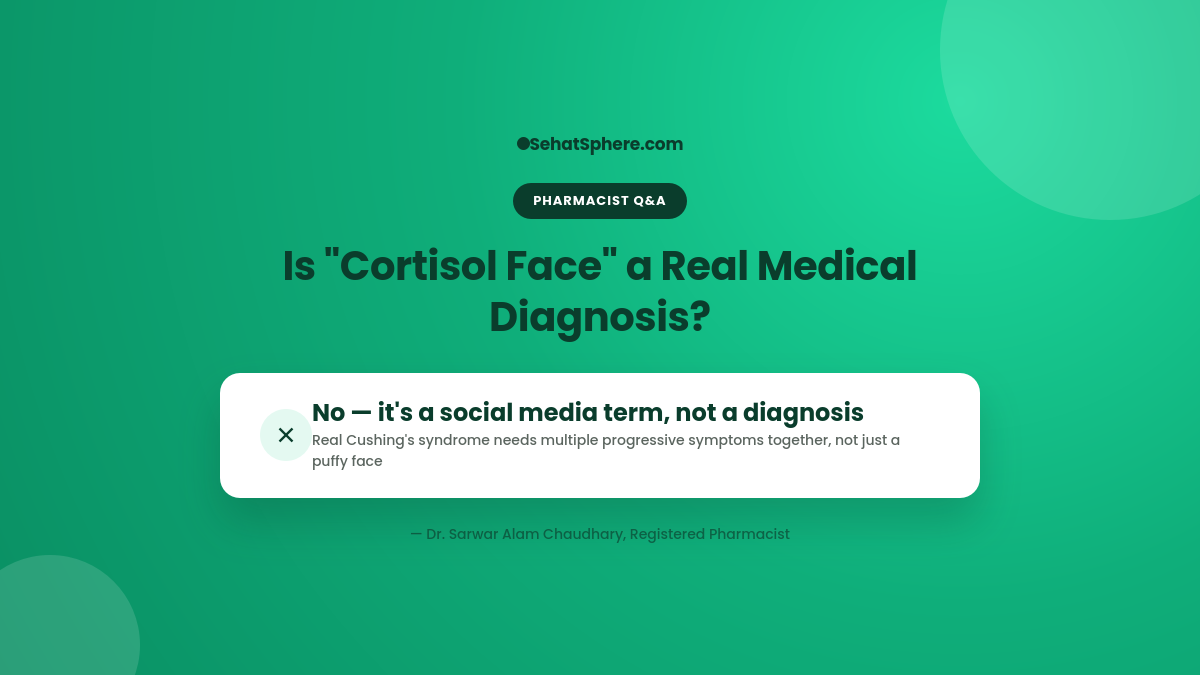
The real condition it borrows from is Cushing’s syndrome (“moon face”), a genuinely rare disorder where the body makes far too much cortisol, usually from long-term steroid medication or a pituitary/adrenal tumor. Endocrine guidelines are specific about this: testing is warranted when someone has multiple, progressive features together — not an isolated puffy face.
| Real Cushing’s Signs (need several together) | Ordinary Puffiness (isolated, resolves in hours) |
|---|---|
| Buffalo hump, thinning limbs | Worse after a salty dinner |
| Purple/dark stretch marks | Worse after poor sleep or alcohol |
| Muscle weakness, high blood pressure | Improves within hours of waking/standing |
| Gradual worsening over weeks-months | Tied to allergies (angioedema) |
The far more common, far better-evidenced causes of a puffy face: sodium intake, sleep position, dehydration, alcohol, and allergies. None of these need a supplement to explain them.
Why Magnesium Glycinate Is Suddenly Everywhere
Magnesium glycinate has become one of 2026’s defining wellness minerals, riding the same wave of “cortisol face” and sleep-focused content. The pitch: chronic stress depletes magnesium, low magnesium worsens stress, and glycinate — gentler on digestion than older forms — breaks the cycle.
There’s real biology behind part of this. Magnesium genuinely participates in GABA signaling, your nervous system’s main calming pathway, and regulates the HPA axis — the system that governs cortisol release. A documented “vicious circle” exists in the research: stress depletes magnesium, and low magnesium makes the stress response harder to switch off. What the trend rarely mentions is that magnesium is also one of the most interaction-prone minerals in the supplement aisle — not because it’s dangerous, but because it’s chemically sticky.
Magnesium isn’t the only “natural” trend getting this treatment, either — sea moss went through the same wave, marketed as a cure-all mineral source with the same gap between the trend and the medicine-cabinet reality.
Take magnesium glycinate, lower your cortisol, fix your “cortisol face,” sleep better — a clean, simple stress-relief story.
Real mechanism, real benefit for many people — but magnesium binds to several common medications in your gut before they can absorb, and “calming” isn’t a one-way street if you’re already on a sedative.
Magnesium and Your Medications: Real Interactions Worth Knowing
| Medication | What Happens | Safe Gap |
|---|---|---|
| Tetracycline / fluoroquinolone antibiotics | Absorption cut 50–90% | 2–6 hours |
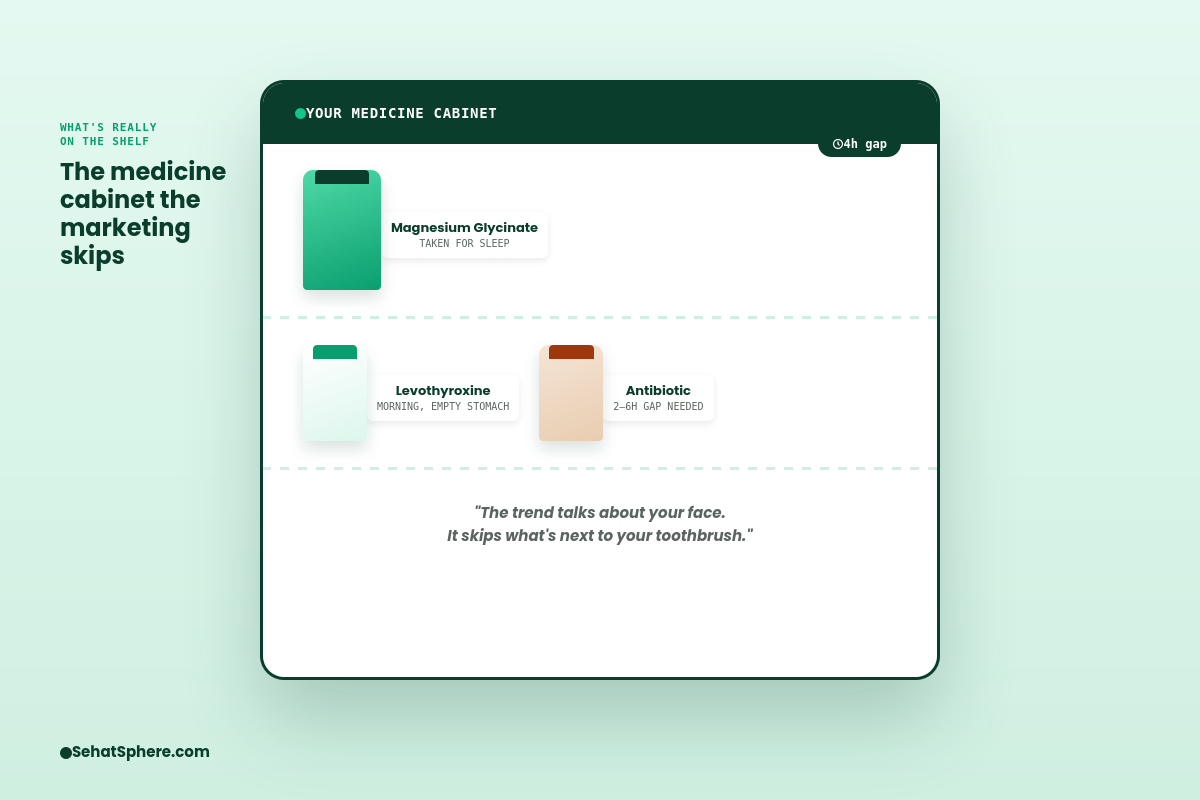
| Levothyroxine (thyroid) | Reduced hormone absorption | 4 hours |
| Bisphosphonates (osteoporosis) | Already-poor absorption worsens | 2 hours |
| Blood pressure medication | Additive vessel-relaxing effect | Monitor BP |
| Rosuvastatin (statin) | Absorption can drop ~50% | 2 hours |
| Gabapentin | Reduced effectiveness for nerve pain | 2 hours |
The antibiotic and thyroid interactions are the best-documented — magnesium ions chemically bind these drugs into complexes your gut can’t absorb. If you’re on levothyroxine specifically, our full interaction guide covers the exact case-report evidence behind the 4-hour rule.
The Sedation Stack Nobody Warns About
Magnesium has a genuine, mild calming and muscle-relaxant effect of its own — exactly why it’s marketed for stress and sleep. If you’re already taking a benzodiazepine, sedative sleep aid, or muscle relaxant, magnesium’s calming effect stacks on top of theirs. Not a chemical interaction exactly — an additive one that’s easy to underestimate precisely because magnesium feels “natural.”
Does Magnesium Actually Lower Cortisol?
The honest research picture is more modest than the marketing. Some trials show magnesium supplementation modestly improves subjective stress and sleep quality — particularly in people who were genuinely deficient. Robust, direct evidence that it measurably lowers cortisol in people with normal magnesium levels is thinner than most supplement blogs suggest.
It’s the same story with cold plunging — another recovery trend people track through wearable HRV numbers, with its own real physiology and its own gap between what the data shows and what the marketing implies.
A Simple Timing Protocol
- Take thyroid medication first thing, on an empty stomach — magnesium in the evening avoids the interaction entirely.
- On an antibiotic course? Take it 2 hours before or 4–6 hours after magnesium.
- Bisphosphonates: keep magnesium and other minerals away from that first-thing empty-stomach dose.
- On blood pressure medication: start at a lower magnesium dose and monitor how you feel, rather than assuming “natural” means “no effect.”
Which Form Should You Actually Take?
Glycinate — gentle on digestion, well-absorbed, the default recommendation for sleep and calm. L-threonate — the only form with clinical evidence of raising brain magnesium specifically, more expensive. Oxide — cheap, poorly absorbed, more likely to cause loose stools, and because more stays unabsorbed in the gut, somewhat more likely to interfere with other medications. Form doesn’t change the interaction list above — glycinate is gentler on your stomach, not immune to binding your antibiotic.
Who Should Be Extra Careful
Kidney disease is the clearest exception overall, but a few other groups deserve specific mention: people on lithium (magnesium can affect lithium levels and needs monitoring), anyone with a heart block or slow heart rhythm (magnesium can slow cardiac conduction further), and people already on multiple sedating medications, where the additive-drowsiness effect compounds with each additional drug.
What To Read Next
- Magnesium and Your Medications (Interactions): The full clinical breakdown, drug by drug.
- Magnesium Deficiency Symptoms: 8 warning signs most people miss entirely.
- Nutrient Deficiency Symptom Finder: Free 2-minute self-check tool.
- Ashwagandha and Your Medications: Another “natural stress relief” trend with real thyroid risks.
- Apple Cider Vinegar and Your Medications: The same trend-versus-pharmacology gap, different bottle.
- Still Tired After 8 Hours of Sleep? If magnesium didn’t fix your fatigue, this covers what else might.
- Why Does Heart Rate Fluctuate? More on reading your wearable’s numbers correctly.
The Other Direction: Medications That Drain Your Magnesium
Almost everything above covers magnesium interfering with medications. There’s an equally important reverse problem that gets far less attention: certain medications quietly deplete your magnesium over time — often the actual reason someone feels drained, crampy, or anxious enough to go looking for a “cortisol face” fix in the first place.
Proton pump inhibitors (PPIs) like omeprazole, used long-term, are specifically flagged for causing low magnesium — sometimes without obvious symptoms until levels are quite low. Loop and thiazide diuretics increase magnesium loss through urine. If you’ve been on any of these for months or years and feel constantly fatigued or crampy, the more useful question may not be “should I add magnesium” but “has one of my existing medications been quietly draining it.”
Why a Blood Test Might Not Tell You the Full Story
Here’s a detail almost none of the wellness content mentions: less than 1% of your body’s total magnesium actually circulates in your blood — the vast majority sits inside cells and bone. A standard serum magnesium test can come back “normal” even when cellular stores are genuinely low, because your body works hard to keep blood levels stable at the expense of everything else.
This is exactly why some people feel classic deficiency symptoms with a “normal” lab result — not a reason to distrust every blood test, just a reason not to treat one normal number as the final word. Our full deficiency-symptoms guide covers what to actually watch for, and the free Blood Report Decoder can help you read what a given lab result actually reflects.
Quick Self-Check
Tick anything that applies to you right now — if you check more than one, it’s worth a conversation with your doctor or pharmacist rather than reaching for a supplement first.
Frequently Asked Questions
Is “cortisol face” a real medical condition?
No. It’s a social-media term for facial puffiness attributed to stress. The real condition it borrows imagery from, Cushing’s syndrome, is rare and requires multiple progressive symptoms together, not an isolated puffy face.
Does magnesium actually reduce facial puffiness?
There’s no direct evidence for that. Ordinary morning puffiness is much better explained by sodium intake, sleep position, dehydration, or allergies — all of which respond to their own specific fixes, not a supplement.
Can I take magnesium glycinate with my thyroid medication?
Yes, but not at the same time — separate them by at least 4 hours. Taking levothyroxine first thing on an empty stomach and magnesium later in the day avoids the interaction entirely.
Does magnesium interact with antibiotics?
Yes, significantly with tetracyclines and fluoroquinolones — absorption can drop 50–90%. Space doses by 2–6 hours depending on the specific antibiotic.
Does magnesium really lower cortisol?
Evidence is strongest in people who are actually deficient. For people with normal magnesium levels, direct cortisol-lowering evidence is thinner than the marketing suggests, though sleep and subjective stress benefits are better supported.
Can I take magnesium with sleep or anti-anxiety medication?
Be cautious — magnesium’s own calming effect can add to a sedative’s effect, increasing drowsiness. Start with a lower dose and see how you respond.
Can my medication actually be causing a magnesium deficiency?
Yes — long-term use of PPIs and loop or thiazide diuretics are well-documented causes of magnesium depletion, sometimes without obvious symptoms until levels are quite low.
Can a normal blood test still mean I’m magnesium deficient?
Yes, because less than 1% of total body magnesium circulates in blood. Serum tests can look normal while cellular stores are genuinely low.
The Bottom Line
Magnesium’s popularity isn’t unfounded — the underlying biology is real, and for genuinely deficient people, the benefit can be meaningful. But “cortisol face” isn’t a diagnosis, and magnesium won’t de-puff a face that’s actually reacting to salt, sleep, or allergies. What the trend leaves out is the medicine cabinet: a handful of very common prescriptions lose effectiveness when taken too close to magnesium, and a few medications quietly cause the deficiency magnesium is being used to treat. None of this is a reason to avoid magnesium — it’s a reason to take it on purpose, not by trend alone.
- National Institutes of Health, Office of Dietary Supplements. Magnesium Fact Sheet. ods.od.nih.gov
- 2 Minute Medicine. TikTok’s “Cortisol Face” Trend Meets Endocrine Reality. 2minutemedicine.com
- Pickering G, et al. Magnesium Status and Stress: The Vicious Circle Concept Revisited. PMC
View All References (5) ▾
- Healthline. What Is “Cortisol Face”? TikTok Videos Relate Face Puffiness to Stress. healthline.com
- GoodRx Health. 8 Magnesium Interactions You Should Know About. goodrx.com