 SehatSphere.com
High Uric Acid Diet: 9 Proven Foods to Lower It Naturally
- Humans get high uric acid at all because of a broken gene — a uricase pseudogene that stopped working roughly 15 million years ago. Every other mammal converts uric acid further into a compound that dissolves easily in urine. We can’t.
- Dal, rajma, and most lentils are
not the problem . Research consistently shows plant purines don’t raise uric acid or trigger gout the way purines from organ meat, red meat, and seafood do. - Estrogen actively pulls uric acid out of your blood through the kidneys. That’s why women typically run 1–2 mg/dL lower than men — and why that protection fades fast after menopause.
- A genuine clinical trap: 11% to 49% of people having an actual gout attack test with a normal or even low uric acid reading at that exact moment. A single “normal” result during a flare doesn’t rule gout out.
- Thiazide diuretics for blood pressure are a well-documented, mechanistic cause of raised uric acid — not a coincidence, a specific transporter-level drug effect worth mentioning to your doctor.
- Uric acid kidney stones and gout are related but not identical problems — stones form because of acidic urine, and can happen even when your blood uric acid is completely normal.
- 1. Why It’s Rising So Fast in India
- 2. Symptoms: How It Actually Shows Up
- 3. The Broken Gene Behind Every Gout Attack
- 4. Check Your Number
- 5. The Real Causes
- 6. Medicines That Quietly Raise Uric Acid
- 7. Why Women’s Risk Changes After Menopause
- 8. The Purine Chart You Can Actually Use
- 9. Building a Diet That Actually Works
- 10. A Sample Day on a Plate
- 11. Home Remedies Backed by Something Real
- 12. When Diet Isn’t Enough
- 13. The Diagnostic Trap Doctors Watch For
- 14. Uric Acid Stones vs Calcium Oxalate Stones
- 15. When to See a Doctor Without Waiting
- 16. Self-Check
- 17. FAQs
- 18. References
1. Why It’s Rising So Fast in India
Somewhere in the last few years, “uric acid” became one of those phrases nearly every Indian household has heard, usually right after a routine blood test comes back with a number circled in red. What happens next is almost always the same: a quick search, a flood of conflicting advice, and a general sense that dal, rajma, and half of what you actually enjoy eating are suddenly the enemy. Most of that advice is outdated, and some of it is flatly wrong.
Uric acid is a waste product your body creates when it breaks down purines — compounds found naturally in your own cells and in certain foods. In small, steady amounts, this is completely normal; your kidneys filter uric acid out through urine every day without issue. Problems start when your body produces more uric acid than your kidneys can clear, or when kidney function itself slows, and the excess builds up in blood. Over time, that excess can form sharp, needle-like crystals in joints — most classically the big toe — causing the sudden, intense pain of a gout attack. The same crystals can also form in the kidneys as stones.
What’s changed in India isn’t biology — it’s diet and lifestyle, and the shift has been fast. Diets have moved toward refined carbohydrates, sugary beverages, and packaged snacks, all of which raise uric acid indirectly, largely through fructose, more than most people realize. Rising obesity and reduced physical activity compound the problem, since excess weight makes it harder for kidneys to clear uric acid efficiently. Add genetics — some families simply produce more uric acid or clear it less efficiently — and you get a population where high uric acid, once considered mainly a problem for older men, now regularly shows up in routine blood work for people in their late twenties and thirties.
Because uric acid rarely causes obvious symptoms early on, most people first encounter it as an unexpected line on a routine health checkup, years before it ever causes a gout attack or kidney stone. That’s actually an opportunity, not just bad news — mildly elevated levels respond well to lifestyle changes, and catching the trend early generally means an easier, less medicated path back to a normal range.
2. Symptoms: How High Uric Acid Actually Shows Up
A lot of people with elevated uric acid have zero symptoms for years — it only shows up as a number on a blood report, discovered incidentally. When it does cause symptoms, they tend to fall into a few recognizable patterns.
The most well-known is a gout attack: sudden, severe pain in a joint, most classically the base of the big toe, along with redness, warmth, and swelling intense enough that even a bedsheet touching the area feels unbearable. Attacks often start at night, peak within 12 to 24 hours, and can last several days to a couple of weeks without treatment.
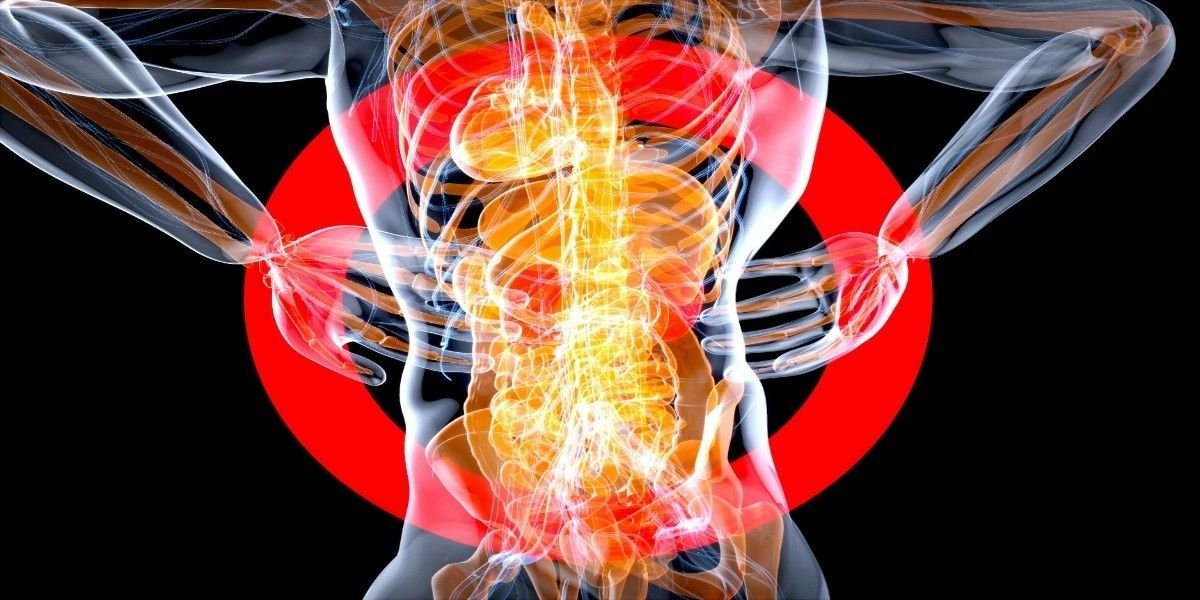
Sudden joint pain, most classically in the big toe, is the most recognizable sign of high uric acid.
Less dramatic but more common are recurring joint aches — in ankles, knees, or wrists — that come and go without an obvious trigger, easy to mistake for general wear-and-tear. Some people notice small, hard lumps under the skin near joints over time, called tophi, which form when uric acid crystals accumulate in soft tissue; these usually only appear after years of untreated high levels.
Kidney stones are another common presentation, sometimes the first and only sign, showing up as sudden, severe back or side pain, blood in urine, or difficulty urinating. Left untreated over many years, recurring attacks can gradually cause permanent joint damage, which is part of why doctors increasingly treat persistently high levels even before a first gout attack occurs, rather than waiting for symptoms to justify treatment.
3. The Broken Gene Behind Every Gout Attack
This is the part almost nobody explains, and it’s genuinely the most interesting fact in this entire topic: humans get gout because of a mutation our ancestors picked up around 15 million years ago, one that every dog, cat, cow, and mouse on earth doesn’t carry.
When your body breaks down purines, the pathway runs through a series of steps — purines convert to a compound called hypoxanthine, then to xanthine, then finally to uric acid, with an enzyme called xanthine oxidase driving the last two conversions. In almost every other mammal, the pathway doesn’t stop at uric acid. A separate enzyme, uricase (urate oxidase), takes over and converts uric acid one step further into allantoin — a compound that dissolves in urine roughly five to ten times more easily than uric acid does.
Humans and the great apes lost that final step entirely. The gene that codes for uricase is still physically present in our DNA, but it’s been silenced by a series of disabling mutations — specifically two separate nonsense mutations (premature “stop” signals in the genetic code, at two different points in the gene) plus a third mutation that damages how the gene gets spliced together, all accumulating over the course of primate evolution. The result is what geneticists call a pseudogene: the blueprint is there, but the protein it would have built is never made. Uric acid metabolism simply terminates one step earlier in us than it does in almost every other mammal on the planet.
This single evolutionary fact is the entire reason gout is a uniquely human problem (shared only with a handful of great apes and, separately, Dalmatians for an unrelated reason). It also explains why “just eat less purine-rich food” only ever gets you partway there — you’re not fixing a temporary excess, you’re working around a permanent, built-in ceiling on how efficiently your body can clear this compound at all.
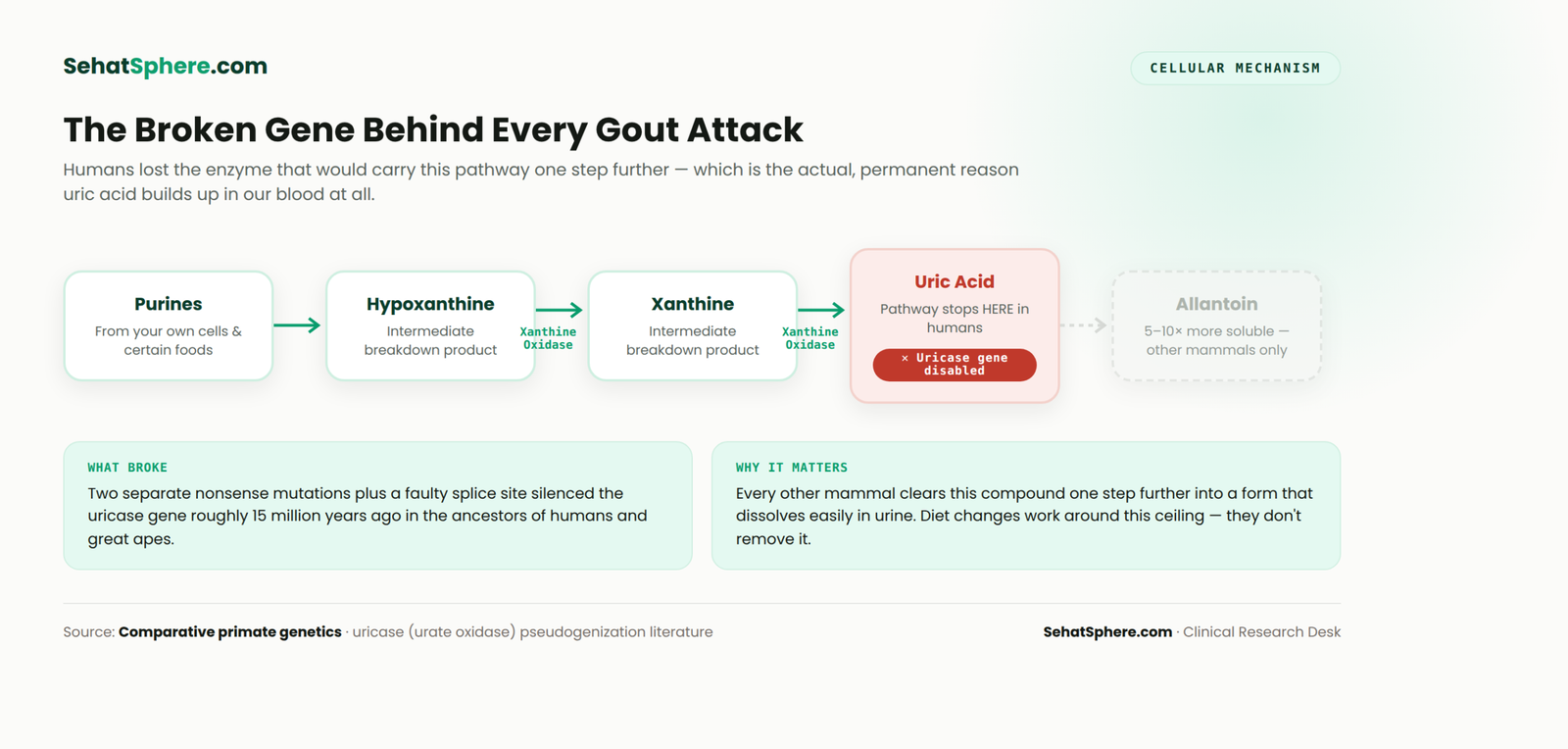
Every other mammal has one more step in this pathway than we do — which is the actual reason uric acid builds up in human blood at all.
There’s an interesting evolutionary theory for why this mutation survived and even seems to have been favored: higher uric acid acts as a mild antioxidant in blood, and some researchers believe it may have helped early hominids extend lifespan or tolerate a fructose-rich diet during periods of famine, when the body needed to store fat efficiently. Whatever the original advantage, the tradeoff in a modern, sugar- and purine-rich diet is exactly the problem this article is about.
4. Check Your Number
If you’ve already had a blood test, you don’t need to guess where you stand — you have an actual number in mg/dL on that report. Enter it below to see where it falls. This isn’t a diagnosis, and a single reading doesn’t tell the whole story (see the diagnostic trap further down this page), but it’s a useful starting point.
Enter a number to see where it falls.
General reference only, not a diagnosis. Ranges vary slightly by lab, by sex, and by testing method — your own report’s reference range is the one your doctor will actually use.
5. The Real Causes of High Uric Acid
Genetics plays a bigger role than most people assume — some people simply produce more uric acid naturally, or their kidneys are less efficient at clearing it, independent of diet entirely. If gout or kidney stones run in your family, your baseline risk is higher regardless of how carefully you follow a high uric acid diet.
Obesity and excess abdominal fat are strongly linked to higher uric acid, partly because fat tissue produces more uric acid itself and partly because it interferes with kidney filtration. This is one of the more actionable causes on this list — even modest, gradual weight loss measurably lowers uric acid in most people. Insulin resistance travels alongside this closely enough that the two are often discussed together; if that connection is new to you, our guide to reversing insulin resistance covers the metabolic side of this in more depth.
Sugar, specifically fructose, deserves more attention than it usually gets. Fructose is metabolized in a way that directly increases uric acid production, independent of calories or weight. This means sugary drinks, packaged fruit juices, and foods sweetened with high-fructose corn syrup can raise uric acid even in people who eat comparatively little meat or seafood — a detail that surprises a lot of vegetarians who assume their diet automatically protects them.
Alcohol, especially beer, raises uric acid through two separate mechanisms: it’s a source of purines itself, and it also slows how efficiently your kidneys excrete uric acid. Reduced kidney function — from chronic kidney disease, dehydration, or certain medications — directly reduces how much uric acid your body can clear, regardless of how much is being produced.
Dehydration deserves its own mention, separate from general kidney function, because it’s so common and so easily overlooked in India’s climate. Long hours in heat, inconsistent water intake during work, and a cultural tendency to under-drink water compared to tea combine to leave kidneys working with less fluid than they need to flush uric acid efficiently.
Myth: Dal, rajma, and other lentils and legumes should be avoided if you have high uric acid.
Fact: Research over the past decade has consistently found that purines from plant sources — lentils, beans, and most vegetables — don’t raise uric acid or trigger gout the way purines from red meat, organ meat, and seafood do. Restricting dal and rajma without real evidence behind it often means giving up an affordable, high-protein staple for no real benefit, while the actual higher-risk foods go unaddressed.
6. Medicines That Quietly Raise Uric Acid
At the pharmacy counter, this is a connection I explain often: a patient’s uric acid climbs even though their diet hasn’t changed at all, and the actual cause is sitting in their own medicine strip. Two drug classes deserve specific attention here, because the mechanism is well-documented, not speculative.
Thiazide and loop diuretics
Thiazide diuretics (like hydrochlorothiazide) and loop diuretics (like furosemide), both commonly prescribed for blood pressure or fluid retention, are one of the best-established drug-induced causes of high uric acid. The mechanism runs through two kidney transporters working against you at once: diuretics compete with uric acid for secretion through a transporter called OAT1 in the kidney’s proximal tubule, directly reducing how much uric acid gets excreted. At the same time, the mild volume depletion diuretics cause pushes the kidney to reabsorb more sodium — and uric acid gets pulled back into the blood alongside it through a paired exchange transporter called URAT1. Both effects push in the same direction: less uric acid leaves the body, and blood levels climb.
If you’re on a diuretic for blood pressure and your uric acid has crept up on recent blood work, that’s a legitimate, specific question to raise with your prescriber — not something to just accept as unrelated. The same diuretics are also well known to shift magnesium levels through a related kidney mechanism, worth asking about at the same visit.
Low-dose aspirin: a genuine dose-dependent paradox
Aspirin’s effect on uric acid is one of the more counterintuitive facts in pharmacology, and it depends entirely on the dose. Low-dose aspirin — the 75–150 mg daily dose widely prescribed for heart protection — actually reduces uric acid excretion and can raise blood levels. Higher doses, well above what’s used for cardiac prevention, have the opposite, uric-acid-lowering effect. In practice, this means the small daily aspirin tablet many people take for heart health is, mechanistically, working slightly against their uric acid at the same time — a detail worth knowing rather than a reason to stop a doctor-prescribed cardio-protective dose on your own.
7. Why Women’s Risk Changes After Menopause
Most uric acid advice is written as if the condition affects everyone identically, but there’s a genuine, well-documented sex difference that changes how this should be thought about for women specifically.
Estrogen has a uricosuric effect — it actively promotes uric acid excretion through the kidneys. This is the direct biological reason pre-menopausal women typically run roughly 1 to 2 mg/dL lower in uric acid than men of the same age, and why gout before menopause is comparatively uncommon in women. As estrogen production drops sharply at menopause, that protective excretion effect fades, and uric acid levels climb toward the range typically seen in men — which is a major reason gout incidence in women rises substantially after menopause, closing much of the gap that existed for decades beforehand.
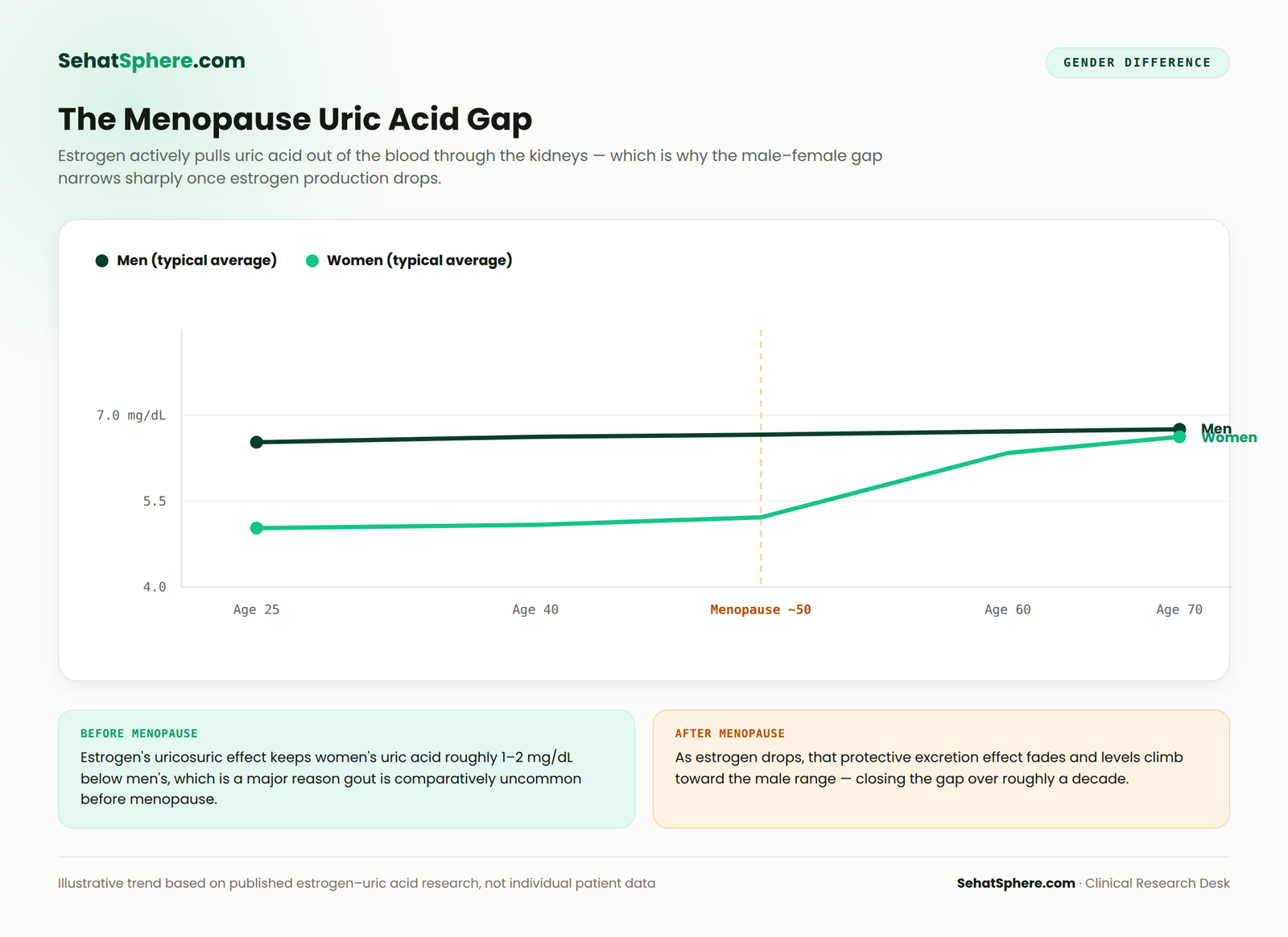
The gap between men’s and women’s average uric acid narrows sharply in the decade around menopause.
It would be reasonable to assume that replacing estrogen — through hormone replacement therapy or a birth control pill — would restore that protective effect. The research on this is more complicated than that assumption, and some analyses have actually found external estrogen use associated with a slightly higher reported gout risk in certain populations, rather than a protective one. This isn’t settled science, and it isn’t a reason to avoid HRT or birth control for someone who otherwise needs them — but it’s an honest reason not to expect either one to function as uric acid protection on its own, and it’s worth a specific mention to your doctor if you’re post-menopausal, on hormone therapy, and have a rising uric acid trend.
Practically, this means the “check your number early” advice earlier in this guide matters even more for women approaching or past menopause — a level that was comfortably normal for years can shift meaningfully within a fairly short window around this hormonal transition, without any change in diet.
8. The Purine Chart You Can Actually Use While Cooking
A high uric acid diet often gets reduced to dense clinical purine tables that are hard to use while actually planning a meal. Here’s a simplified version built around what a typical Indian kitchen stocks.
| Category | Foods |
|---|---|
| High — Limit | Organ meat (liver, kidney), red meat (mutton), seafood (prawns, crab, sardines), beer |
| Moderate | Chicken, most fish, dal & legumes (rajma, chana, urad), mushrooms, spinach |
| Low — Generally Safe | Milk, curd & dairy, eggs, rice, roti, most vegetables, fruits, nuts |
Notice that dal and legumes sit in the moderate category, not the high-purine one — a distinction that gets lost in most oversimplified diet advice.
9. Building a High Uric Acid Diet That Actually Works
The most effective high uric acid diet isn’t defined by a long list of forbidden foods — it’s defined by a handful of consistent habits. Prioritize hydration first: adequate water intake genuinely helps your kidneys flush uric acid more efficiently, and it’s the single most evidence-backed, zero-cost intervention on this entire list.
Shift protein sources toward dairy, eggs, and moderate amounts of dal and legumes rather than red meat and seafood, without eliminating any of these entirely unless a doctor has specifically advised it. Cut back sharply on sugary drinks, packaged fruit juices, and anything sweetened with high-fructose corn syrup — this often moves the needle more than any change to protein sources.
Limit alcohol, especially beer, and be particularly cautious during any period when uric acid is already elevated or a gout attack has recently occurred. Gradual weight loss, if you’re carrying excess weight, is one of the most reliable long-term levers for lowering uric acid — but rapid weight loss or prolonged fasting can actually raise uric acid temporarily, so gradual is genuinely better than fast here.
Meal timing matters more than most diet advice acknowledges. Long gaps between meals followed by a large, protein-heavy dinner puts more metabolic load on the body at once than spacing similar food across the day. Where practical, spreading protein intake across meals is a small adjustment that fits naturally into most routines without requiring any different foods at all. Most traditional Indian thalis, built around dal, roti, sabzi, and curd, are already reasonably uric-acid-friendly — the adjustments that matter most are usually about drinks, snacking habits, and portion frequency of red meat and seafood, not a wholesale diet overhaul.
10. A Sample Day: What This Actually Looks Like on a Plate
Theory is easier to follow with an actual example. Here’s one realistic day, built around common Indian staples, that stays within the guidelines above without feeling restrictive.
- MorningA glass of warm water, followed by a bowl of poha or vegetable upma
- Mid-MorningA piece of fruit and a small handful of nuts
- LunchDal, two rotis, a vegetable sabzi, a bowl of curd, and a side salad
- EveningGreen tea or plain water, with roasted chana or a small bowl of sprouts
- DinnerGrilled or steamed chicken or paneer, a light vegetable curry, and one roti
- All DayAt least 3 to 3.5 litres of water, spaced out rather than consumed all at once
Notice this plan doesn’t eliminate dal, legumes, or even occasional chicken — it simply structures the day around consistent hydration, moderate portions, and minimal sugary drinks or fried snacks.
11. Home Remedies That Are Actually Backed by Something
Beyond diet changes, a few home habits genuinely support a high uric acid diet without needing any special products or supplements.

Consistent hydration is the single most effective, zero-cost intervention for high uric acid.
Water is, without exaggeration, the most effective home remedy on this list. Adequate hydration directly supports your kidneys’ ability to filter and excrete uric acid, and for people who are chronically under-hydrated, simply fixing that alone can produce a measurable drop within weeks. Aim for consistent intake through the day rather than large amounts at once.
Cherries, and in India specifically jamun during its short summer season, have more research behind them than most home remedies get. Compounds in cherries appear to help lower uric acid and reduce inflammation, and several studies have specifically linked regular cherry consumption to fewer gout flare-ups. Fresh jamun, or diluted jamun juice without added sugar, is a reasonable seasonal substitute.
Weight management deserves a mention here too, not as a quick fix but as a genuine long-term remedy — sustained, gradual weight loss lowers uric acid more reliably than almost any single dietary tweak, though it works on a timeline of months rather than days. What doesn’t hold up as well: many popular “detox” drinks, apple cider vinegar in large amounts, and packaged supplement blends marketed specifically for uric acid, most of which lack meaningful evidence behind the claims on their packaging.
12. When Diet Isn’t Enough: Where Medicine Fits In
For a meaningful number of people, especially those with a strong genetic tendency, recurrent gout attacks, or kidney involvement, diet and lifestyle changes alone aren’t enough to bring uric acid into a safe range, and medication becomes necessary. This is a decision for a doctor to make based on your levels, your history, and how often you’re having flare-ups — not something to self-manage with diet alone or based on a blog post.
Allopurinol
Used for decades and generally the first option doctors consider. Lower cost, but needs a slow dose build-up and occasional monitoring, particularly in people with reduced kidney function.
Febuxostat
A newer alternative, sometimes used when allopurinol isn’t well tolerated or hasn’t lowered levels enough. Not typically recommended for people with certain existing heart conditions.
Both medicines work by reducing how much uric acid your body produces in the first place, rather than just treating symptoms during an attack. Neither is something to start, stop, or adjust without your doctor, since dosing depends heavily on your specific kidney function and blood levels. Alongside these, doctors sometimes prescribe short-term anti-inflammatory medication specifically to manage an active gout attack, which is a separate approach from the long-term medicines above that lower baseline levels.
13. The Diagnostic Trap Doctors Watch For
This is a fact worth knowing even if you never need it: during an actual, active gout attack, your serum uric acid level can come back normal — or even low. Published clinical data puts this at anywhere between roughly 11% and 49% of patients tested during a genuine acute attack, depending on the study population.
Two things are happening at once. First, uric acid behaves as what’s called a negative acute-phase reactant — the same intense inflammatory response driving the attack itself temporarily pushes serum uric acid down, partly through inflammation-related hormones increasing how much the kidneys excrete during that window. Second, the acute stress of a flare can independently increase renal excretion for a short period. Both effects work in the same direction: the blood test, taken at exactly the wrong moment, can look reassuring even while a genuine gout attack is happening in the joint.
Clinical guidance is explicit that a normal serum uric acid during an acute attack does not rule out gout. If a joint looks and feels like a classic gout attack, a single “normal” blood test taken during the flare itself shouldn’t be treated as the final word — the gold-standard confirmation is examining joint fluid directly for urate crystals, and testing uric acid again once the acute attack has fully settled, typically two to four weeks later, gives a far more reliable picture of your actual baseline.
Practically, this is exactly why doctors don’t rely on a single number taken at a single moment to make big decisions, and why repeat testing after an attack resolves matters more than most patients realize.
14. Uric Acid Stones vs Calcium Oxalate Stones: Why the Treatment Is Different
Not every kidney stone linked to uric acid actually needs a high blood uric acid level to form — and this is a distinction that gets flattened in most consumer health content. Uric acid kidney stones form based primarily on urine pH, not blood uric acid concentration. Uric acid is poorly soluble in acidic urine, roughly below pH 5.5, and becomes dramatically more soluble as urine pH rises above 6.0 to 6.5. Someone with completely normal blood uric acid but persistently acidic urine — a pattern strongly associated with insulin resistance and metabolic syndrome — can still form uric acid stones for years without ever having elevated blood levels at all.
This makes uric acid stones fundamentally different from calcium oxalate stones, the most common kidney stone type overall, which aren’t governed by the same pH relationship and instead depend more on urinary calcium, oxalate, and citrate concentrations. That difference matters directly for treatment: the primary medical approach to uric acid stones is urinary alkalinization — typically potassium citrate, dosed to raise urine pH into the 6.0–6.5 range — alongside increased fluid intake, which together can dissolve existing uric acid stones without surgery in many cases. Calcium oxalate stones don’t respond to alkalinization the same way; their prevention instead centers on hydration, dietary oxalate and sodium moderation, and appropriate calcium intake.
If you’ve had a uric acid stone specifically confirmed by stone analysis (not assumed), that’s meaningfully different information than a high blood uric acid reading on its own — and it’s worth asking your urologist directly whether urine pH and alkalinizing treatment are relevant for you, since the diet advice for a stone problem and the diet advice for a gout problem overlap but aren’t identical.
15. When to See a Doctor Without Waiting
Most people managing a high uric acid diet never need urgent care, but a few situations are exceptions worth knowing.
- Sudden, severe joint pain, especially in the big toe, with redness and swelling
- Fever alongside joint pain — this can indicate infection rather than gout, and needs urgent evaluation
- Severe back or side pain, blood in urine, or difficulty urinating
- Repeated gout attacks within the same year
- A uric acid reading significantly above the normal range on a routine test, even without symptoms
A single high reading isn’t an emergency, but a pattern of high readings or an acute attack are both situations where prompt care changes the outcome.
16. Quick Self-Check
Not a diagnosis — a structured way to decide whether a conversation with your doctor about testing or treatment is worth having sooner rather than later.
17. Frequently Asked Questions
What is considered a high uric acid level?
Reference ranges vary slightly by lab, but levels above roughly 7 mg/dL in men and 6 mg/dL in women are generally considered elevated. Your specific lab report will include its own reference range, which is the one your doctor will actually use.
Can uric acid be lowered without medicine?
For many people with mildly elevated levels, yes — consistent hydration, weight management, and reducing sugar and alcohol intake can bring levels down meaningfully. For higher levels or recurrent gout, medication is often necessary alongside these changes.
Is dal really safe for high uric acid?
Yes, for most people. Research has consistently found that purines from plant sources like dal and legumes don’t raise uric acid or trigger gout the way animal purines do. Restricting them isn’t necessary unless a doctor has specifically advised it for your case.
How long does it take to lower uric acid through diet?
Some changes, particularly cutting sugary drinks and improving hydration, can show measurable effects within a few weeks. Weight-related improvements typically take longer, often several months, since they depend on sustained, gradual weight loss.
Does exercise help or hurt uric acid?
Regular, moderate exercise helps over time by supporting weight management. However, very intense or unaccustomed exercise can temporarily raise uric acid and is sometimes linked to triggering a gout attack, so building up activity gradually is preferable.
Can high uric acid go away completely?
For many people, sustained lifestyle changes can bring levels back into a normal range and keep them there. For people with a strong genetic or kidney-related cause, ongoing management, sometimes including long-term medication, is usually needed.
Is beer worse than other alcohol for uric acid?
Yes. Beer contains purines itself, in addition to alcohol’s general effect of slowing uric acid excretion, which is why it’s specifically flagged more often than wine or spirits in most uric acid diet guidance.
Can I drink tea or coffee with high uric acid?
Plain tea and coffee in moderate amounts are generally fine, and coffee in particular has been associated with slightly lower uric acid levels in some studies, though it isn’t a treatment on its own. The bigger issue is usually what gets added — sugar, condensed milk, or flavored syrups — rather than the tea or coffee itself.
Does menopause really raise uric acid, or is that a myth?
It’s real and mechanistically well-understood: estrogen promotes uric acid excretion through the kidneys, so pre-menopausal women typically run 1–2 mg/dL lower than men. When estrogen drops at menopause, that protective effect fades and uric acid tends to rise, which is a major reason gout becomes noticeably more common in women after menopause.
If my uric acid test came back normal, does that rule out gout?
Not necessarily, especially if the test was taken during an active flare. Studies show 11% to 49% of people having a genuine acute gout attack test with a normal or even low uric acid at that moment, because the inflammation itself temporarily lowers the number. Repeat testing after the attack settles gives a more accurate picture.
The Short Version
- Uric acid builds up in humans specifically because we lost a gene (uricase) every other mammal still has — not because of one bad diet choice.
- Uric acid rises mainly from genetics, excess weight, fructose/sugar, alcohol, certain medicines like thiazide diuretics, and reduced kidney function — not primarily from dal and legumes.
- Estrogen protects women against high uric acid before menopause; that protection fades afterward, which is worth knowing rather than being surprised by.
- A single “normal” reading during an actual gout attack doesn’t rule gout out — retesting after the flare settles is more reliable.
- Hydration remains the single most effective, zero-cost intervention, and cherries/jamun plus gradual weight loss are the home remedies with real evidence behind them.
- Medication like allopurinol or febuxostat is sometimes necessary and should always be doctor-directed.
Why Trust This Guide
- MedlinePlus, National Institutes of Health. Gout.
- Kratzer JT, Lanaspa MA, Murphy MN, et al. Evolutionary history and metabolic insights of ancient mammalian uricases. Background summary: Urate oxidase (uricase) pseudogenization in humans and great apes.
- Arthritis Foundation. Women Not Immune to Gout — estrogen, menopause, and hormone therapy effects on uric acid.
- Clinical Inquiries, Journal of Family Practice. Can normal serum uric acid levels rule out gout?
- EBM Consult. Mechanism of thiazide and loop diuretic-induced hyperuricemia (OAT1/URAT1 transporter effects).
- StatPearls, National Center for Biotechnology Information. Uric Acid Nephrolithiasis.