 SehatSphere.com
Zinc Deficiency and Your Medications: The Smell-Loss Warning Behind 800+ Reported Cases
- Zinc deficiency and your medications intersect in two directions most content never covers together — a real absorption problem on long-term acid-reducing therapy, and a real overdose risk on the supplement side.
- Long-term PPI use (Omeprazole, Pantoprazole) can measurably reduce zinc absorption — acute use has been shown to cut zinc uptake by up to 70%, since stomach acid is what releases zinc from food and supplements into an absorbable form.
- The FDA received
over 130 direct reports of permanent smell loss (anosmia) tied to intranasal zinc cold remedies like Zicam — while the manufacturer separately held over 800 consumer complaints on the same issue that had never reached regulators. - On the other end, sustained high-dose zinc supplementation (above the 40 mg/day upper limit) can trigger zinc-induced copper deficiency — a documented cause of serious blood disorders including sideroblastic anemia and agranulocytosis.
- Oral zinc — tablets, lozenges, capsules — is not implicated in the anosmia warning. The risk is specific to intranasal products applied directly inside the nose.
- Both directions are manageable with basic awareness: know your baseline, respect the 40 mg/day upper limit, and never put zinc directly in your nose.
Patients bring up zinc more casually than almost any other nutrient — usually as an afterthought when discussing immunity or a cold that won’t go away. What rarely comes up is that zinc deficiency and your medications overlap in a specific, well-documented way if you’re on long-term acid-reducing therapy, and that the “more is better” instinct with zinc supplements carries a real, if under-discussed, risk of its own.
This isn’t a piece meant to scare anyone off zinc. It’s the fuller picture — deficiency, the medication interaction, and the overdose risk — in one place, the way I’d actually walk a patient through it.
The same mineral, two very different safety stories — deficiency on one end, overdose on the other.
1. The Zicam Timeline: A Warning Worth Knowing
2. Zinc Deficiency and Your Medications: The Core Signs
Zinc is involved in immune function, wound healing, and — relevant here — taste and smell perception, since it’s a cofactor for enzymes in the sensory pathways involved in both. Deficiency tends to build quietly:
1. Reduced taste or smell
Often the earliest and most overlooked sign, since food starting to taste “flat” gets attributed to a cold or stress rather than a nutrient gap.
2. Slow wound healing
Zinc supports collagen synthesis and immune cell function at the wound site; deficiency can measurably slow recovery from cuts and skin injuries.
3. Frequent infections
Zinc is required for normal immune cell development, so chronic low levels can mean more frequent colds and slower recovery from them.
4. Hair thinning and skin changes
Zinc-dependent enzymes support hair follicle and skin cell turnover, so deficiency can show up as thinning hair or dry, irritated skin.
5. Appetite changes
Reduced taste perception plus zinc’s direct role in appetite-regulating pathways can lead to a genuine drop in appetite, particularly in older adults.
3. Zinc Deficiency Risk Checker
Select what applies to you to check your pattern for zinc deficiency and your medications overlap. Educational tool only — not a diagnosis.
4. The PPI Interaction Most People Never Hear About
If you’re on a proton pump inhibitor for acid reflux or GERD, this is the interaction most worth understanding. Stomach acid is needed to release zinc from food and supplements into its absorbable form — PPIs work by suppressing that acid, which means less zinc actually gets absorbed.
| Finding | Effect on Zinc |
|---|---|
| Acute PPI use with zinc gluconate supplement | Up to 70% reduction in uptake |
| Long-term PPI use, dietary zinc | ~20% lower plasma zinc levels |
| 7 days of omeprazole + zinc sulfate | ~50% reduction in plasma zinc |
Data compiled from published pharmacology research.
This doesn’t mean everyone on a PPI develops clinical zinc deficiency — most don’t. But for anyone on long-term therapy (a year or more is when effects are most consistently reported), it’s a genuinely reasonable thing to mention at your next checkup, especially if you’re also noticing any of the signs above. Mineral balance matters elsewhere too — our Blood Pressure Fluctuation guide covers a related electrolyte angle worth knowing if you’re already tracking one nutrient closely.
Oral zinc — lozenges, tablets, capsules — is not implicated in the FDA’s anosmia warning. The risk is specific to intranasal zinc products like Zicam nasal gel and swabs, where concentrated zinc contacts the olfactory nerve directly. If a cold remedy is applied inside the nose and lists zinc as an ingredient, that’s worth knowing before use, not after.
5. The Overdose Risk Nobody Talks About
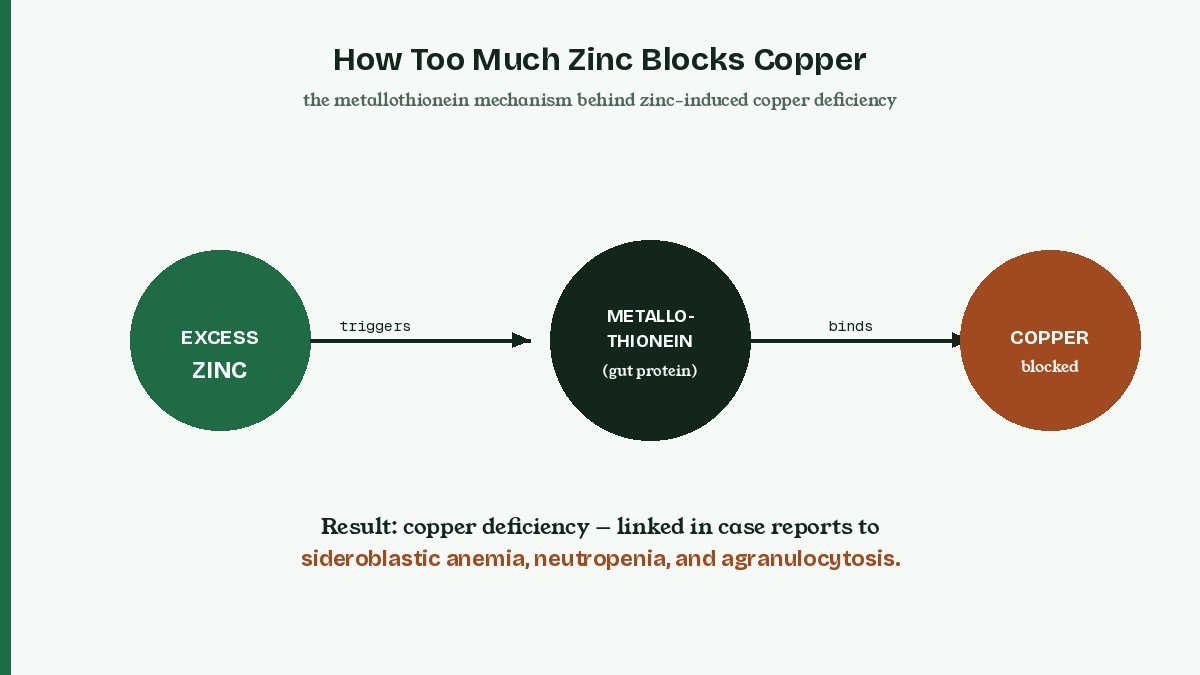
The same “more zinc, more immunity” instinct that helps in moderation becomes the problem at high, sustained doses.
Zinc supplements are widely treated as harmless — take more, feel safer. The mechanism that undermines this is genuinely under-discussed: sustained high-dose zinc intake triggers a gut protein called metallothionein, which binds copper more strongly than zinc, blocking copper absorption and increasing its excretion.
Copper deficiency sounds abstract until you see what it’s actually been documented to cause. Published case reports describe zinc-induced copper deficiency progressing to sideroblastic anemia, neutropenia, and in at least one documented case, agranulocytosis — a near-total absence of infection-fighting white blood cells.
The people most likely to megadose zinc — during cold season, for “immune support” — are often doing so precisely when they most need a functioning immune system. Zinc-induced copper deficiency can, in a real documented sense, work against the exact goal it was taken for.
None of this means a standard multivitamin-level zinc dose is risky. The documented harm clusters around sustained high-dose supplementation — well above the tolerable upper intake level of 40 mg/day — continued for weeks or months, not an occasional lozenge during a cold.
6. Your Daily Zinc Intake Calculator
A quick way to see where zinc deficiency and your medications risk might actually overlap — not a clinical dosing tool.
Managing several medications alongside zinc? The Integrative Interaction Checker tool or the Medication + Lifestyle Checker can cross-check your full list faster than piecing it together manually.
7. Two Scenarios I See Often
Illustrative patterns from pharmacy-counter conversations, not published case reports.
A patient on long-term Pantoprazole for chronic acid reflux mentions, almost in passing, that food “just doesn’t taste like much anymore.” The instinct is to blame the reflux itself — but a year or more of acid suppression is exactly the window where PPI-driven zinc reduction becomes most consistently measurable.
Someone starts a high-dose daily zinc lozenge habit every cold season, taking well above the standard dose for weeks at a time “just to be safe.” Months later, unusual fatigue and tingling in the hands prompt bloodwork that turns up unexplained anemia — and copper deficiency, driven by the zinc habit, ends up being the actual cause.
8. Myth vs. Fact
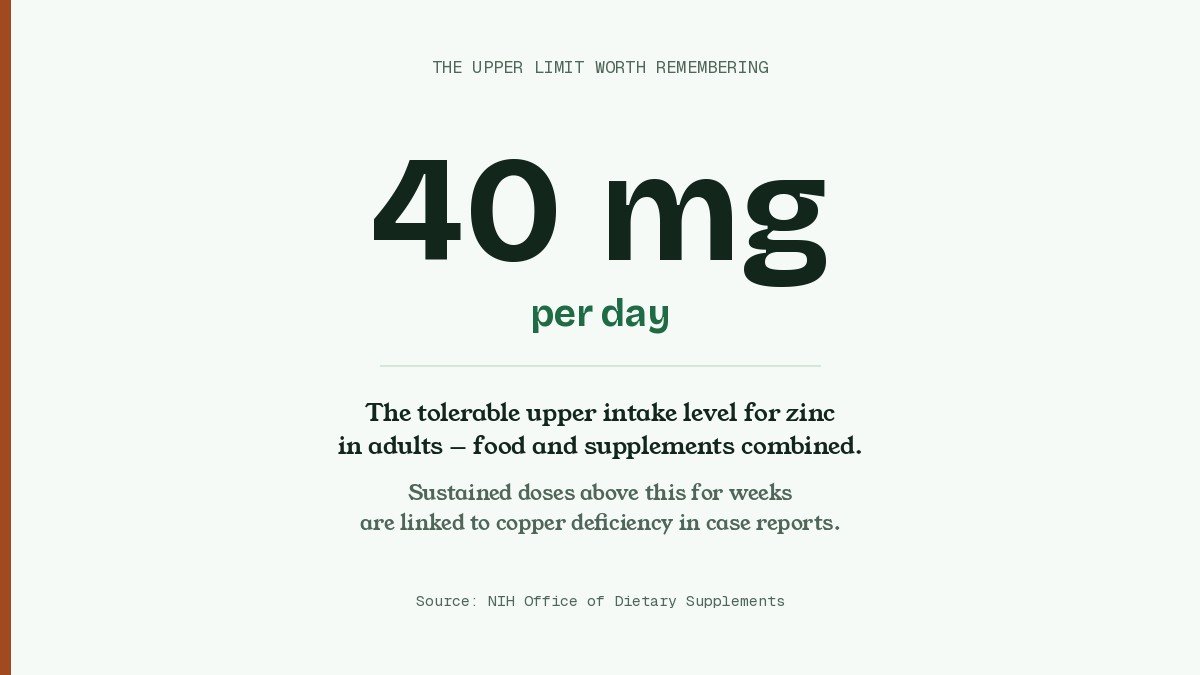
The one number worth remembering on the overdose side of this equation.
Zinc nasal sprays are a safe, natural way to shorten a cold.
The FDA specifically warned against intranasal zinc products after 800+ reported cases of permanent smell loss.
More zinc always means better immune support.
Sustained high doses can trigger copper deficiency serious enough to cause documented blood disorders.
If you’re on a PPI, zinc deficiency isn’t something to think about.
Research shows PPIs can reduce zinc uptake by up to 70% acutely and ~20% with long-term use.
Zinc deficiency symptoms are obvious and easy to spot.
Early signs like dulled taste and mild fatigue are easy to misattribute to stress, aging, or a cold.
9. A Safer-Use Checklist
Managing zinc deficiency and your medications together doesn’t need to be complicated:
- Consider a zinc blood test before starting long-term supplementation, especially if you’re on a PPI.
- Never use intranasal zinc gels or swabs — the anosmia risk isn’t worth it for a cold remedy.
- Keep total daily zinc, food plus supplements, under the 40 mg upper limit unless a doctor advises otherwise.
- If you’re on high-dose zinc for weeks, watch for unusual fatigue, numbness, or tingling.
- Get periodic zinc and copper testing if you’re on long-term PPI therapy or sustained zinc supplementation.
- If fatigue or immunity concerns are what brought you here, the free Which Nutrient Deficiency Do You Have? tool covers more than zinc alone.
If you already have recent bloodwork, our Blood Report Decoder can help you understand what your levels are actually telling you. For general immune-support habits beyond supplementation, see Boost Immunity Naturally, and for the broader medication-safety framework I use with every patient, see the Complete Guide to Medicine Safety.
10. Quick Glossary
Anosmia
Complete or partial loss of the sense of smell, which can also blunt taste since the two senses are closely linked.
Metallothionein
A protein produced in the gut in response to zinc intake that also binds copper, which is the mechanism behind zinc-induced copper deficiency.
Sideroblastic anemia
A type of anemia where the bone marrow produces abnormal red blood cells, which can result from copper deficiency among other causes.
Agranulocytosis
A dangerous drop in a specific type of white blood cell (neutrophils) that severely impairs the body’s ability to fight infection.
Tolerable Upper Intake Level (UL)
The maximum daily intake of a nutrient unlikely to cause adverse effects in most people — 40 mg/day for zinc in adults.
Zinc isn’t the only “and your medications” story worth reading if you’re managing multiple supplements — our Sea Moss, Glutathione, Proffee, and Taurine guides each cover a different real mechanism. If you’re weighing whether the branded zinc supplement on the shelf is worth the extra cost, our opinion piece on Generic Medicines and the Price Truth is directly relevant. If persistent fatigue is part of what brought you here, Still Tired After 8 Hours of Sleep is worth reading, and if dosing or timing mistakes are a pattern, our Medicine Mistakes guide covers the ones I see most often.
11. Quick Knowledge Check
Three questions to confirm the mechanisms above actually stuck — not a graded exam, just a gut check.
12. Frequently Asked Questions
What are the early signs of zinc deficiency?
Common early signs include reduced sense of taste or smell, slow wound healing, frequent infections, hair thinning, and loss of appetite. Many of these overlap with other deficiencies, which is why lab testing is more reliable than symptoms alone.
Can zinc really affect your sense of smell?
Yes, in both directions. Zinc deficiency can blunt taste and smell, while certain zinc-containing nasal products have been directly linked by the FDA to permanent loss of smell (anosmia) due to damage to the olfactory nerve.
What did the FDA say about Zicam and smell loss?
In 2009, the FDA warned consumers to stop using Zicam Cold Remedy nasal gel and swabs after receiving over 130 direct reports of anosmia, with the manufacturer separately holding over 800 consumer complaints that had never been reported to regulators.
Do PPI medications like omeprazole cause zinc deficiency?
They can meaningfully reduce zinc absorption. Research has shown acute PPI use can inhibit zinc uptake by up to 70%, and long-term use is associated with measurably lower plasma zinc levels, since stomach acid is needed to release zinc for absorption.
How much zinc can you safely take?
The tolerable upper intake level for adults is 40 mg per day from supplements and food combined. Higher doses, especially sustained over weeks, carry real risk of copper deficiency.
Can too much zinc actually be dangerous?
Yes. Chronic excess zinc intake is a documented cause of copper deficiency, which in case reports has led to serious blood disorders including sideroblastic anemia, neutropenia, and even agranulocytosis.
What is zinc-induced copper deficiency?
Excess zinc triggers a protein called metallothionein in the gut that binds copper more strongly than zinc, blocking copper absorption and increasing its excretion, which can deplete the body’s copper stores over time.
How is zinc deficiency diagnosed?
Through a serum or plasma zinc blood test, though levels can be affected by recent meals, inflammation, and time of day, so results are usually interpreted alongside symptoms and risk factors like PPI use.
What foods are highest in zinc?
Oysters, red meat, poultry, beans, nuts, and fortified cereals are among the richest dietary sources of zinc.
Should I take a zinc supplement?
It depends on your risk factors. If you’re on long-term PPI therapy, have a restricted diet, or have confirmed low levels, a modest supplement may help — but megadosing without medical guidance carries real risk of copper deficiency.
The Bottom Line
Zinc deficiency and your medications intersect in a specific, well-documented way if you’re on long-term PPI therapy — and the instinct to fix low zinc, or just “support immunity,” by megadosing carries a real risk on the other end that almost never gets mentioned in the same breath. Both directions are manageable with basic awareness: know your baseline, respect the 40 mg/day upper limit, and never put zinc directly in your nose.
Why Trust This Guide
- “Zicam Zinc Nasal Sprays May Damage Sense of Smell, FDA Says.” ABC News / FDA public health advisory.
- “Zinc and PPIs: How Acid Suppression Affects Zinc Levels.” LiveHealthyRx, pharmacist-reviewed.
- “Malabsorption-Related Issues Associated with Chronic PPI Use.” Austin Publishing Group.
- “Zinc-Induced Copper Deficiency Myeloneuropathy Masquerading as Paraneoplastic Syndrome: A Case Report.” PMC, National Institutes of Health.
- “Agranulocytosis secondary to zinc excess: Clinically relevant observations.” PMC, National Institutes of Health.
- “Zinc-induced copper deficiency, sideroblastic anemia, and neutropenia.” PMC, National Institutes of Health.
- “Zinc — Fact Sheet for Health Professionals.” Office of Dietary Supplements, National Institutes of Health.
- “Zinc supplements: Do they interact with medications?” Mayo Clinic.