 SehatSphere.com
The Boosting Immunity Balance Myth: Is It Even the Right Goal?
The boosting immunity balance myth is one immunologists genuinely need to correct: your immune system doesn’t need “boosting,” and more isn’t automatically better. As Harvard Health puts it, the immune system is “very finely tuned” — it works best balanced, not maximized. Overactivation causes allergies, autoimmune disease, and chronic inflammation; underactivation causes frequent infections. Boosting immunity as a goal misunderstands the actual biology entirely.
Key takeaways:
- Immunologists describe the immune system as a thermostat, not a volume knob — too high causes real harm (autoimmune disease, allergies), just as too low does.
- Vitamin D, widely marketed for immune “boosting,” has been shown to actually reduce activity of certain immune cells — a genuinely counterintuitive finding most marketing ignores.
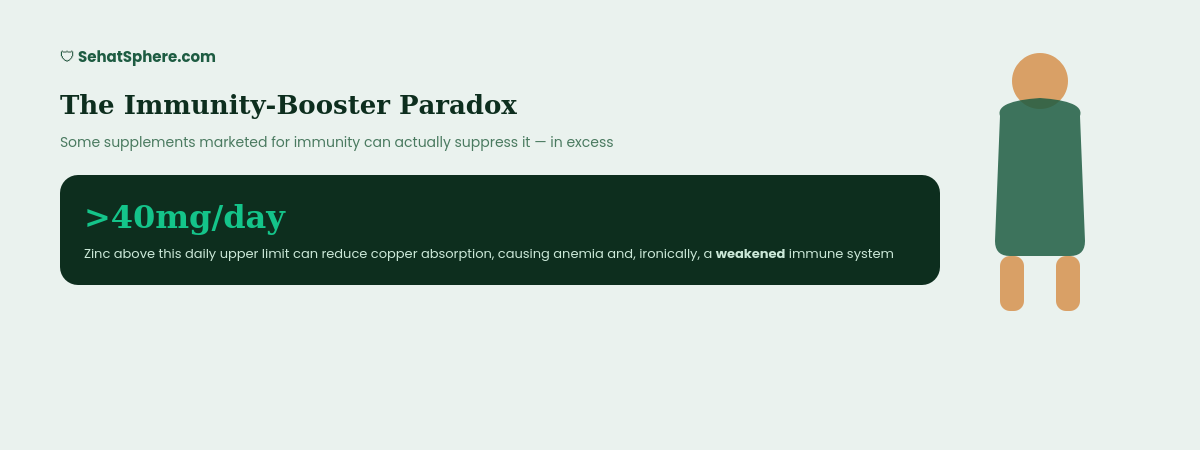
- Zinc above the tolerable daily limit (40mg for adults) can reduce copper absorption, causing anemia and, ironically, a weakened immune system.
- Vaccination genuinely does “boost” immunity in a real, targeted, measurable way — supplements marketed the same way generally don’t, unless correcting an actual deficiency.
- The thermostat, not volume-knob, model
- What happens when immunity is “too high”
- The vitamin D paradox
- The zinc overdose problem
- Why vaccination is genuinely different
- The India-specific immunity-booster market
- What actually, evidence-backed, helps
- Genuine deficiencies worth ruling out
- Quick self-check
- FAQs
The Thermostat, Not Volume-Knob, Model
This is the single most important reframe in this entire topic. Multiple immunologists use the same analogy independently: your immune system works like a thermostat, not a volume knob you turn up for more protection. Turn it too high, and you get overactivation and uncontrolled inflammation. Turn it too low, and you get failure to respond to genuine infection. Both directions cause illness — the goal is calibration, not maximization.

What Happens When Immunity Is “Too High”
This is the part “boost your immunity” marketing never mentions, because it undermines the entire premise. A genuinely overactive immune response is directly linked to allergies, autoimmune disorders (where the immune system attacks the body’s own healthy tissue), and chronic inflammation — itself a documented contributor to heart disease, and metabolic conditions our insulin resistance guide and heart attack in young adults guide both cover from different angles. If a supplement genuinely could “boost” immune function the way marketing implies, this braking mechanism is exactly what would be at risk of being overridden. Chronic stress independently disrupts this same balance too — our mental stress guide covers this same cortisol-immune overlap in more depth.
What To Read Next
- Zinc Deficiency Symptoms: The real, documented case for zinc — and its limits.
- FDA Intranasal Zinc Warning: Another real zinc-related risk worth knowing.
- Vitamin D Deficiency in India: The genuine deficiency case, separate from the immunity-boost myth.
The Vitamin D Paradox
Vitamin D is one of the most heavily marketed “immunity boosters,” which makes this finding genuinely worth knowing: research shows vitamin D can actually reduce the activity of certain T cells — immune cells critical to fighting infection — even while increasing some inflammatory responses elsewhere. This doesn’t mean vitamin D is bad; genuine deficiency, which our vitamin D deficiency guide covers extensively for the Indian context, is a real problem worth correcting. It means the simple “more vitamin D = more immunity” framing is genuinely wrong, not just imprecise.
The Zinc Overdose Problem
Zinc has real, genuine evidence behind it — our zinc deficiency guide covers this in depth, especially given how common deficiency is in India specifically. But the “more is better” instinct genuinely backfires here in a well-documented way.
| Zinc Intake | Effect |
|---|---|
| Adequate (per RDA) | Supports genuine immune function, wound healing |
| Above 40mg/day (adult UL) | Can reduce copper absorption |
| Chronic excess | Copper deficiency → anemia, low white blood cells → weakened immunity |
This is a genuine, ironic paradox worth sitting with: a mineral marketed specifically for “boosting” immunity can, in excess, produce the opposite of its marketed effect. Our FDA intranasal zinc warning guide covers a separate, real zinc-related risk worth knowing about too.
Why Vaccination Is Genuinely Different
This distinction matters and gets lost in “boost vs. don’t boost” debates online: vaccination genuinely does produce a real, targeted, measurable enhancement of immune function against a specific pathogen — through a completely different, well-understood biological mechanism than any supplement claims to use. Comparing a multivitamin to a vaccine, as some marketing implicitly does, genuinely misrepresents both.
The India-Specific Immunity-Booster Market
India’s immunity-supplement category grew significantly following COVID-19, with existing brands (including well-known malt beverages) actively rebranding around “immunity” messaging, and newer Vitamin C + Zinc + herbal combination products becoming one of the fastest-growing categories in the country’s nutraceutical space. Indian physicians quoted on this exact topic have offered genuinely balanced, non-alarmist guidance: recommended-dose vitamin C and zinc are generally safe, but stacking multiple supplements together is a real risk, certain overdoses are genuinely dangerous, and common traditional preparations like chyawanprash or giloy juice are reasonable for healthy people in moderation — while cautioning that a healthy, balanced diet already provides most of what’s needed for most people.
What Actually, Evidence-Backed, Helps
Move the framing from “boosting” to “supporting” or “not undermining” your immune system, and the genuinely evidence-backed list is short, unglamorous, and consistent across every credible source:
- Regular physical activity — genuinely supports balanced immune function, not just general fitness.
- Adequate, consistent sleep — directly affects immune regulation; our mental stress guide covers the same overlapping cortisol-sleep pathway.
- A genuinely balanced diet — covering real gaps rather than mega-dosing single nutrients; our protein deficiency guide and Nutrient Deficiency Symptom Finder are worth using to identify actual gaps, not assumed ones.
- Avoiding smoking and excessive alcohol — genuinely, measurably interfere with normal immune regulation.
- Correcting confirmed deficiencies specifically — supplementing what’s genuinely low, under medical guidance, rather than blanket “just in case” mega-dosing.
If you’re managing chronic conditions alongside this, our diabetic foot care guide and antibiotic mistakes guide both touch on genuine infection-related risk from a different, practical angle. The free Integrative Interaction Checker is worth using before stacking multiple immune-marketed supplements together.
Genuine Deficiencies Worth Ruling Out First
Before assuming any supplement, it’s worth actually confirming which nutrient, if any, is genuinely low. Our hair fall and vitamin deficiency guide and B12 deficiency guide both cover fatigue-overlapping symptoms that get misattributed to “low immunity” without ever being properly tested. If thyroid symptoms are part of your picture, our thyroid medicine guide is worth reading too, since thyroid dysfunction genuinely affects overall resilience to illness in ways people often misattribute to “weak immunity” specifically. The free Blood Report Decoder is worth using once you actually have lab results in hand.
Quick Self-Check
Tick anything that applies to you, and see what it suggests.
Frequently Asked Questions
Is “boosting” immunity actually a good goal?
Not really. Immunologists describe the immune system as needing balance, not maximization — an overactive immune system causes allergies, autoimmune disease, and chronic inflammation, just as an underactive one causes infections.
Can vitamin D supplements weaken your immune response?
Research shows vitamin D can reduce the activity of certain T cells, even while increasing some inflammatory responses — a genuinely counterintuitive finding, though correcting an actual deficiency remains worthwhile.
Can too much zinc actually weaken immunity?
Yes. Zinc above the tolerable daily limit (40mg for adults) can reduce copper absorption, leading to anemia, low white blood cell counts, and a genuinely weakened immune system.
Do immunity booster supplements actually work?
Generally not for people without a confirmed deficiency. Most immune-marketed supplements have limited evidence beyond correcting an actual documented nutrient gap.
Is vaccination the same as taking an immune-boosting supplement?
No, vaccination produces a real, targeted, measurable immune enhancement against a specific pathogen through a well-understood mechanism, unlike most supplement claims.
What actually supports healthy immune function?
Regular exercise, adequate sleep, a balanced diet, avoiding smoking and excessive alcohol, and correcting any confirmed nutrient deficiency specifically.
The Bottom Line
The boosting immunity balance myth persists precisely because “more” sounds intuitively better — but the real, evidence-backed target is balance: correcting genuine deficiencies, supporting your body’s existing regulation through sleep, movement, and diet, and being honest that most healthy people don’t need to “boost” anything at all.
- Harvard Health Publishing. Can Supplements Help Boost Your Immune System?
- Cedars-Sinai. Can You Really Boost Your Immune System?
- American Society for Biochemistry and Molecular Biology. Scientists Must Speak Out Against Misinformation About Immune-Boosting Supplements.
View All References (5) ▾
- The Conversation. Immune Health Is All About Balance.
- GoodRx Health. Zinc Supplements: How Much Is Too Much?