
🩸 SehatSphere Lab Note · The Complete Guide
CGM and Medication: Is Your Spike Real?
Or Just a Sensor Glitch?
CGM and medication interactions are the biggest blind spot in the biggest biohacking trend of 2026. What almost nobody explains: some medications don’t raise your glucose at all — they just fool the sensor into reading wrong. Some interactions are genuinely dangerous. This guide covers all of it.
What Is a CGM, and Why Is Everyone Suddenly Wearing One
A continuous glucose monitor (CGM) is a small sensor, usually worn on the arm, that measures glucose in the fluid just under your skin every few minutes, all day and night, without fingersticks. For over a decade this was a prescription-only, diabetes-only device. That changed in 2024–2025 when Dexcom Stelo and Abbott Lingo both received over-the-counter clearance in the US, followed by a wave of subscription platforms — Levels, Nutrisense, Signos, January AI — built entirely around non-diabetic “metabolic optimization.” A sensor and two weeks of glucose curves are now something anyone can buy at a pharmacy, no prescription required, and by most 2026 industry rankings, CGM-driven metabolic tracking sits at or near the top of the year’s biggest health trends.
The appeal is obvious: instead of guessing which foods spike your energy or mood, you can see it. What almost none of the marketing explains is that the number on your app isn’t always telling you what you think it is.
How CGMs Actually Work — Why Interference Happens At All
A CGM doesn’t measure blood directly. A tiny filament sits in your interstitial fluid (the fluid between cells, just under the skin) and uses an electrochemical reaction — an enzyme called glucose oxidase reacts with glucose and generates a small electrical current, which the sensor converts into a glucose number. This is a brilliant piece of engineering, but it has a built-in weakness: the sensor’s electrode can’t perfectly distinguish glucose’s electrical signal from certain other “electroactive” molecules that happen to donate or accept electrons in a similar way. When one of those molecules is present in your interstitial fluid at a high enough concentration, the sensor reads it as if it were extra glucose — a falsely high reading that has nothing to do with your actual blood sugar.
This single mechanical fact is the reason this entire topic exists, and it’s also why brand matters so much: Dexcom and Abbott use different enzyme chemistry and different protective membrane layers, so they’re vulnerable to different substances. There’s no single universal answer to “does X affect my CGM” — it depends on the electrode sitting on your arm.
Three Curves, Three Different Stories
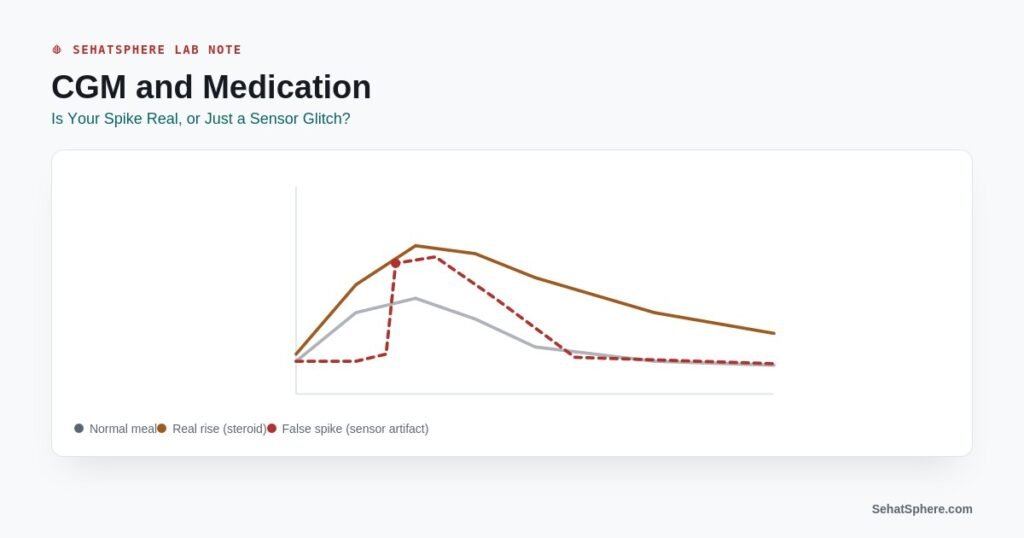
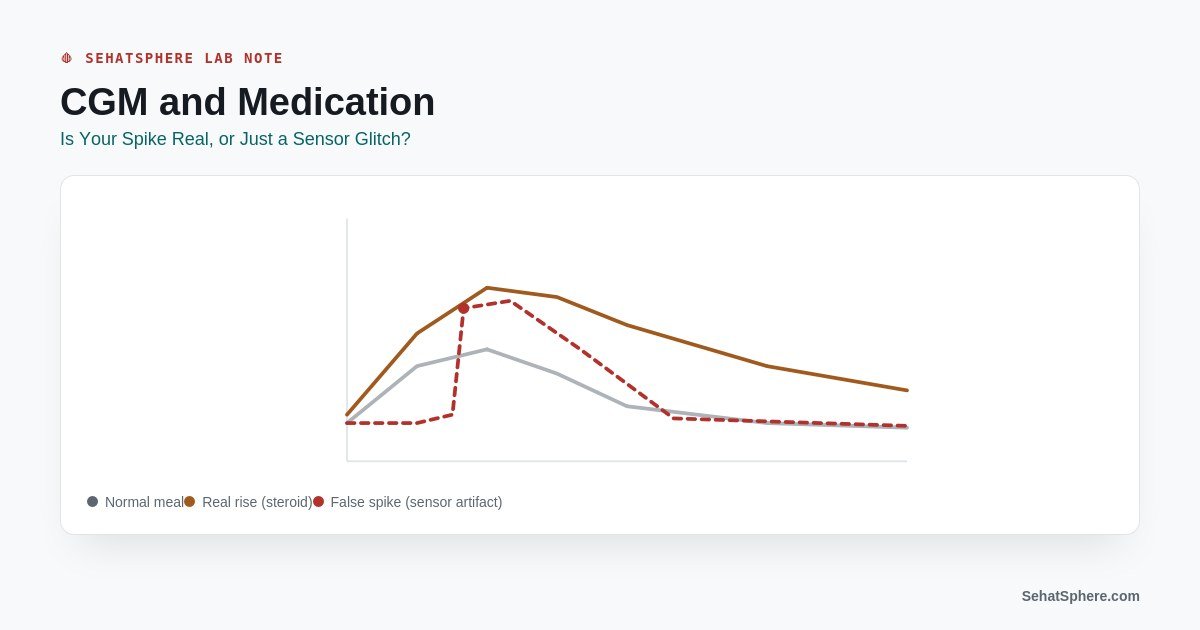
Notice the shapes, not just the height: the real medication effect follows the same smooth curve family as a normal meal, just bigger and longer. The artifact spike is abrupt and disconnected from meal timing — a signature of sensor chemistry, not physiology.
04 🎯 The CGM and Medication Distinction No Review Makes
Every CGM comparison article ranks accuracy, cost, and app design. Almost none explain that a “high” reading can mean two completely different things: your glucose actually rose, or a substance in your system is interfering with the sensor’s chemistry while your real glucose never moved. Confusing the two leads to genuinely pointless anxiety over diet choices that were never the cause — and in rarer cases, to a missed signal that actually mattered.
The Complete CGM and Medication Interference List
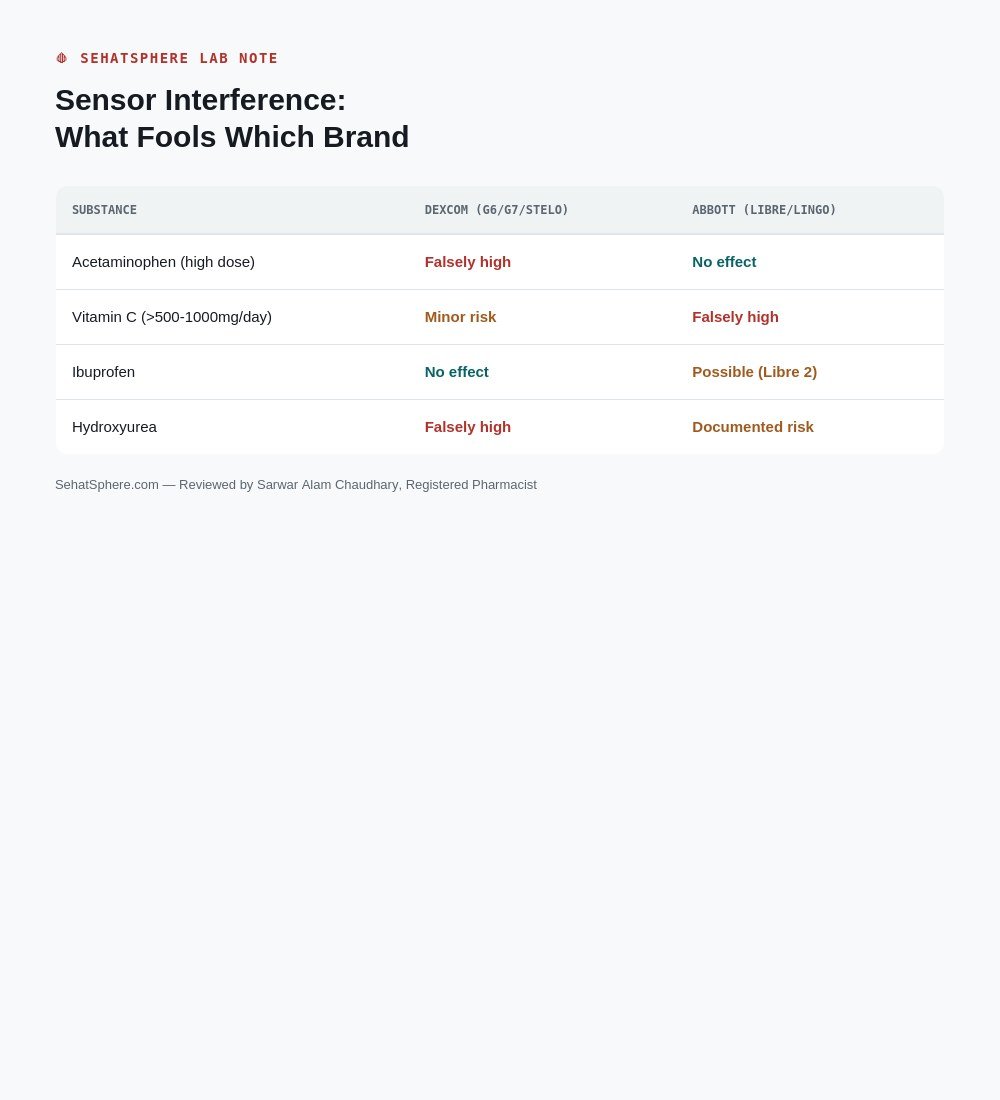
| Substance | Dexcom (G6/G7/Stelo) | Abbott (Libre/Lingo) |
|---|---|---|
| Acetaminophen (>1g/6hrs) | Falsely high | No effect |
| Vitamin C (>500–1000mg/day) | Minor risk | Falsely high |
| Ibuprofen | No effect | Possible (Libre 2) |
| Hydroxyurea | Falsely high (avoid use) | Documented risk |
| Aspirin / salicylates | Possible false low | Possible false low |
| Ethyl alcohol | Minor interference | Minimal |
| L-DOPA / methyldopa | No documented effect | Possible false high |
| Uric acid (gout flares) | Possible interference | Minimal |
This reflects published interference studies, not an exhaustive list — new substances are still being tested. Always check your specific device’s official interference page, not a generic list, before assuming a reading is wrong.
Real Physiological Effects — Medications That Actually Move Your Glucose
Steroids (glucocorticoids) — prednisone and similar drugs block insulin’s effect and prompt the liver to release more glucose. One trial found post-meal glucose rose by as much as 27% on a standard oral steroid dose. This is real, dose-dependent, and well-documented — the effect is strongest with short-term high doses and can persist for the duration of treatment.
Decongestants containing pseudoephedrine trigger an adrenaline-like “fight or flight” response that pushes glucose up — exactly why a bad cold visibly shifts your curve even without extra carbs.
Antipsychotics, particularly clozapine and olanzapine, carry some of the strongest documented glucose effects of any drug class — between 15% and 72% of people on second-generation antipsychotics gain significant weight, and the drugs independently impair insulin signaling and damage pancreatic beta cells, sometimes regardless of weight change.
Certain antibiotics, fluoroquinolones in particular, are documented to cause real glucose swings in both directions — sometimes dangerously low, not just high.
Immunosuppressants, antiretroviral therapy, and some cancer immunotherapies (immune checkpoint inhibitors) are recognized causes of drug-induced diabetes in the clinical literature — a less commonly discussed but medically significant category for anyone on long-term therapy for a transplant, HIV, or cancer treatment.
Niacin (vitamin B3) at high supplement doses raises glucose by affecting glucose tolerance directly.
07 🔴 The Most Dangerous Interaction on This Page
Beta-blockers don’t reliably raise your glucose number — but they blunt the physical warning signs of a real, dangerous low. Shakiness, a racing heart, and anxiety are your body’s adrenaline-driven alarm system for hypoglycemia. Beta-blockers dull that exact alarm. If you’re on a beta-blocker and a medication that can cause lows (insulin, sulfonylureas), you may not feel a low coming the way you’re used to — your CGM’s low-glucose alert becomes more important than your own body’s signals, not less. This is a genuinely important safety point that has nothing to do with sensor accuracy and everything to do with masked symptoms.
Non-Medication Confounders (So You Don’t Blame the Wrong Thing)
Not every unexplained reading is a medication issue. The dawn phenomenon — a natural hormone-driven glucose rise in the early morning hours, before you’ve eaten anything — catches many new CGM users off guard. Compression lows happen when you sleep on the sensor arm, physically restricting blood flow and producing a temporary false low that resolves once you change position. Intense exercise and acute stress both genuinely raise glucose through the same adrenaline pathway as decongestants — real, but not diet-related. Ruling these out first, before suspecting a medication, saves a lot of unnecessary worry.
If Interference Is a Real Concern, Does Brand Choice Matter?
If you take high-dose acetaminophen regularly, an Abbott-based sensor (Libre, Lingo) avoids that specific interference. If you take high-dose Vitamin C or certain supplements, a Dexcom-based sensor (G6, G7, Stelo) is generally the safer choice on that axis. Neither brand is universally “more accurate” — they’re differently vulnerable, and the right pick depends on what’s already in your medicine cabinet, not marketing claims about sensor technology.
10 🔴 If You’re on Insulin or Sulfonylureas
Everything above applies more urgently if you’re on a medication that can itself cause a real, dangerous low blood sugar. A falsely high CGM reading from acetaminophen, layered on top of insulin dosing decisions, is a genuinely different risk category than the same false reading in someone on no glucose-lowering medication at all. If you use insulin or a sulfonylurea, never make a dosing decision purely off a CGM number that looks physiologically implausible — confirm with a fingerstick first, every time, no exceptions.
Three Real-World Scenarios
Scenario 1 — The false alarm: A non-diabetic Dexcom Stelo user takes two extra-strength Tylenol for a headache and watches their app show a sudden “high” reading twenty minutes later, with no food involved. This matches the classic acetaminophen interference pattern — abrupt, disconnected from any meal, and resolving as the drug clears. A fingerstick would show normal blood sugar the entire time.
Scenario 2 — The real effect: Someone starts a five-day course of oral prednisone for a bad allergic reaction and notices their glucose curve running visibly higher and staying elevated longer after every meal, for the full five days. This is the expected, real, dose-dependent steroid effect — not a device problem, and worth mentioning at their next doctor visit if they have any risk factors for diabetes.
Scenario 3 — The one that actually matters: A person on both a beta-blocker for blood pressure and a sulfonylurea for type 2 diabetes doesn’t feel their usual warning shakiness before a real low. Their CGM alert is what catches it. This is exactly the situation described in the beta-blocker warning above — the device isn’t a luxury here, it’s compensating for a masked symptom.
How Long Does Interference Actually Last?
This varies by substance and dose, which is part of why it’s easy to misread. Acetaminophen interference on Dexcom sensors generally tracks the drug’s presence in your system — roughly a few hours per dose, longer with repeated dosing through the day. Vitamin C’s interference window on Abbott sensors is similar, generally resolving within several hours as the vitamin clears. This is useful in practice: if a “high” reading fades on a timeline that matches when you took a pill rather than when you ate, that timing itself is a meaningful clue.
Two Myths Worth Retiring
Myth: “My CGM is basically a lab-grade glucose test.” It’s genuinely useful for trends, but it measures interstitial fluid with a built-in lag behind blood glucose, and — as this entire guide covers — it can be chemically fooled by common substances. Treat it as a trend tool, not a diagnostic-grade lab result.
Myth: “If it’s not a diabetes medication, it can’t affect my glucose or my sensor.” Decongestants, antipsychotics, steroids, and even high-dose vitamins have nothing to do with diabetes treatment and still show up on this list. Glucose physiology and sensor chemistry don’t care what a drug was originally prescribed for.
Availability Beyond the US
Stelo and Lingo’s over-the-counter status is currently a US regulatory change specifically — availability, pricing, and even which interference warnings apply can differ by country and by which specific sensor model is sold locally. If you’re outside the US, check your local product’s own interference documentation rather than assuming the US Stelo/Lingo data applies exactly to what’s on pharmacy shelves near you.
Quick Glossary
Interstitial fluid — the fluid between your cells, just under the skin, where a CGM actually measures.
Electroactive substance — any compound whose chemistry can mimic glucose’s electrical signal at the sensor.
MARD — Mean Absolute Relative Difference, the standard industry metric for CGM accuracy versus lab reference values.
Dawn phenomenon — a natural pre-dawn glucose rise from overnight hormone release, unrelated to diet.
Compression low — a false low reading from physically pressing on the sensor, most often during sleep.
✅ CGM and Medication: Before You Blame Your Diet
- Check your specific sensor brand’s interference list — Dexcom and Abbott publish these directly, and they don’t match each other.
- Note the timing: a spike disconnected from any meal, appearing right after a pill, is a strong artifact signal.
- Confirm with a fingerstick if a reading looks physiologically implausible — CGM makers themselves recommend this for suspected interference.
- Tell your doctor about your CGM if starting a new medication — this cuts both ways, since some interactions are real and worth monitoring.
- If you’re on insulin, a sulfonylurea, or a beta-blocker, treat every unexplained reading as worth double-checking, not dismissing.
Frequently Asked Questions
Can Tylenol/acetaminophen really fake a glucose spike?
Yes, on Dexcom sensors specifically, at high doses (over 1g every 6 hours). It doesn’t raise your actual blood glucose at all — it’s a sensor chemistry effect. Abbott’s Libre/Lingo sensors are not affected by acetaminophen the same way.
Should I stop taking medication because it affects my CGM?
No — never adjust medication based on a wearable reading. If you suspect interference, confirm with a fingerstick and mention it to your doctor rather than changing your medication yourself.
Does ibuprofen affect CGM readings?
Dexcom states no interference. Some research has found a possible effect on Abbott’s Libre 2 specifically, which is a good example of why brand matters for this question.
Why does my glucose spike when I have a cold, even without eating sugar?
Likely a real effect from decongestants (pseudoephedrine) or the stress response of being sick itself, both of which genuinely raise glucose, not a sensor issue.
Are CGMs accurate for non-diabetics?
Generally reasonable for trends, per manufacturer accuracy data, but medical groups caution against using them for self-diagnosis or restrictive eating decisions without professional guidance.
What is the dawn phenomenon and how is it different from a medication effect?
It’s a natural early-morning glucose rise from overnight hormone release, happening before any food or medication — a normal pattern, not an interference or a diet problem.
Why do beta-blockers matter so much for CGM users?
They don’t reliably change your glucose number, but they blunt the physical symptoms (shakiness, racing heart) that normally warn you of a real low — making your CGM’s alert more important, not less.
Does antipsychotic medication really affect blood sugar that much?
Yes — some antipsychotics, especially clozapine and olanzapine, are among the most strongly documented glucose-affecting drugs, through both weight gain and direct effects on insulin signaling.
📚 Sources
The research behind this CGM and medication guide:
- Dexcom — Official CGM Interfering Substances List
- GoodRx — Does Tylenol Raise Blood Sugar?
- Dynamic Interference Testing — Libre 2 & Dexcom G6 Sensors
- Levels — Medications That Can Raise Blood Sugar
- Diabetes Education Services — CGM Interfering Substances (Jan 2026)
- Medscape — Top Medications That Increase Blood Glucose
- Diabetologia — When Therapeutic Drugs Lead to Diabetes
Medical disclaimer: This article on CGM and medication interference is for general education only, not medical advice. Confirm unexpected readings with a fingerstick and talk to your doctor about any medication concerns, especially if you use insulin or sulfonylureas.