
 SehatSphere
Statin Muscle Pain: The SAMSON Trial
You stopped your cholesterol medicine because of muscle pain. A landmark British trial found something that changed how doctors think about it entirely.
Quick Answers
The global picture
Statin muscle pain is the number one reason people quit a life-saving medicine. Statins are among the most widely prescribed medicines on Earth — and also among the most widely abandoned. Roughly 39% of adults worldwide have high cholesterol, and studies estimate that between half and three-quarters of people prescribed a statin stop taking it within two years, most commonly citing muscle pain.
In India specifically, ICMR data shows 25-30% of urban adults have abnormal lipid profiles, yet statin prescription rates remain far lower than in high-income countries — meaning many people who would benefit aren’t on treatment at all, while many who are prescribed one stop early over fears that, as this guide explains, are often misplaced.
What I see at the pharmacy counter
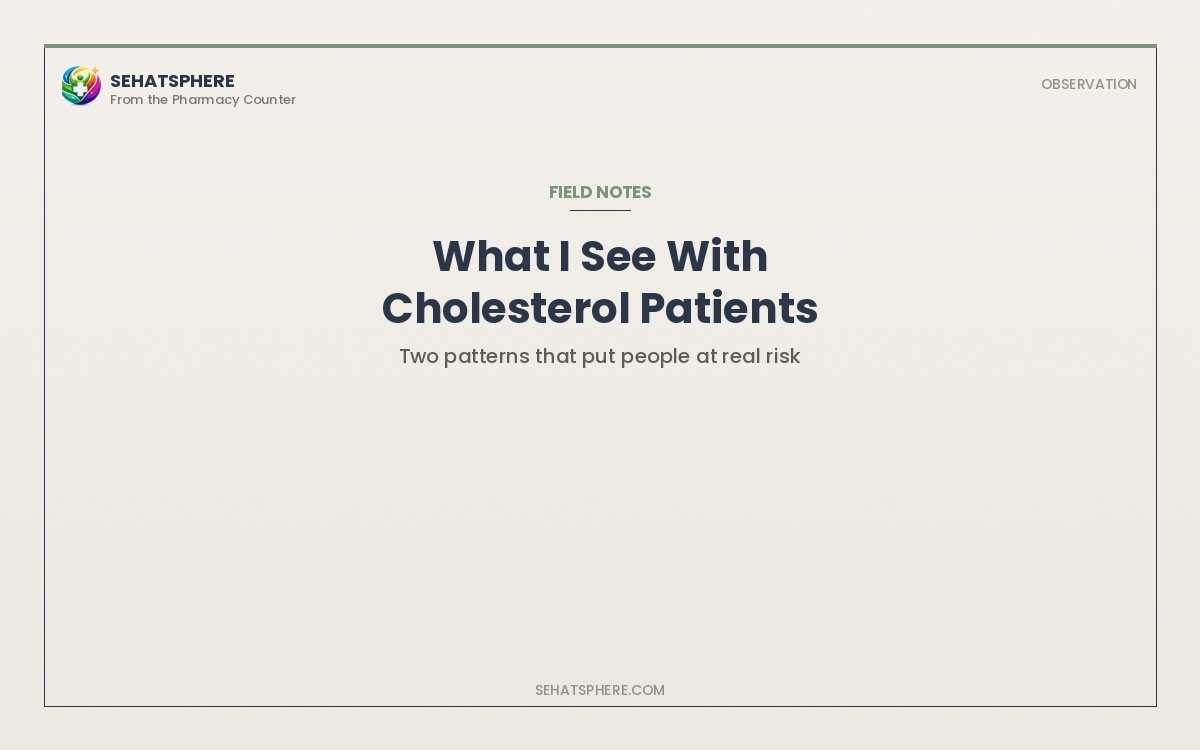
People come in convinced their statin is causing their aches and pains, and stop it on their own. Just as often, someone’s cholesterol comes back normal after months on treatment, and they decide they’re “cured” and quietly stop refilling — not realising the normal number is the medicine working, not proof they no longer need it.
— Dr. Sarwar Alam Chaudhary, BHMS, Registered PharmacistBoth patterns are understandable. Both are also, in most cases, based on a misunderstanding that a landmark clinical trial has since clarified in detail.
Statin Muscle Pain: The SAMSON Trial Findings
Between 2016 and 2019, researchers at Imperial College London, funded by the British Heart Foundation, ran an unusual trial called SAMSON — Self-Assessment Method for Statin Side-effects Or Nocebo. They recruited 60 people who had already stopped a statin because of side effects.
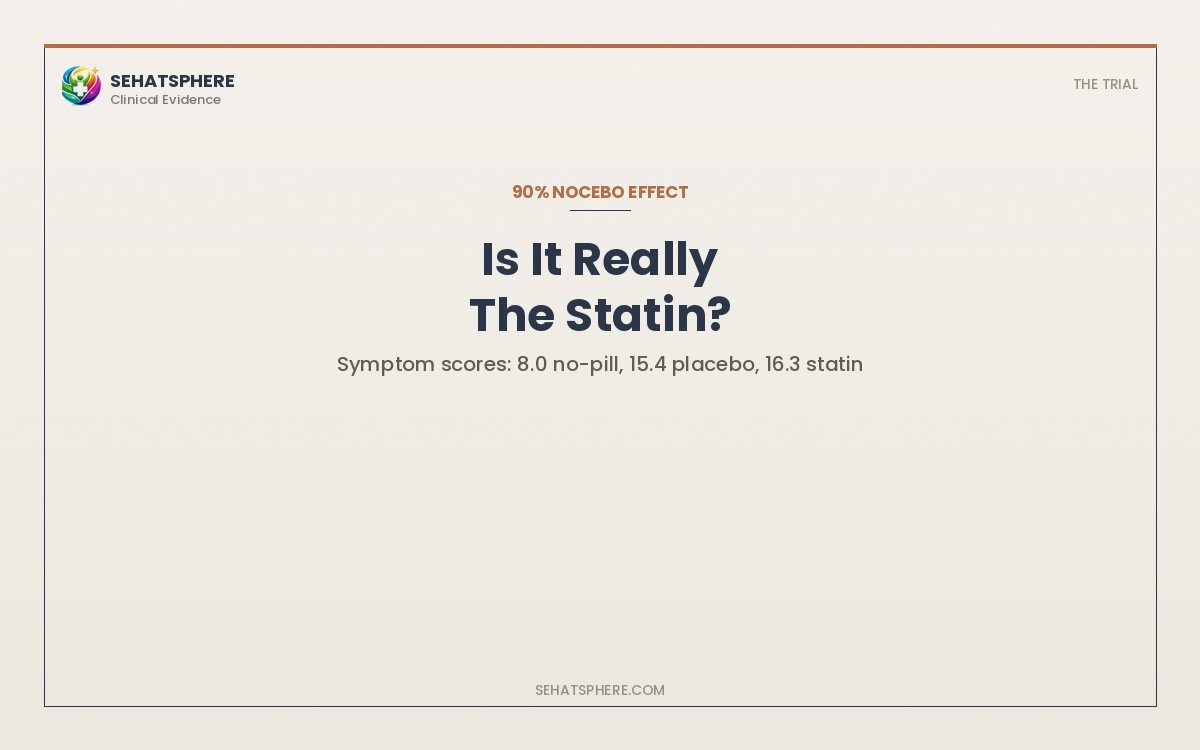
Each participant received 12 unmarked bottles across a year: four containing a statin (atorvastatin), four containing an identical placebo, and four containing nothing. Neither the participant nor the researchers knew which was which each month. Every day, participants logged their symptom intensity on a smartphone.
The statin and placebo scores were statistically indistinguishable. Overall, 90% of the symptom burden people experienced on the real statin was also present on the dummy pill. The results were published in the New England Journal of Medicine in 2020.
Many of the very real side effects of taking a statin were the result of knowing you are taking a tablet, not the result of the statin inside the tablet.
— Professor Darrel Francis, Principal Investigator, SAMSON trialAfter the trial, participants were shown their own data — proof that their symptoms tracked with taking any pill, not specifically the statin. Half of them chose to restart their statin.
Test what you just learned
1. In the SAMSON trial, what percentage of statin symptoms were also felt on placebo?
2. After seeing their own data, what fraction of participants restarted their statin?
What exactly is a “nocebo” effect?
A nocebo effect is the placebo effect’s mirror image: instead of feeling better because you expect to, you feel worse because you expect to. If you’ve read about statin side effects, or heard about someone else’s experience, your brain has a genuine, physical readiness to notice and amplify ordinary aches that you’d otherwise ignore.
This doesn’t mean the pain isn’t real — participants in SAMSON genuinely felt what they reported. It means the cause often isn’t the drug’s pharmacology, but the psychological and physiological experience of taking any tablet while expecting a particular symptom.
When it IS the statin: real SAMS
SAMSON doesn’t mean statin-related muscle symptoms never happen. A large Italian study across 23 lipid clinics (PROSISA, over 16,000 patients) found a genuine statin-associated muscle symptom (SAMS) prevalence of about 9.6%, confirmed through a formal stop-restart (dechallenge-rechallenge) process. The key difference from nocebo-driven symptoms is that true SAMS reliably reappear when you restart the exact same statin under controlled conditions, and resolve when you stop it — a pattern your doctor can help verify.
“If I feel muscle pain on a statin, it’s definitely the drug — I should stop immediately and never take one again.”
Most reported symptoms are nocebo. True SAMS exist in roughly 1 in 10 people and can often be managed by switching statins, not abandoning them.
Grapefruit and your statin
This interaction is real and depends entirely on which statin you take. Grapefruit blocks an enzyme (CYP3A4) that breaks certain statins down — without it, the drug builds up in your blood.
| Statin | Grapefruit effect |
|---|---|
| Simvastatin, Lovastatin | Levels can rise ~260% if taken together — avoid completely |
| Atorvastatin | Levels can rise ~80%, at any time of day — avoid completely |
| Rosuvastatin, Pravastatin | Minimal to no interaction — generally safe |
| Fluvastatin, Pitavastatin | Little to no significant interaction |
If you love grapefruit and take atorvastatin or simvastatin, ask your doctor about switching to rosuvastatin or pravastatin instead of giving up the fruit — or the medicine.
Morning or night? Here it actually matters
We’ve written before about how blood pressure medicine timing barely matters. Statins are genuinely different — because it depends on the drug’s half-life.
- 🌙Simvastatin, lovastatin (short half-life): take in the evening — your liver makes most cholesterol overnight, so this is when the drug is needed most.
- ☀️Atorvastatin, rosuvastatin (long half-life): take any time of day — blood levels stay steady regardless of when you dose.
“All cholesterol medicine should be taken at bedtime, like I read online.”
Only short-half-life statins genuinely benefit from evening dosing. Ask your pharmacist which category your specific statin falls into.
The “my cholesterol is normal now” trap
This is the second pattern I see constantly. A normal cholesterol reading after months on a statin is evidence the medicine is working — not evidence you’re cured. Stopping typically means LDL cholesterol climbs back toward where it started within weeks, quietly rebuilding cardiovascular risk with no symptoms to warn you.
Try SehatSphere’s Free Health Tools
Two tools that pair well with this guide — both free, no signup needed to start.
Blood Report Decoder
Paste your lipid panel or full lab values for an instant colour-coded breakdown.
Open Tool →
Stop, switch, or stay? An honest framework
Mild, vague muscle aches starting weeks or months after your dose was stable; symptoms that don’t match a clear on/off pattern with the pill.
Severe muscle weakness, dark urine, symptoms starting within days of a NEW statin or dose increase, or any thought of stopping because your numbers “look fine now.”
If you do have symptoms, the right next step usually isn’t quitting statins altogether — it’s a conversation about dose, timing, switching statin type, or a formal stop-restart trial with your doctor’s guidance.
Frequently Asked Questions
Is statin muscle pain real or all in my head?
The pain itself is genuinely felt, not imagined. The SAMSON trial found 90% of the symptom burden was also present on a placebo pill, meaning the cause is usually the experience of taking any tablet (nocebo effect), not the statin’s pharmacology specifically.
What was the SAMSON trial and who ran it?
SAMSON was a British Heart Foundation-funded trial led by Imperial College London, published in the New England Journal of Medicine in 2020. It gave 60 participants unmarked statin, placebo, and no-pill months to isolate true drug effects from nocebo effects.
Can grapefruit be eaten with any statin?
No. Simvastatin, lovastatin, and atorvastatin require complete avoidance of grapefruit. Rosuvastatin, pravastatin, fluvastatin, and pitavastatin have minimal to no interaction.
Should statins be taken in the morning or at night?
It depends on the statin. Short-half-life statins like simvastatin and lovastatin work best taken in the evening. Long-half-life statins like atorvastatin and rosuvastatin can be taken at any consistent time.
Can I stop my statin once my cholesterol is normal?
Generally no. A normal reading while on treatment usually means the statin is working. Stopping typically causes LDL cholesterol to rise back toward pre-treatment levels within weeks.
What is statin-associated muscle symptoms (SAMS) and how common is it really?
SAMS refers to genuine, drug-caused muscle symptoms. Studies using formal stop-restart testing found a true prevalence of around 9.6%, far lower than the proportion of people who report symptoms and stop statins.
How common is high cholesterol worldwide and in India?
Around 39% of adults worldwide have high cholesterol. In India, ICMR data shows 25-30% of urban adults have abnormal lipid profiles, though statin prescription rates remain comparatively low.
What should I do if I think my statin is causing real side effects?
Talk to your doctor rather than stopping on your own. Options include a formal stop-restart trial, switching to a different statin, adjusting the dose, or reviewing other medicines and supplements you’re taking.
Written by Sarwar Alam Chaudhary
A practising pharmacist who is also pursuing BHMS and works in a hospital setting — the patterns in this guide come directly from what I see with cholesterol patients at the counter. More about the author →