 SehatSphere.com
What Are Ultra-Processed Foods? The Slow Poison Hiding in Your Kitchen
- Ultra-processed isn’t a vague insult — it’s NOVA Group 4, a real classification defined by industrial markers like extracted substances and cosmetic additives, not by calories or “junk food” instinct.
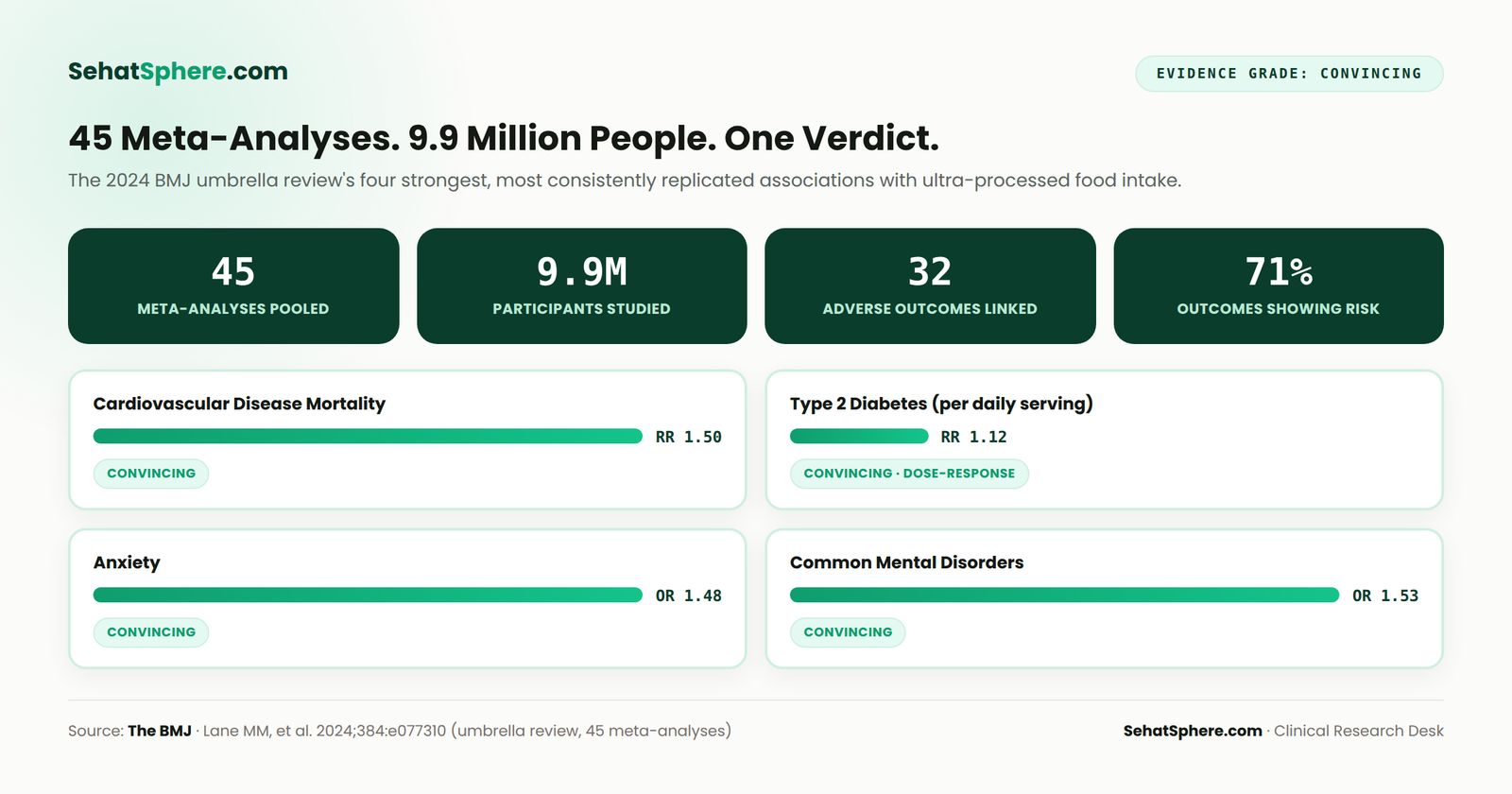
- A 2024 umbrella review in The BMJ pooled 45 meta-analyses across ~9.9 million people and found convincing evidence linking UPFs to higher cardiovascular mortality, type 2 diabetes, anxiety, and common mental disorders.
- A landmark NIH trial proved UPFs cause overeating even when calories, sugar, and fat are matched exactly — people ate about 500 extra calories a day without trying to.
- Common emulsifiers measurably thin your gut’s protective mucus layer in controlled human trials — this isn’t theoretical.
What “Ultra-Processed” Actually Means
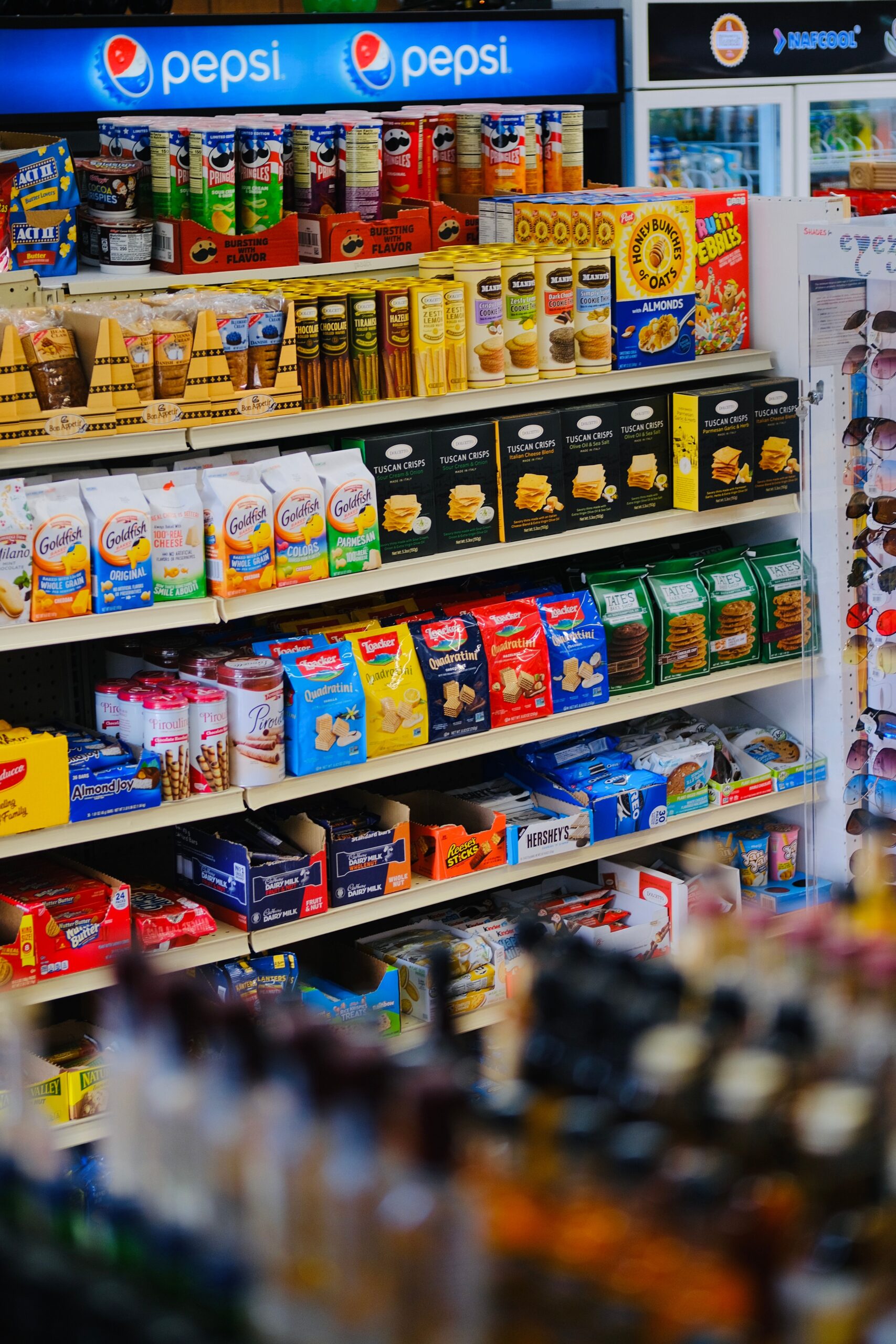
Walk down a modern grocery aisle and very little of what you’re looking at is actually food in the traditional sense — it’s industrial formulation. The term comes from the NOVA classification system, proposed in 2009 by Carlos Monteiro and colleagues at the University of São Paulo and since adopted into the Pan American Health Organization’s own dietary guidelines. NOVA sorts everything you eat into 4 groups by degree and purpose of processing, not by calories, fat, or sugar content alone: Group 1 (unprocessed or minimally processed — an apple, plain rice, an egg), Group 2 (processed culinary ingredients — oil, salt, sugar itself), Group 3 (processed foods — canned vegetables, cheese, freshly baked bread), and Group 4: ultra-processed foods.
What actually defines Group 4 is specific, not vague: substances rarely found in a home kitchen at all (high-fructose corn syrup, hydrogenated oils, modified starches, protein isolates), cosmetic additives whose only job is to make the product look, taste, or feel a certain way (flavors, colorants, emulsifiers, sweeteners, thickeners), and industrial processes like extrusion, molding, and pre-frying. A food doesn’t need to be “unhealthy-tasting” to qualify — plenty of UPFs are engineered specifically to taste better than anything in your kitchen, which is exactly the point covered in Section 3.
Traditional culinary processing — baking, fermenting, curing — keeps the food matrix largely intact: fiber networks, cell structures, and micronutrients stay bound together the way your gut evolved to digest them. Ultra-processing strips all of that away and reassembles the leftover macronutrients into something engineered for shelf-life and palatability, not nutrition. That’s the mechanism behind almost everything in this article.
2. The Hidden-Sugar Name Game
To avoid listing plain “sugar” as the single largest ingredient on a label, manufacturers spread the same sweetening load across several chemically distinct names, each one individually ranking lower on the ingredient list even though the combined sugar content is identical or higher. Sugar hides behind more than 60 industrial pseudonyms — maltodextrin, high-fructose corn syrup, dextrose, crystalline fructose, invert sugar, evaporated cane juice, rice syrup, barley malt, and corn syrup solids all exert the same metabolic toll on your body regardless of what the front of the pack claims.

Once one of these fast-absorbing sugars hits your bloodstream, it arrives with far more velocity than the sugar naturally bound inside a whole fruit or grain, forcing a sharp insulin surge to clear it. Repeated day after day, this is a major driver of peripheral insulin resistance and visceral fat deposition — the same mechanism our guide to reversing insulin resistance covers in full.
- Does the ingredient list have 5 or more items you wouldn’t keep in your own kitchen?
- Is there a cosmetic additive whose only job is flavor, color, or texture (not nutrition)?
- Would the product still exist — and taste the same — without any of those additives?
Two or more “yes” answers is a reasonably reliable sign you’re holding a Group 4 ultra-processed product, whatever the front-of-pack marketing claims.

3. Why You Can’t Just Stop: The Kevin Hall Trial
For years, the obvious rebuttal to UPF concerns was “people just eat too much of them, that’s a willpower problem, not a food problem.” A landmark 2019 NIH inpatient trial run by Kevin Hall’s team, published in Cell Metabolism, tested that assumption directly — and settled it.
20 healthy adults lived at the NIH Clinical Center for 28 days, spending 2 weeks on an ultra-processed diet and 2 weeks on a minimally processed diet, in random order. Crucially, both diets were matched for total calories, sugar, fiber, fat, and carbohydrates — the only real difference was processing level. Participants could eat as much or as little as they wanted from whichever diet they were on that week.
The result: people spontaneously ate roughly 500 extra calories a day on the ultra-processed diet and gained about 2 lbs over 2 weeks — with zero instruction to eat more, and despite the two diets being nutritionally identical on paper. When they switched to the minimally processed diet, they lost a similar amount. Because the macronutrients were matched, the only variable left to explain the overeating was the food’s engineering — its energy density, eating rate, and hyper-palatability overriding the normal satiety signals (peptide YY, leptin) that would otherwise tell your brain you’re full.
This is the mechanism worth internalizing: UPFs aren’t just “easy to overeat” the way any tasty food can be — a controlled, matched-calorie trial showed they cause measurably faster, larger intake almost automatically, which is a very different clinical claim than a moral one about self-control.
4. The Emulsifier Problem: How UPFs Break Your Gut Barrier
Modern packaged foods rely heavily on emulsifiers — carboxymethylcellulose (CMC), polysorbate 80, and soy lecithin among the most common — to keep fat and water blended smoothly on a shelf for months. Inside your gut, these same molecules behave less like a food ingredient and more like a mild detergent.
A 2015 Nature study by Chassaing and colleagues first showed that dietary emulsifiers alter gut microbiota composition and promote low-grade inflammation, colitis, and metabolic syndrome in mice. The obvious question — does this hold in humans? — was answered by a subsequent randomized, controlled-feeding human trial: 16 healthy adults were given either an emulsifier-free diet or one enriched with 15 grams of CMC daily for 11 days in an inpatient setting.

The CMC group showed measurably reduced gut microbial diversity, a drop in Faecalibacterium prausnitzii (a bacterium generally associated with gut health), and reduced short-chain fatty acids and free amino acids in stool samples — all markers of a less protective gut environment. Most strikingly, in 2 of the 7 CMC-fed participants (versus zero in the control group), bacteria were found encroaching into the normally sterile inner mucus layer that separates gut bacteria from the intestinal wall — a pattern seen in inflammatory bowel disease. CMC consumption also modestly but measurably increased postprandial abdominal discomfort.
This is the real, human-verified mechanism behind Leaky Gut Syndrome — the loss of that protective mucus barrier lets bacterial fragments and endotoxins slip into circulation, triggering the same low-grade systemic inflammation implicated in chronic stress and cortisol dysregulation, meaning a poor diet and a stressed mind can genuinely compound each other’s damage rather than acting independently.
If a snack is labeled vegan or plant-based, it’s automatically less processed.
Many plant-based meat and dairy alternatives meet NOVA’s own Group 4 criteria — extracted protein isolates, cosmetic additives, industrial texturization — exactly like their animal-based counterparts.
5. The Cardiovascular Connection
Systemic inflammation paired with the refined industrial sodium common in UPFs causes structural stiffening of endothelial cell walls and impairs nitric oxide synthesis — the same vessel-flexibility mechanism explored in our Heart Rate Fluctuation guide. That persistent vascular resistance creates micro-scarring across coronary artery walls, ideal traps for oxidized LDL cholesterol to collect and accelerate plaque formation — plaque that can eventually rupture and trigger the kind of early-onset heart attacks covered in our Heart Attack in Young Adults guide.
This dietary pathway also feeds directly into heart failure over time — the same structural strain our Early Signs of a Weak Heart guide covers, including its own pulse-pressure and ejection-fraction diagnostic angles. A high-sodium, high-hidden-sugar UPF pattern is one of the most modifiable inputs into that slow-building process, which is exactly why Section 6’s numbers below matter as much as they do.
6. The 32 Health Outcomes: What the Biggest Review Ever Found
In February 2024, The BMJ published an umbrella review by Lane and colleagues — an “umbrella” because it pools dozens of existing meta-analyses rather than running new studies from scratch. This one pooled 45 meta-analyses covering roughly 9.9 million participants, examining every previously studied association between UPF exposure and adverse health outcomes in one place.
| Outcome | Effect Size | Evidence Grade |
|---|---|---|
| Cardiovascular disease mortality | RR 1.50 (1.37–1.63) | Convincing |
| Type 2 diabetes (dose-response) | RR 1.12 (1.11–1.13) per serving | Convincing |
| Anxiety | OR 1.48 (1.37–1.59) | Convincing |
| Common mental disorders | OR 1.53 (1.43–1.63) | Convincing |
| All-cause mortality, heart disease mortality, depression, obesity, poor sleep | Elevated risk | Highly suggestive |
Overall, 71% of the outcomes studied showed a direct association between higher UPF exposure and higher health risk. The type 2 diabetes figure is worth sitting with specifically: it’s a dose-response relationship, meaning each additional daily serving of UPF was associated with roughly a 12% relative increase in risk — small on its own, but compounding across a day that might realistically include 4, 5, or 6 servings.
These aren’t marketing words — they’re formal GRADE-style evidence tiers used in umbrella reviews. “Convincing” means the association held up consistently across many studies with minimal bias and a strong dose-response pattern. “Highly suggestive” means the direction of the association is very likely real but the evidence base is somewhat less airtight (fewer studies, more heterogeneity). Both tiers still represent real, replicated signals — not single-study noise.
One honest limitation is worth stating plainly: almost all 45 pooled meta-analyses behind these numbers are built from observational cohort data, which can show a strong association without proving direct causation on their own — people who eat more UPFs may also differ in other unmeasured ways. That’s exactly why Section 3’s Kevin Hall trial matters as much as it does here: it’s one of the few pieces of this puzzle that comes from a randomized, calorie-matched, inpatient design rather than an observational cohort, and it’s what turns “UPFs are associated with weight gain” into “UPFs cause measurably more eating, calorie-for-calorie, in a controlled setting.” The two study types answer different questions, and this article leans on both rather than either alone.
7. UPFs and Mental Health: The Anxiety-Depression Link
The two strongest single associations in the entire BMJ umbrella review weren’t cardiovascular or metabolic at all — they were anxiety (OR 1.48) and common mental disorders (OR 1.53), both graded as convincing evidence, with depression itself graded highly suggestive. This is a genuinely underdiscussed angle: most UPF coverage stops at heart disease and diabetes.
The proposed mechanisms tie directly back to Sections 4 and 5: the gut-brain axis means that gut barrier disruption and the resulting systemic inflammation don’t stay confined to the digestive tract — inflammatory signaling reaches the brain and has been linked to mood disturbance independent of any diagnosed digestive disease. Blood sugar volatility from the hidden sugars in Section 2 is a second, separate contributor, since sharp glucose swings are themselves associated with irritability and anxiety-like symptoms. Neither pathway requires you to have any existing gut or metabolic diagnosis to matter — this is a population-level signal that applies broadly, not only to people who already have digestive symptoms.
8. UPFs During Pregnancy: What the Data Actually Shows
A 2022 systematic review and meta-analysis in Nutrients (Pizato et al.) pooled 61 studies across nearly 700,000 women specifically on maternal UPF consumption and perinatal outcomes. Two associations stood out: higher UPF intake was linked to a 48% higher odds of gestational diabetes (10 cohort studies, over 42,000 women) and a 28% higher odds of preeclampsia (4 cohort studies, over 112,000 women).
The authors graded the certainty of the gestational-diabetes evidence as very low (cohort-study design limitations, not a causal proof), while the preeclampsia association carried moderate certainty. No significant association was found for low birth weight, preterm birth, or excessive gestational weight gain. This is a real, worth-knowing signal — not a settled verdict — and it’s a reason to bring up dietary pattern with an obstetrician, not a reason for alarm over any single packaged snack.
9. Check Your Plate: Self-Assessment
Tick anything that’s true of a food currently in your kitchen. This is a rough awareness tool built directly on NOVA’s own real criteria, not a diagnosis.
10. How Much of Your Day is Ultra-Processed?
A rough, honest estimate matters more than a perfect one. Enter two numbers below:
11. If You’re on Medication, This Matters More
A UPF-heavy diet isn’t a neutral background choice if you’re already managing a chronic condition with medication — it actively works against several drug classes. The refined sodium load can blunt the effect of antihypertensives and complicates the timing questions covered in our Blood Pressure Medicine Timing guide. The rapid glucose spikes from hidden sugars fight directly against glucose-lowering medications, the same tension explored in our Diabetes Medicine, Hypoglycemia & Weight Loss guide.
Cross-check your combination
Anyone on multiple medications alongside a heavy-UPF diet should think about drug-nutrient timing together, not diet and medications separately — the Integrative Interaction Checker and our Complete Guide to Medicine Safety are both built for exactly that combined view.
12. India’s Trans-Fat Crackdown & Reading Labels Here
India has actually moved faster than many countries on one specific UPF-linked risk: industrial trans fat. FSSAI capped industrial trans fatty acids at 2% of total oils/fats by mass in any food product, effective January 1, 2022 — down from a 3% limit the year before. That’s genuinely meaningful progress, but it doesn’t cover the sugar-alias game from Section 2 or the emulsifier load from Section 4, which remain unregulated by any similar cap.
Practically, this means an Indian packaged snack that’s now “trans-fat compliant” can still be a full Group 4 ultra-processed product by every other NOVA marker — hydrogenated-fat compliance is not the same thing as minimally processed. Reading the full ingredient list, not just the trans-fat number on the nutrition panel, remains the only reliable check.
For a sense of what a more comprehensive policy looks like, Chile’s Law of Food Labeling and Advertising — phased in from July 2016 — requires a black-and-white octagon “Excess of—” warning stamp covering at least 10% of a package’s front whenever a product exceeds set thresholds for sugar, sodium, saturated fat, or calories, with products carrying any such warning barred from being marketed to children under 14 or sold in schools. Independent interrupted-time-series studies tracking real purchase data found measurable drops in energy, sodium, sugar, and saturated fat bought per household in the years after rollout. FSSAI’s trans-fat cap is a genuine start, but it targets a single ingredient rather than the whole ultra-processed pattern the way Chile’s four-nutrient system does — which is worth knowing simply so the “2% trans fat” claim on an Indian label isn’t mistaken for a broader health seal of approval.
13. The Whole-Foods Swap Matrix
A structured, practical reference for grocery shopping — not a rule to follow perfectly, a direction to lean toward:
| Food Group | Whole / Minimally Processed | Ultra-Processed (Group 4) |
|---|---|---|
| Breakfast | Steel-cut oats, whole eggs, sprouted grains | Sugary cereals, instant pancake mixes |
| Beverages | Filtered water, unsweetened tea, black coffee | Diet sodas, sweetened juices, energy drinks |
| Dairy | Plain yogurt, traditional butter | Flavored fruit yogurts, non-dairy creamers |
| Cooking fats | Cold-pressed olive oil, ghee | Refined seed oils, hydrogenated margarines, vanaspati |
14. A Realistic 7-Step Kitchen Reset
Not a gimmick, not an all-or-nothing streak to maintain — a sequence of real, low-effort swaps that compound:
| Step | Do This |
|---|---|
| 1 | Replace one sugary/diet drink a day with water or unsweetened tea |
| 2 | Swap one packaged breakfast item for eggs, oats, or leftovers |
| 3 | Read one label per shopping trip out loud — if you can’t picture the ingredient in a kitchen, note it |
| 4 | Replace one packaged snack with a whole-food one (fruit, nuts, roasted chana) |
| 5 | Cook one meal this week that normally comes from a package |
| 6 | Check one cooking fat at home against the swap matrix above |
| 7 | Re-run the self-check in Section 9 on your most-eaten packaged item |

15. Quick Quiz
16. Frequently Asked Questions
What are ultra-processed foods (UPFs)?
Industrial formulations made mostly or entirely from substances extracted from foods (oils, starches, protein isolates) plus cosmetic additives like flavors, colorants, and emulsifiers — NOVA Group 4, as opposed to whole or minimally processed foods.
How do I spot a UPF on a label?
Look for ingredients you wouldn’t find in a home kitchen — maltodextrin, high-fructose corn syrup, hydrogenated oils, emulsifiers like polysorbate 80 or carboxymethylcellulose — and a long list of purely cosmetic additives.
Is “natural flavor” on a label a sign it’s not processed?
No — “natural flavor” is itself an industrially extracted or synthesized additive under NOVA’s own definition. The word “natural” describes the flavor compound’s origin, not the food’s degree of processing.
Why do ultra-processed foods make it so hard to stop eating?
A 2019 NIH controlled trial showed people spontaneously ate ~500 extra calories a day on a calorie-matched ultra-processed diet — the food’s engineering (texture, energy density, eating rate) overrides normal fullness signals.
Do emulsifiers really damage the gut?
Yes, in controlled human trials — 15g/day of carboxymethylcellulose for 11 days reduced gut microbial diversity, lowered short-chain fatty acids, and caused visible bacterial encroachment into the protective mucus layer in some participants.
How many health conditions are UPFs actually linked to?
A 2024 BMJ umbrella review of 45 meta-analyses (~9.9 million people) found associations with 32 distinct adverse outcomes, with cardiovascular mortality, type 2 diabetes, anxiety, and common mental disorders carrying the strongest “convincing” evidence grade.
Can ultra-processed foods affect mood, not just metabolic health?
Yes — anxiety and common mental disorders were among the review’s strongest associations, likely via gut-brain-axis inflammation and blood-sugar volatility, independent of any diagnosed digestive condition.
Are UPFs risky during pregnancy?
A 2022 meta-analysis of nearly 700,000 women found higher UPF intake linked to 48% higher odds of gestational diabetes and 28% higher odds of preeclampsia — real signals, though the gestational-diabetes evidence itself was graded very-low certainty by the authors.
Has India done anything to regulate UPF ingredients?
FSSAI capped industrial trans fat at 2% of total oils/fats in any food product from January 2022 — real progress, but it doesn’t address hidden-sugar aliases or emulsifiers, which remain unregulated.
Does eating UPFs matter more if I’m on medication?
Yes — the sodium load can blunt blood-pressure medications and the sugar spikes fight directly against glucose-lowering drugs, so diet and medication timing should be considered together, not separately.
The Short Version
Ultra-processed isn’t a scare word — it’s NOVA Group 4, a real classification built on industrial substances and cosmetic additives, not calories. A landmark trial proved these foods cause overeating even at matched calories, emulsifiers measurably thin your gut’s protective barrier in controlled human studies, and the biggest review ever done links UPFs to 32 outcomes spanning heart disease, diabetes, anxiety, and depression. None of this demands perfection — the 7-step reset above is about direction, not zero tolerance.
Why Trust This Guide
More From SehatSphere
- Lane MM, et al. Ultra-processed food exposure and adverse health outcomes: umbrella review of epidemiological meta-analyses. The BMJ. 2024;384:e077310 — 45 meta-analyses, ~9.9 million participants, 32 adverse outcomes.
- Hall KD, et al. Ultra-Processed Diets Cause Excess Calorie Intake and Weight Gain. Cell Metabolism. 2019 — the NIH inpatient controlled-feeding trial.
- Chassaing B, et al. Dietary emulsifiers impact the mouse gut microbiota promoting colitis and metabolic syndrome. Nature. 2015.
- Chassaing B, et al. Randomized Controlled-Feeding Study of Dietary Emulsifier Carboxymethylcellulose Reveals Detrimental Impacts on the Gut Microbiota and Metabolome. Gastroenterology. 2022 — the human CMC trial.
- Monteiro CA, et al. The Nova food classification system — origin, PAHO adoption, and Group 4 defining criteria.
- Pizato N, Paula WO, Patriota ESO, Gonçalves VSS. Maternal Consumption of Ultra-Processed Foods-Rich Diet and Perinatal Outcomes: A Systematic Review and Meta-Analysis. Nutrients. 2022;14(15):3242.
- Food Safety and Standards Authority of India (FSSAI) — industrial trans-fat limit reduced to 2% of total oils/fats, effective January 1, 2022.