
Heart Health Warning Signs: The Complete Guide
Five guides on heart rate, blood pressure, and heart attack signs, brought together — with the single most important distinction upfront: what needs emergency care right now, and what’s a pattern worth monitoring over time.
Over several guides, we’ve covered heart rate fluctuation, blood pressure patterns, anger’s effect on the heart, weak-heart signs, and heart attacks in young adults — each in depth. This page brings them together as one complete reference on heart health warning signs, starting with the one distinction that matters more than anything else on this list: knowing what’s a genuine emergency versus what’s a pattern worth tracking.
Heart Health Warning Signs: Emergency vs. Worth Monitoring
Per the American Heart Association, this distinction is the single most important thing to get right — acting fast on real emergency signs saves lives, while genuinely non-urgent symptoms don’t need a panicked reaction.
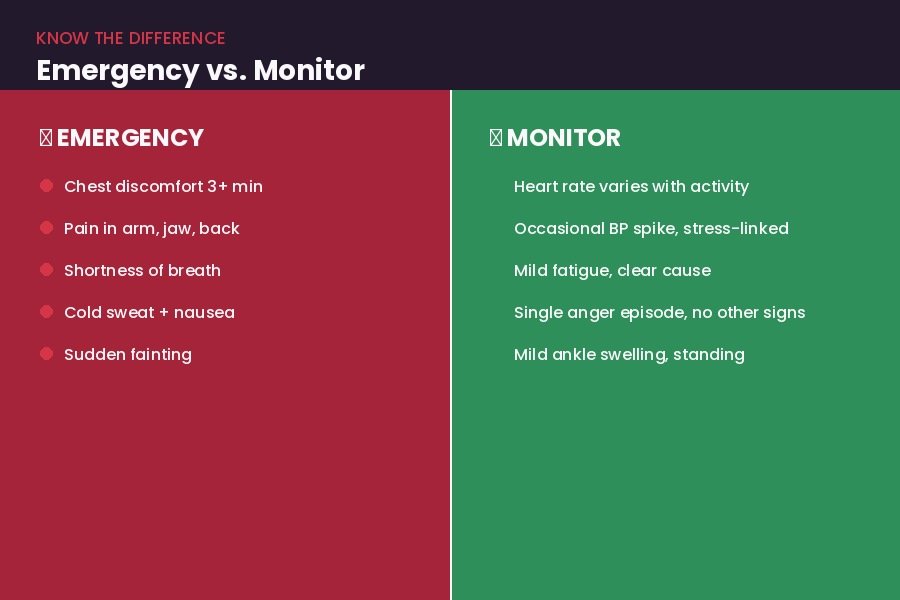
- Chest discomfort lasting more than a few minutes, or that goes away and returns
- Pain or discomfort in arms, back, neck, or jaw
- Shortness of breath, with or without chest discomfort
- Cold sweat, nausea, or lightheadedness alongside any of the above
- Sudden fainting
- Heart rate that varies with activity, stress, sleep, or temperature
- Occasional blood pressure spikes tied to a stressful moment
- Mild fatigue that has an obvious explanation (poor sleep, illness)
- A single episode of anger or stress without other symptoms
- Gradual, mild ankle swelling after long periods standing
If you’re ever unsure which category a symptom falls into, treat it as the emergency category — a wasted trip to the emergency room costs far less than a delayed one.
It’s also worth knowing that heart attacks don’t always announce themselves dramatically — the American Heart Association notes that many start slowly, with mild discomfort rather than sudden collapse, which is exactly why mild-but-persistent symptoms shouldn’t be dismissed just because they aren’t severe.
The 5 Topics, Compared
| Topic | Core Question | Urgency Level |
|---|---|---|
| Heart Rate Fluctuation | Why does my pulse vary so much day to day? | Usually normal, sometimes worth tracking |
| Blood Pressure Fluctuation | Why do my BP readings change so much? | Usually normal, sometimes worth tracking |
| Anger & Blood Pressure | Can emotional stress actually harm my heart? | Low per-episode, cumulative risk over time |
| Weak Heart Signs | What are the early, easy-to-miss signs? | Worth a doctor’s evaluation |
| Heart Attack in Young Adults | What does it look like, and why is it rising? | Medical emergency |
The 5 Guides, One at a Time
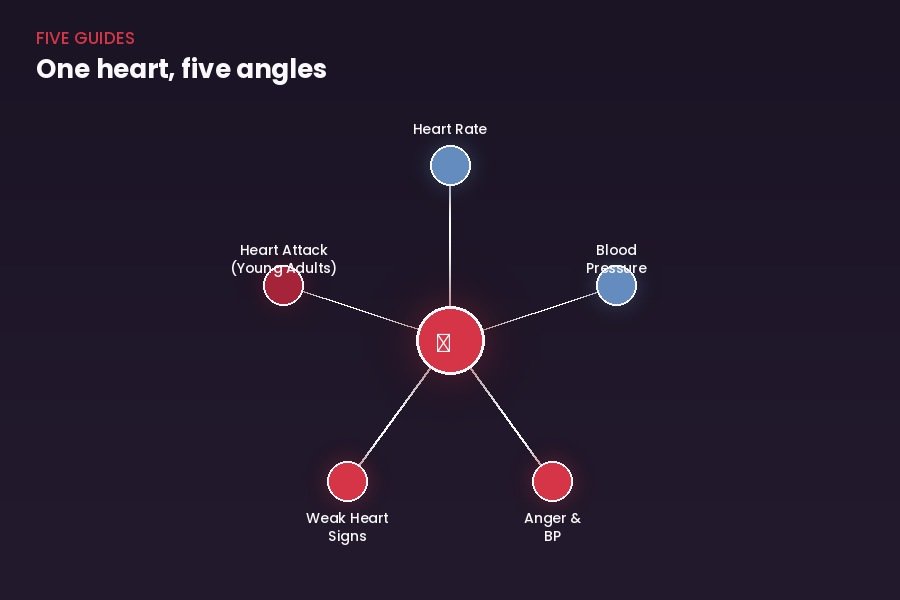
Heart Rate Fluctuation
12 hidden causes behind a changing pulse, plus a 7-day plan to build a stable baseline.
Read the full guide →Blood Pressure Fluctuation
Why readings swing so much through the day, and how to get a reading you can actually trust.
Read the full guide →Does Anger Raise Blood Pressure?
The real science behind emotional stress and short-term cardiac risk.
Read the full guide →7 Early Warning Signs of a Weak Heart
The subtle signs most adults ignore until they become impossible to miss.
Read the full guide →Heart Attack in Young Adults
Symptoms, causes, and recovery — why this is becoming more common at younger ages.
Read the full guide →🧭 Related: Metabolic Health
Heart health is closely tied to insulin resistance and chronic stress. Our Insulin Resistance guide and Mental Stress guide cover the two biggest contributing factors in depth.
Risk Factors Worth Knowing
Age, being overweight, diabetes, high cholesterol, and high blood pressure all raise risk — and per the American Heart Association, the more of these factors present at once, the more seriously any new symptom deserves to be taken.
Heart attack risk is traditionally associated with older age, but it’s increasingly seen in younger adults, which is exactly why risk factors, not age alone, should guide how seriously a symptom gets treated.
Smoking, a sedentary lifestyle, and untreated high cholesterol compound these risks further — and the American Heart Association notes that quitting smoking alone cuts coronary heart disease risk by half within just one year. Recognizing these heart health warning signs early, alongside knowing your personal risk factors, is what actually changes outcomes.
Why Signs Look Different in Women
Chest pain remains the most common heart attack symptom for both men and women, but women more frequently experience shortness of breath, nausea, and back or jaw pain — symptoms that get mistaken for less serious conditions more often than classic chest pain does.
This mismatch between symptom and expectation is a documented reason heart attacks in women are sometimes recognized later than they should be — worth knowing specifically because it changes what to watch for.
Extreme, unexplained fatigue — the kind that doesn’t match recent activity or sleep — deserves particular attention in women, since it’s a more heavily weighted early sign for women than it typically is for men.
The Short Version of These Heart Health Warning Signs
- Chest discomfort, arm/jaw/back pain, shortness of breath, cold sweat, and lightheadedness together mean call emergency services now.
- Heart rate and blood pressure naturally fluctuate — persistent or symptom-linked changes are what’s worth investigating.
- Women’s heart attack symptoms are often subtler than the classic chest-clutching image — shortness of breath and back/jaw pain matter just as much.
- Risk factors (age, weight, diabetes, cholesterol, BP) should guide how seriously any new symptom is taken.
- When unsure, treat it as an emergency — the cost of being wrong is far lower than the cost of waiting.
Frequently Asked Questions
Chest discomfort lasting more than a few minutes or that goes away and returns, pain in the arms, back, neck, or jaw, shortness of breath, cold sweat, nausea, and lightheadedness are the classic warning signs, per the American Heart Association.
Yes. While chest pain remains the most common symptom for both, women more often experience shortness of breath, nausea, and back or jaw pain, which are sometimes mistaken for less serious conditions.
No. Heart rate naturally fluctuates with activity, stress, sleep, hydration, and temperature. It becomes worth investigating when it’s persistent, unexplained, or accompanied by other symptoms like dizziness or chest discomfort.
Acute anger and stress can trigger real physiological changes — raised blood pressure and heart rate — and research links intense anger episodes to a measurably higher short-term risk of cardiac events in people with existing risk factors.
While heart attack risk rises with age, it is increasingly seen in younger adults, which is why risk factors — not age alone — should guide how seriously any warning sign is taken.
Call your local emergency number immediately. Don’t drive yourself, don’t wait to see if it passes, and don’t wait for all symptoms to appear together — partial or unclear symptoms still warrant an emergency call.