 SehatSphere.com
Fatty Liver Treatment: Symptoms, Diet, Routine & 7-Day Recovery Guide
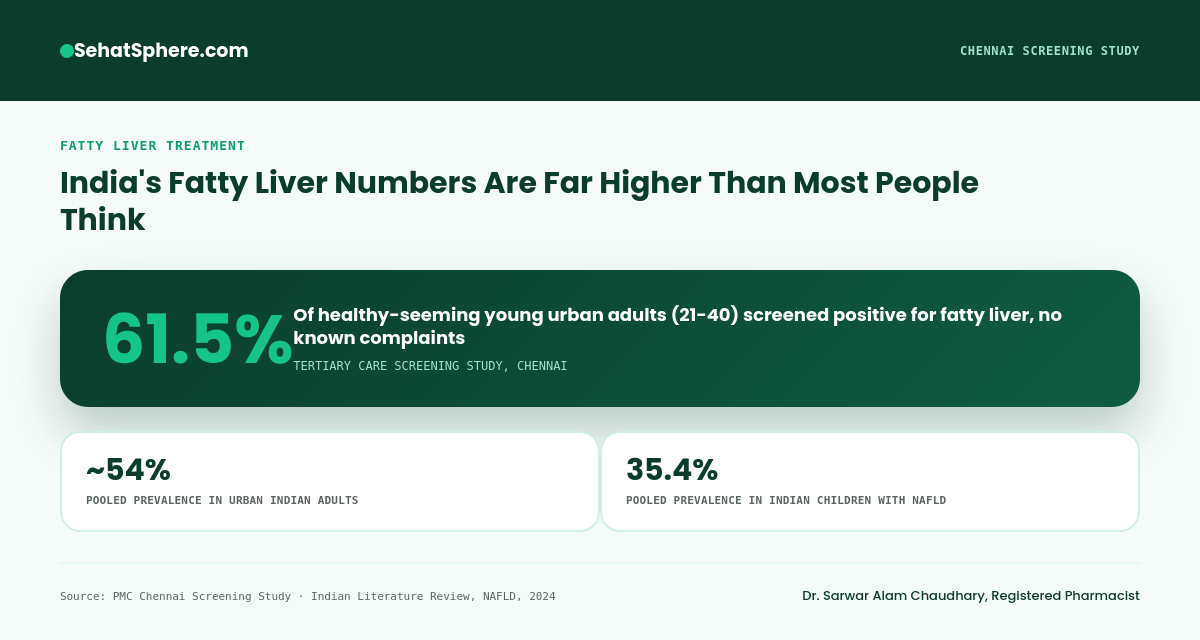
One tertiary-care study in Chennai screened 510 healthy-seeming adults aged 21–40, with no known liver complaints — 61.5% screened positive for fatty liver. Fatty liver treatment starts with an uncomfortable fact: it’s almost always silent, it’s alarmingly common in India specifically, and it’s genuinely reversible — but only if you know what actually moves the needle and what doesn’t.
Key takeaways:
- NAFLD prevalence in India ranges from 9% in some rural surveys to over 54% in urban screening studies — and it affects children too, not just overweight adults.
- Just 5% weight loss measurably reduces liver fat; 7–10% loss improves inflammation and even early scarring (fibrosis).
- Coffee — caffeinated or decaf — is genuinely protective: a UK Biobank study of nearly 500,000 people found regular drinkers had a 20% lower fatty liver risk and 49% lower risk of dying from liver disease.
- Reversal isn’t necessarily permanent: a 10-year study found 49% of men who reversed their fatty liver relapsed, with as little as 1.5kg of regained weight enough to trigger it.
- How common is this in India, really
- From simple fat to serious damage
- The “only obese people get it” myth
- Other risk factors worth knowing
- Symptoms — and why you might have none
- The real reversal numbers
- Coffee’s genuinely protective effect
- What to eat and avoid
- 7-day recovery plan
- Why reversal isn’t always permanent
- When it’s more serious
- How this connects to metabolic health
- Quick self-check
- FAQs
How Common Is This in India, Really?
The honest answer is a wide, genuinely uncomfortable range. National Health Portal estimates put Indian prevalence at 9–32%, but that figure predates most of the recent urban screening data. A Bhopal study using FibroScan (a more precise tool than ultrasound alone) found 43.6% of adults affected. A meta-analysis pooling multiple Indian studies found 38.6% in adults and 35.4% in children — and among those children, 63.4% were already obese.
| Population | Prevalence |
|---|---|
| Urban adults (pooled estimate) | ~54% |
| Rural adults (pooled estimate) | ~30% |
| Young urban adults, Chennai (ages 21–40) | 61.5% |
| Children with NAFLD (pooled) | 35.4% |
NAFLD has become one of the leading causes of hepatocellular carcinoma (liver cancer) and liver transplant in India specifically — not a distant Western-lifestyle problem, a genuinely local and current one, driven by the same rising rates of obesity, diabetes, and processed food consumption reshaping Indian cities. If ultra-processed food makes up a large share of your weekly meals, that pattern connects directly to this same metabolic picture.
From Simple Fat to Serious Damage
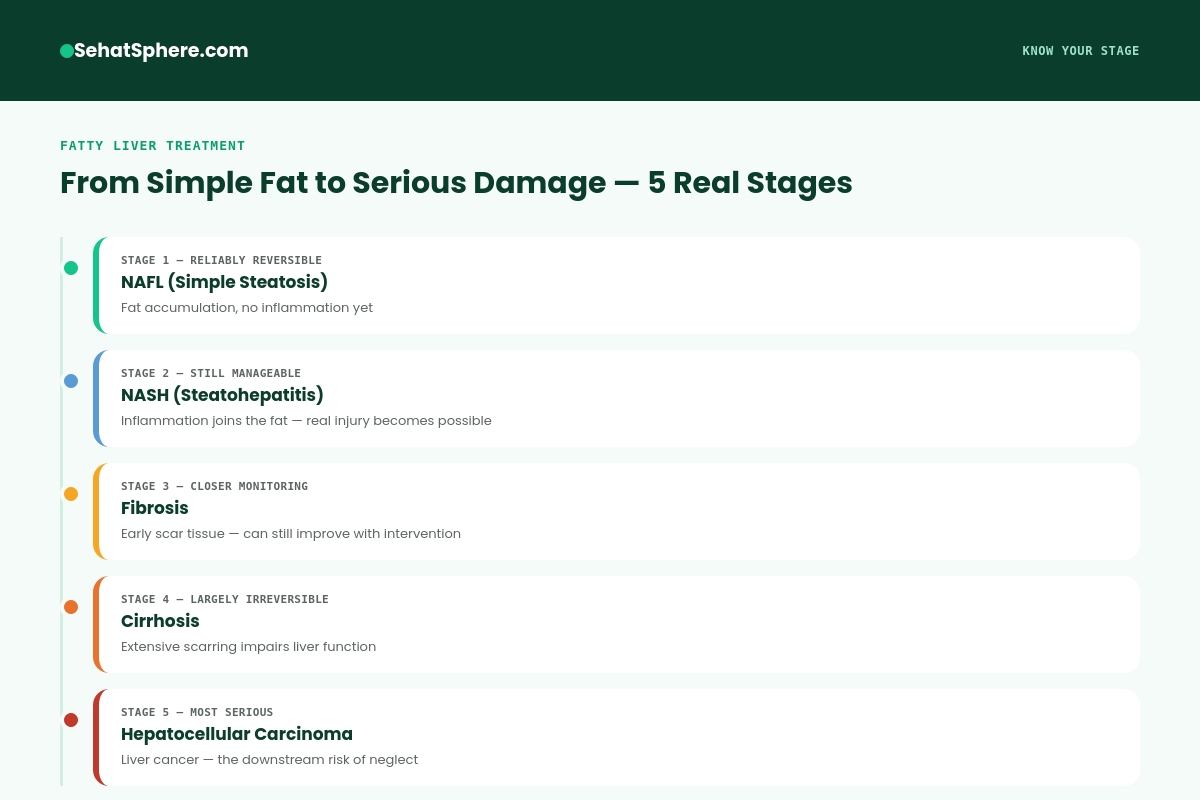
“Fatty liver” isn’t one fixed condition — it’s a spectrum, and knowing where you sit on it changes everything about urgency. Most people diagnosed with fatty liver via a routine ultrasound are somewhere on this spectrum without knowing exactly where, which is precisely why follow-up testing matters more than the initial scary-sounding diagnosis itself.
1. NAFL (simple steatosis)
Fat has accumulated in liver cells, but there’s no significant inflammation or damage yet. This stage is genuinely, reliably reversible, and represents the vast majority of fatty liver diagnoses caught on a routine scan.
2. NASH (non-alcoholic steatohepatitis)
Inflammation has joined the fat accumulation. This is the stage where real, lasting liver injury starts to become possible if left unaddressed, and where elevated liver enzymes on a blood test typically first become noticeable.
3. Fibrosis
Repeated inflammation triggers scar tissue formation. Early fibrosis can still improve with intervention — this is not yet the point of no return, though it does represent a meaningfully more serious stage requiring closer monitoring.
4. Cirrhosis
Extensive, established scarring that impairs liver function. Largely irreversible, though further progression can often still be slowed with aggressive lifestyle and medical management.
5. Hepatocellular carcinoma (HCC)
Liver cancer, the most serious downstream complication of long-neglected fatty liver disease, and one of the reasons early screening genuinely matters rather than being precautionary overcaution.
The “Only Obese People Get It” Myth
This assumption keeps a genuine number of people from ever getting checked. “Lean NAFLD” is a real, well-documented phenomenon — fatty liver disease occurring in people with a normal BMI. Indian studies specifically report high variability in lean NAFLD rates, and central obesity (fat around the waist specifically, even in an otherwise normal-weight body) is often a better predictor than overall BMI. If you’re metabolically unwell — high triglycerides, insulin resistance, or a family history — being thin doesn’t rule this out. High uric acid often travels alongside this same metabolic pattern too — our high uric acid diet guide covers a closely related dietary picture.
Other Risk Factors Worth Knowing
Beyond weight and insulin resistance, a few less-discussed factors genuinely raise risk. PCOS in women is independently associated with higher NAFLD prevalence, likely through shared insulin resistance and hormonal pathways. Rapid weight loss itself — from crash dieting or certain bariatric procedures without proper supervision — can paradoxically worsen liver fat temporarily before improving it, which is part of why the gradual, sustained approach in this guide is emphasized over dramatic short-term measures. Certain medications, including some steroids and specific chemotherapy drugs, can independently contribute to fatty liver, which is worth mentioning to your doctor if you’re on long-term treatment for an unrelated condition.
What To Read Next
- How to Reverse Insulin Resistance: The metabolic driver behind most fatty liver cases.
- Mounjaro & Ozempic Diet India: If GLP-1 medication is part of your weight-loss plan.
- Blood Report Decoder: Understand your ALT, AST, and lipid panel results.
- Protein Deficiency in India: Getting protein intake right while managing liver health.
- Common Antibiotic Mistakes: Your liver processes far more medication than people realize.
Symptoms — and Why You Might Have None
Fatty liver disease earns its reputation as a “silent” condition honestly — early NAFL frequently produces no symptoms at all, which is exactly why the Chennai study above found so many affected young adults who had no idea. When symptoms do appear, they’re often vague enough to dismiss:
| Stage | Possible Symptoms |
|---|---|
| Early (NAFL) | Usually none; occasionally mild fatigue or dull right-upper-abdomen discomfort |
| NASH / Fibrosis | Persistent fatigue, unexplained weight loss, mild jaundice, spider-like blood vessels on skin |
| Cirrhosis (advanced) | Significant abdominal swelling, confusion, easy bruising, marked jaundice |
Diagnosis relies on a combination of blood tests (elevated ALT and AST specifically), imaging (ultrasound as a first pass, FibroScan for more precision), and ruling out alcohol as the primary cause. Central obesity, elevated triglycerides, and insulin resistance are the strongest associated red flags worth discussing with a doctor even before symptoms appear — our insulin resistance guide covers this shared metabolic root in more depth.
The Real Reversal Numbers
This is where most fatty liver content gets vague. The actual evidence is specific:
| Weight Loss | What It Improves |
|---|---|
| 5% of body weight | Measurable reduction in liver fat (steatosis) |
| 7–10% of body weight | Inflammation, hepatocyte injury, and early fibrosis |
A 2013 study of 154 people with NAFLD found that consistent diet-and-exercise intervention led to complete remission in 64% of participants. The exercise specifics matter: a 2018 review defined the effective range as moderate activity, 20–60 minutes, 4–7 days a week (or 200+ minutes weekly total) — and separate research found exercise reduces liver fat partly independent of weight loss itself, meaning movement helps your liver even before the scale moves.
In real-world clinic settings — not controlled trials — only about 19.8% of patients actually achieved 5%+ weight loss during follow-up. This isn’t meant to discourage you; it’s meant to explain why frequent check-ins and a structured plan (like the 7-day framework below) genuinely outperform vague “eat better” advice.
Coffee’s Genuinely Protective Effect
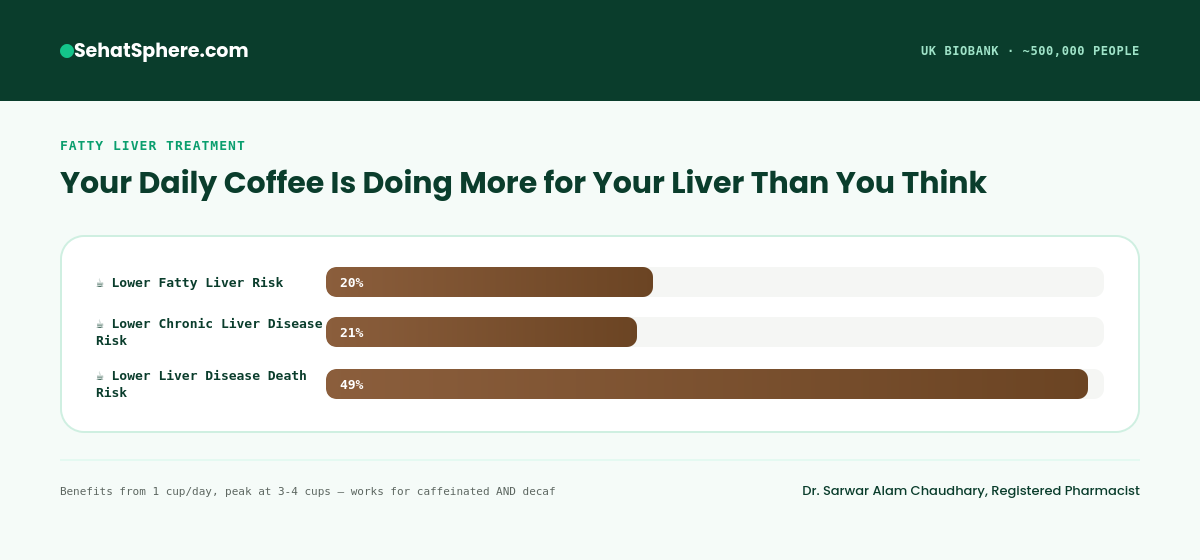
This is the part of fatty liver treatment that almost never makes it into consumer content, likely because it sounds too good to be restriction-focused advice. A UK Biobank study following nearly 500,000 people for a median of 10.7 years found coffee drinkers — of any type, caffeinated or decaf — had a 21% lower risk of chronic liver disease, 20% lower fatty liver risk, and 49% lower risk of dying from liver disease, compared to non-drinkers.
A separate meta-analysis found coffee consumption associated with a 35% decrease in odds of significant liver fibrosis. Benefits start at just one cup a day, peaking around three to four cups. Because the effect holds for decaffeinated coffee too, researchers believe compounds like chlorogenic acid and polyphenols — not just caffeine — are doing meaningful work here, with antifibrotic and antioxidant effects on liver tissue directly. Animal studies modeling this mechanism found decaffeinated coffee reduced body weight gain, prevented fatty liver development, and lowered both blood sugar and cholesterol markers in high-fat-diet conditions, suggesting the protective effect operates through multiple pathways at once rather than a single simple mechanism.
What to Eat and Avoid
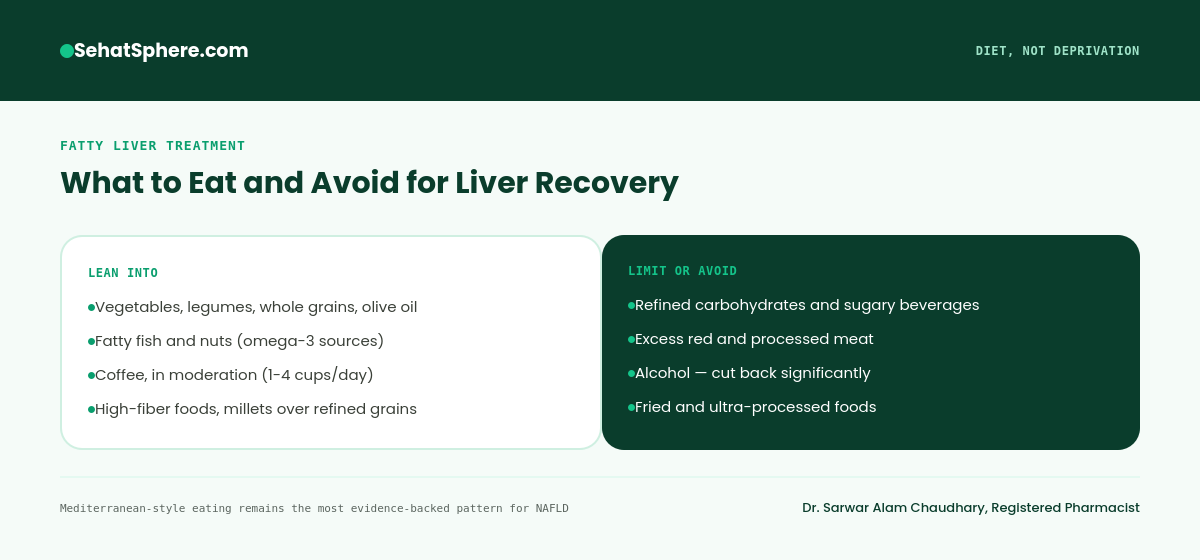
| Lean Into | Limit or Avoid |
|---|---|
| Mediterranean-style eating — vegetables, legumes, whole grains, olive oil | Refined carbohydrates and sugary beverages |
| Fatty fish, nuts (omega-3 sources) | Excess red and processed meat |
| Coffee, in moderation (1–4 cups/day) | Alcohol — cut back significantly or eliminate |
| High-fiber foods, millets over refined wheat/rice | Fried and ultra-processed foods |
None of this requires a dramatic, unsustainable overhaul. The evidence consistently favors gradual, maintained changes over aggressive short-term diets that are hard to sustain — a theme that matters even more once you see the relapse data further down this guide. Protein intake specifically deserves attention here — adequate protein supports muscle mass during weight loss, which itself protects metabolic rate, though most Indian diets run lower on protein than commonly assumed; our protein deficiency guide covers this gap in more detail. If acid reflux is part of your daily reality alongside dietary changes, our GERD guide is worth reading too, since large dietary shifts can temporarily affect reflux symptoms either direction.
7-Day Recovery Plan
A realistic starting structure, not a complete cure in a week — genuine reversal takes months, but the habits below are exactly the ones the evidence above supports.
| Day | Focus | Action |
|---|---|---|
| 1 | Baseline | Note your current weight, waist circumference, and typical diet honestly |
| 2 | Move | 20–30 minutes of moderate activity — a brisk walk counts |
| 3 | Cut liquid sugar | Replace sugary drinks with water or your regular coffee |
| 4 | Add fiber | One extra serving of vegetables or legumes at each main meal |
| 5 | Repeat movement | Second activity session — consistency matters more than intensity |
| 6 | Alcohol check | An honest, specific plan to reduce or eliminate alcohol intake |
| 7 | Plan forward | Book a follow-up liver panel in 8–12 weeks and set a realistic 5% weight-loss target |
Why Reversal Isn’t Always Permanent
A 10-year Japanese cohort study followed 1,260 men who had successfully achieved NAFLD remission. The honest result: 49% experienced recurrence by the end of follow-up. The specific trigger identified was small — a weight regain of just 1.5kg or more was the statistical cutoff associated with relapse. Regular exercisers were meaningfully overrepresented in the group that maintained remission (34.6%) compared to those who relapsed (24.5%).
This isn’t meant to be discouraging — it’s meant to reframe fatty liver treatment as an ongoing relationship with your metabolic health, not a one-time fix. The 7-day plan above is a genuine starting point, not a finish line.
When It’s More Serious
Yellowing of the skin or eyes (jaundice), significant abdominal swelling, confusion or difficulty concentrating, easy bruising or bleeding, or unexplained, unintentional weight loss. These suggest the disease may have progressed beyond simple fatty liver and need direct medical evaluation, not further lifestyle experimentation alone.
If diabetes or elevated blood sugar is part of your picture — which it very often is alongside NAFLD — our insulin resistance guide and, if you’re on GLP-1 medication as part of treatment, our Mounjaro and Ozempic diet guide are directly relevant next reads.
How This Connects to the Rest of Your Metabolic Health
Fatty liver rarely travels alone. If you’re also managing blood pressure, our BP fluctuation guide and normal blood pressure by age guide are worth reading, since hypertension and NAFLD share overlapping metabolic drivers far more often than coincidence would suggest. Chronic stress genuinely worsens metabolic health too — our mental stress guide and anger and blood pressure guide cover the cortisol pathway that compounds with liver fat over time.
If you’re on long-term medication for other conditions, it’s worth knowing how they interact with this picture. Our statins guide, pantoprazole guide, and thyroid medicine guide all touch on metabolic overlap worth understanding alongside a fatty liver diagnosis. Fatigue during recovery is also worth ruling out against a genuine nutrient gap — the free Nutrient Deficiency Symptom Finder and our B12 deficiency guide are reasonable starting points, and if you’re on multiple prescriptions, the free Integrative Interaction Checker is worth running your full list through.
Quick Self-Check
Tick anything that applies to you, and see what it suggests.
Frequently Asked Questions
Can fatty liver be reversed completely?
Yes, especially in the early NAFL stage. A 2013 study found 64% of participants achieved complete remission through consistent diet and exercise. Later stages with fibrosis or cirrhosis are harder to fully reverse but can often still be slowed.
How much weight loss is needed to reverse fatty liver?
5% of body weight measurably reduces liver fat. 7-10% improves inflammation and early fibrosis, offering more comprehensive benefit.
Does coffee really help with fatty liver?
Yes, genuinely. A UK Biobank study of nearly 500,000 people found coffee drinkers had a 20% lower fatty liver risk and 49% lower risk of dying from liver disease, with benefits from both caffeinated and decaffeinated coffee.
Can thin people get fatty liver?
Yes. “Lean NAFLD” is a well-documented phenomenon, particularly linked to central (waist) obesity and insulin resistance even in people with a normal overall BMI.
What are the early symptoms of fatty liver disease?
Often none at all in early stages, which is why it’s frequently discovered incidentally. When present, mild fatigue or dull right-upper-abdomen discomfort can occur.
How common is fatty liver disease in India?
Estimates vary widely by study and region, from around 9% in some rural surveys to over 54% in urban screening studies, with rates rising alongside obesity and diabetes.
Can fatty liver come back after it’s reversed?
Yes. A 10-year study found 49% of men who achieved remission experienced recurrence, with as little as 1.5kg of weight regain associated with relapse.
What exercise is best for fatty liver?
Moderate activity for 20-60 minutes, 4-7 days a week, is the evidence-supported range. Exercise appears to benefit the liver partly independent of weight loss itself.
Is fatty liver disease linked to diabetes?
Yes, strongly. Insulin resistance and type 2 diabetes frequently coexist with NAFLD, sharing much of the same underlying metabolic dysfunction.
Can children get fatty liver disease?
Yes. Pooled Indian studies found 35.4% prevalence among children with NAFLD, with the majority being obese, reflecting the same rising metabolic risk factors seen in adults.
The Bottom Line
Fatty liver disease is common enough in India that assuming it doesn’t apply to you is statistically risky, and silent enough that waiting for symptoms means waiting too long. The genuinely good news: it’s reversible with specific, well-documented thresholds — 5% weight loss for fat, 7-10% for inflammation and early scarring — and even something as simple as your daily coffee has real, measured liver benefits. The honest catch is that reversal takes sustained effort, not a one-time push, since nearly half of people who reverse it can relapse without ongoing maintenance. Start with a liver panel, not another fad diet, and if cost has ever kept you from following through on prescribed treatment, our generic medicine pricing guide and the Biological Longevity Audit are both worth exploring as you build a sustainable plan.
- Prevalence, Metabolic Profile, and Associated Risk Factors of NAFLD in an Adult Population of India. PMC
- Prevalence of NAFLD in Urban Adult Population, Chennai. PMC
- Effect of Coffee Consumption on NAFLD Incidence and Fibrosis Risk: Systematic Review and Meta-Analysis. PubMed
View All References (6) ▾
- A weight regain of 1.5kg or more and lack of exercise are associated with NAFLD recurrence in men. PMC
- National Health Portal of India. Non-alcoholic Fatty Liver Disease. nhp.gov.in
- Indian Literature Review on Nonalcoholic Fatty Liver Disease. Gastroenterology, Hepatology and Endoscopy Practice, 2024.